
CompareVolt rating
7.6 out of 10
12.8 kWh that can grow on a listed Sungrow hybrid inverter, but full cover needs monitoring and a mild site.
7.6 out of 10
- Warranty10 yrs, unlimited home; 3 conditions
- Functionality12.8 kWh, 7.68 kW DC; needs inverter
- VPP readiness7 programs; 4 name the SBR
- Australian backingSince 2014; costs partly covered
How this score adds up
| Warranty 7.0 (30%) | |
|---|---|
| Term: 10 years | 2.0 of 3 |
| Keeps 70% at year 10 | 1.5 of 2 |
| Home use: unlimited cycles | 3.0 of 3 |
| Conditions: needs iSolarCloud monitoring; ends 126 months after manufacture; heat limits | 0.5 of 2 |
| Functionality 7.0 (35%) | |
| Power and backup 7.0 · 60% of Functionality | |
| Continuous power: 7.68 kW battery DC; the inverter sets AC output | 3.0 of 4 |
| Backup equipment: needs a separate Sungrow hybrid inverter | 1.0 of 2 |
| Backup output: set by the inverter | 1.0 of 2 |
| Three-phase homes: listed with SH15T, SH20T and SH25T three-phase hybrids | 2.0 of 2 |
| Capacity and expansion 7.0 · 30% of Functionality | |
| Largest documented system: 25.6 kWh (SBR256 on listed three-phase inverters; SBR224 on single-phase) | 3.0 of 4 |
| Adding later: charge levels must match; new modules only, per Sungrow's guide | 2.0 of 4 |
| Usable figure: 12.8 kWh, agreed | 2.0 of 2 |
| Enclosure 7.0 · 10% of Functionality | |
| Enclosure rating: IP55 | 7.0 of 10 |
| 7.0 × 60% + 7.0 × 30% + 7.0 × 10% = 7.0 | |
| VPP readiness 9.0 (15%) | |
| Open programs: 4 name SBR, 3 list Sungrow | 8.0 of 8 |
| Warranty room for VPP use: 2.8 MWh per kWh | 1.0 of 2 |
| Australian backing 8.5 (20%) | |
| Presence: Sungrow Australia Group Pty Ltd, North Sydney | 3.0 of 3 |
| In Australia since 2014 | 2.0 of 2 |
| Claim route: you or the installer claim online; installer troubleshoots first | 2.0 of 2 |
| Claim costs: freight to $200 and a labour rebate; on-site costs excluded | 1.5 of 3 |
| Overall: 7.0 × 30% + 7.0 × 35% + 9.0 × 15% + 8.5 × 20% = 7.6 | |
Rubric 1.0 · scored 15 Nov 2026 · How we rate batteries · Source documents
Rated so far: 38 batteries, from 4.4 to 8.2. Compare similar batteries · Use the quote checklist
In a nutshell
What’s good
- 12.8 kWh usable. Usable storage in a four-module LFP stack.
- Single- and three-phase options. Sungrow lists compatible single-phase and three-phase hybrid inverter options; check the exact pairing.
- Modular expansion. Additional modules are possible through Sungrow's installer expansion procedure.
1 more good point
- Ten-year cover. Defect cover and 70% retained capacity for 120 months from installation or 126 from manufacture; unlimited cycles for daily self-consumption and backup.
What to watch
- Needs a hybrid inverter. This DC battery needs a compatible hybrid inverter; its storage rating does not establish backup power.
- Temperature and monitoring. Temperature history and complete monitoring records matter to warranty cover.
- No warranty restart. Adding modules to an existing stack does not restart its performance warranty.
2 more things to watch
- Battery limits larger inverters. With the SH8.0RS, SH10RS, SH10RT, SH10T and SH15T–SH25T, SBR128 alone gives at most 7.68 kW, below the inverter's backup rating; solar must make up the rest.
- Throughput limit for other uses. VPP use is not one of the two uses with unlimited cycles, so on the warranty's wording it, or any mix with it, has a 35.84 MWh limit.
Good fit for: Homes planning storage around a compatible Sungrow hybrid inverter.
Look elsewhere if: You want a battery with its own integrated AC inverter or guaranteed whole-home backup from the battery alone.
All specifications and notes
Capacity and power
| Usable capacity | 12.8 kWhUsable energy in the reviewed configuration. |
|---|---|
| AC output | Depends on inverterThe battery's 7.68 kW rated DC power is not household AC output. |
| Performance cover | 10 yr, 70% retention120 months from installation or 126 from manufacture, whichever first. Application, temperature and monitoring conditions apply. |
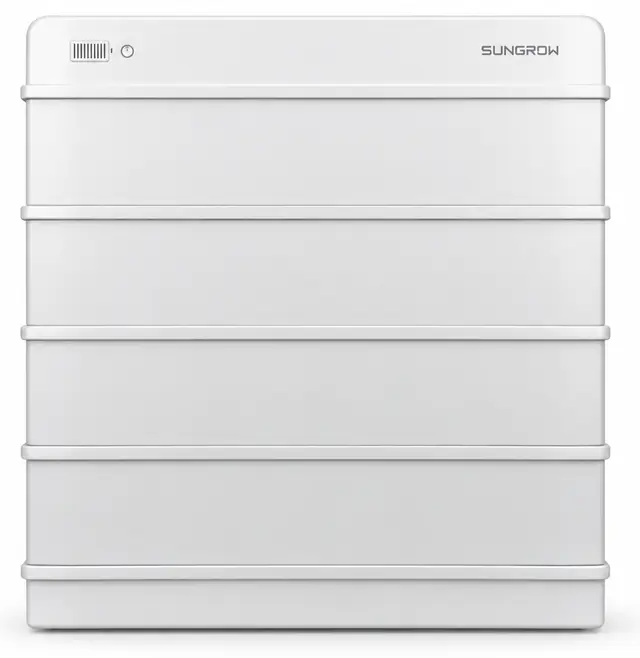
| Module configuration | 4 × 3.2 kWh modulesFour-module LFP stack. Each module stores 3.2 kWh on the DC side; the battery is separate from the inverter. |
Manufacturer’s figures
As stated in the manufacturer’s Australian datasheet. Only the IP rating feeds the score; the rest are shown for reference.
| IP rating | IP55The maker’s rating for dust and water getting in, which matters on an outdoor wall. |
|---|---|
| Weight | 147 kgWhether it can go on a wall, and how the installer has to handle it.SBR128: four modules; each module is 3.2 kWh and 33 kg |
| Dimensions | 625 × 675 × 330 mm (W × H × D)Whether it fits the wall or cupboard where the installer plans to put it.SBR128: four modules |
| Operating temperature | Charge 0°C to 50°C; discharge −20°C to 50°CWhether it suits a hot garage or an outdoor wall where you live.Performance cover: under 90 days a year at 35–40°C, under 30 above 40°C, else average below 25°C |
More specifications
| Chemistry | LFPFour-module stack. Each module stores 3.2 kWh on the DC side. |
|---|---|
| Compatible inverters | SH5.0–10RS; SH5.0/10RT; SH5/10/15/20/25TFull output on SH5.0RS, SH6.0RS, SH5.0RT and SH5T. On SH8.0RS, SH10RS, SH10RT, SH10T and SH15T–SH25T the battery alone gives 7.68 kW at most. |
| Expansion | Installer procedure requiredThe installer matches module charge levels and updates firmware under Sungrow's procedure. |
| Warranty throughput | 35.84 MWh for other usesUnlimited cycles for daily self-consumption and backup. Any other use, or a mix that includes one, has this limit; VPPs are not named. |
| Warranty temperature | Under 90 days at 35–40°C a yearAlso fewer than 30 days above 40°C, and an average below 25°C for the rest of the year. |
| Monitoring | iSolarCloud is a warranty conditionWith incomplete, deleted or altered records, cover is at least four years from installation or four years six months from manufacture. |
What the system needs
| SBR128 battery stack | Four 3.2 kWh modules store energy on the DC side; the battery is separate from the inverter. |
|---|---|
| Compatible hybrid inverter | Converts stored energy to AC. Sungrow's May 2026 chart lists selected SH-RS, SH-RT and SH-T models; with the larger ones the battery alone can't supply full backup power. |
| Backup connection | The inverter's backup output needs an installer-designed circuit and switchboard arrangement. Ask which loads remain powered during an outage. |
| iSolarCloud monitoring | Have the installer commission monitoring and preserve the performance records required for warranty assessment. |
A four-module, high-voltage home battery that works with a compatible Sungrow hybrid inverter.
Capacity and power
This review covers SBR128: four modules and 12.8 kWh of usable capacity, measured under Sungrow's test conditions. Other SBR sizes have different voltage and power limits and are outside this review.
The Australian datasheet's 7.68 kW is the battery's rated DC (direct current) power, at up to 30 A. The inverter turns DC into AC, the mains power your home uses, so the inverter sets your household output. For example, the single-phase SH6.0RS has a 6 kW rated AC output and a 6 kW rated off-grid backup output. The battery's larger DC figure does not make it a 7.68 kW AC system.
You can add modules later, with conditions. Sungrow's extension manual has the installer bring the old and new modules to the same charge level and update firmware first. Sungrow's May 2026 chart allows up to seven modules (SBR224, 22.4 kWh) on its listed single-phase SH-RS inverters and eight (SBR256, 25.6 kWh) on its listed SH-RT and SH-T models. The chart also allows two to four equal stacks in parallel, joined by a Y connector or a combiner box; the warranty treats a stack added on site as a new battery, registered separately. Have any future stack checked against your inverter.
Backup and installation
Choose the inverter and backup circuits together. Sungrow's chart lists SBR128 with the single-phase SH5.0RS, SH6.0RS, SH8.0RS and SH10RS and with the SH5.0RT, SH10RT, SH5T, SH10T, SH15T, SH20T and SH25T. Sungrow's Australian datasheet calls the SH15T, SH20T and SH25T three-phase. SBR128 is a full match only with the SH5.0RS, SH6.0RS, SH5.0RT and SH5T. With the larger models, SBR128 alone gives at most 7.68 kW, below the inverter's full backup rating, and solar has to make up the rest. Solar can't help at night, so check your night-time loads.
The quote should name which circuits and phases get backup, how much they draw at once and the inverter's starting-load (surge) limit. A three-phase supply does not make a single-phase inverter give three-phase backup. An inverter datasheet's outage-mode ratings are for blackouts; they don't show it suits living off the grid.
Warranty and ownership
Sungrow's Australian V9.0 warranty, effective 21 May 2026, gives defect cover and keeps 70% of capacity for 120 months from installation or 126 months from manufacture, whichever comes first. Daily self-consumption and backup get unlimited cycles. Any other use, or a mix that includes one, is limited to 35.84 MWh of throughput (total energy discharged) for SBR128. A virtual power plant (VPP) is not one of the two listed uses, so on the warranty's wording VPP use falls under that limit. Get Sungrow's answer for your program in writing.
Working the warranty’s energy limits through at one full charge and discharge a day:
- Home use: no throughput limit.
- VPP and other uses: 35.84 MWh, about 2.8 MWh per usable kWh. At one full charge and discharge a day that is reached in about 7.7 years, before the 10-year term ends.
Performance cover needs a yearly battery temperature profile of fewer than 90 days at 35–40°C, fewer than 30 days above 40°C, and an average below 25°C for the rest of the year. Outside it, performance or throughput cover may not apply. That is narrower than the datasheet's operating range, which runs to 50°C, so agree the location before you accept the quote.
Monitoring in iSolarCloud, Sungrow's online monitoring platform, is an express condition: an unmonitored battery is excluded. If the records are incomplete, deleted or altered, the warranty promises at least four years from installation or four years six months from manufacture, subject to exclusions. Don't assume full cover offline. Added modules keep the original stack's performance-warranty dates. Ordinary resale does not automatically transfer cover. Australian Consumer Law rights remain.
Brand and Australian support
Support evidence checked 21 September 2026. Sungrow was founded in 1997. The warranty names Sungrow Australia Group Pty Ltd as importer, with a North Sydney address, phone and email. That company has been registered since 26 February 2014 (checked 15 November 2026). Age and contacts say nothing about SBR128's reliability or how quickly claims are handled.
You or your installer can lodge a claim online with Sungrow. The V9.0 warranty, which covers SBR128, asks you to contact the installer who sold the system first, for troubleshooting. For an accepted claim, Sungrow supplies parts or a replacement by standard freight and pays standard ground transport both ways up to $200 in total. The installer may be eligible for a service rebate towards labour once Sungrow has tested the returned battery and found it defective. The warranty portal sets that rebate at $150, excluding GST, for one battery module plus $30 for each extra module. Travel, subsistence and on-site installation costs are not covered, and Sungrow can recover its costs if the battery has no defect or the warranty doesn't cover it. Because you can claim yourself, and Sungrow lists a phone number and email, you still have a route if your installer has gone, though the terms don't promise to pay a new electrician in full. Australian Consumer Law rights are separate.
The completed ARENA/ITP program did not test SBR128. Searches of the ACCC, CEC and Energy Safe Victoria registers in September 2026 found no SBR128 or controller entry. We found no dated Australian survey of SBR128 owners or installers with a stated sample size. General brand comments mix products and installers, so they can't show a failure rate.
Price and alternatives
We found no fixed Australian installed price in the manufacturer material checked. Request a complete quote covering the four-module stack, compatible inverter, monitoring, backup wiring and switchboard work. Sungrow's current Australian page documents the family; it does not confirm local stock or delivery dates.
Contact Sungrow about local supply ↗
Use the battery catalogue to compare other system designs if your existing inverter or required backup power makes this pairing unsuitable. Compare complete installations with the same backed-up loads, rather than battery-module prices alone.
Current approval and rebate eligibility were not verified. Have the installer confirm the exact battery, inverter and installation requirements before including any incentive in your budget.
Who it suits
Estimate your evening use with the battery size calculator, then ask for the exact inverter model and a written outage-load plan before deciding. If adding modules later or joining a VPP matters, get the compatibility and warranty answers now. Those checks determine whether this particular four-module system fits your home better than simply choosing by stored kilowatt-hours.
How it compares
Reviewed configurations side by side: this review first, then the others in alphabetical order. Figures come from each manufacturer’s documents, with their conditions under each row; this is not a ranking. The full comparison links every source.
| Configuration | This reviewSungrow SBRSungrow SBR128 battery (four modules) | sonnen sonnenBatteriesonnenBatterie Evo with two modules | Tesla PowerwallTesla Powerwall 3 with Backup Gateway 2 |
|---|---|---|---|
| Usable stored energy | 12.8 kWh usable, measured at the battery (DC) | 10 kWh usable, measured at the battery (DC) | 13.5 kWh usable, measured at the system's AC output |
Conditions for Usable stored energy
| |||
| Household AC power | Depends on the inverter | Rated active power: 5 kW AC nominal, charging or dischargingRated apparent power: 5 kVA AC nominal, charging or discharging | Nominal output: 5, 10 or 11.04 kW AC, dischargingCharge power: 5 kW AC continuous, charging |
Conditions for Household AC power
| |||
| What backup covers | Depends on the inverter | In an outage the Evo disconnects from the grid and supplies only the essential-loads circuit; normal circuits are not supplied. A grid-connected solar inverter on that circuit can keep running and recharge the battery. | Backup Gateway 2 is the islanding device. On a three-phase supply, only the backup phase selected at commissioning is supplied in an outage, and Powerwalls on other phases stop. |
Conditions for What backup covers
| |||
| Required equipment | A compatible Sungrow hybrid inverter. Sungrow's cross-reference chart lists permitted pairings and flags where battery power limits the inverter's backup output. | An installer-wired essential-loads circuit for backup and an Ethernet connection. sonnen's backup specification lists a maximum compatible PV inverter power of 6,000 W. | Backup Gateway 2 is required for grid connection, with a wired link to Powerwall 3. Fully off-grid systems are not supported. |
| Warranty | Defect and performance cover end at 120 months from installation or 126 months from manufacture, whichever comes first, with at least 70% of initial capacity retained. Unlimited cycles for daily self-consumption and backup. Any other application, or any combination that includes one, is limited to 35.84 MWh of discharged energy, measured at the battery output on the inverter side. | Ends at the first of 10 years from commissioning or 10,000 complete recharge cycles, with partial cycles adding up. Capacity will not fall below 80% of the nominal capacity on the technical data sheet during the warranty. | 10 years from initial installation, with 70% of 13.5 kWh rated capacity retained at 10 years. Unlimited cycles for solar self-consumption, time-based control and backup. Any other application, or any combination that includes one, is limited to 37.8 MWh of throughput, measured at the battery AC output. |
Conditions for Warranty
| |||
Other reviewed batteries closest to 12.8 kWh of usable capacity.
- Tesla Powerwall 2 review: recall, warranty and adding a Powerwall 3Rated 7.2 out of 1013.5 kWh usableWarranty: 10 yearsOne difference: Australian backingTesla Powerwall 2 review: recall, warranty and adding a Powerwall 37.0SBR1288.5
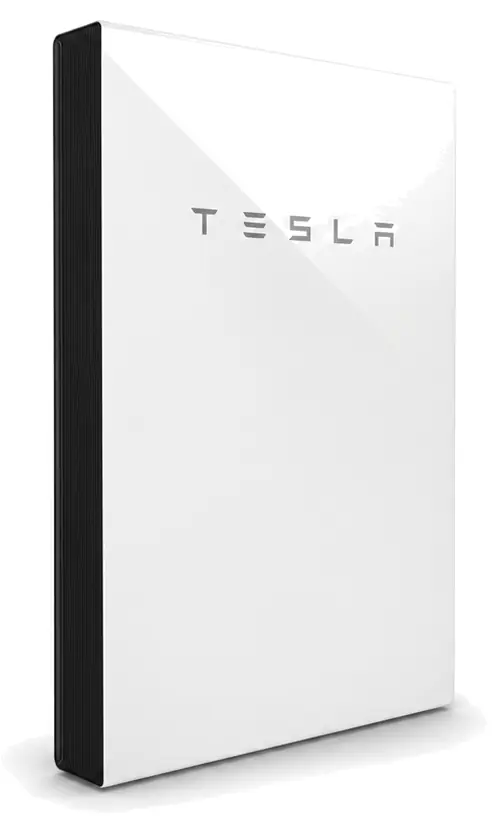
- Tesla Powerwall 3 review: Australian price and backup limitsRated 8.2 out of 1013.5 kWh usableWarranty: 10 yearsOne difference: FunctionalityTesla Powerwall 3 review: Australian price and backup limits9.0SBR1287.0
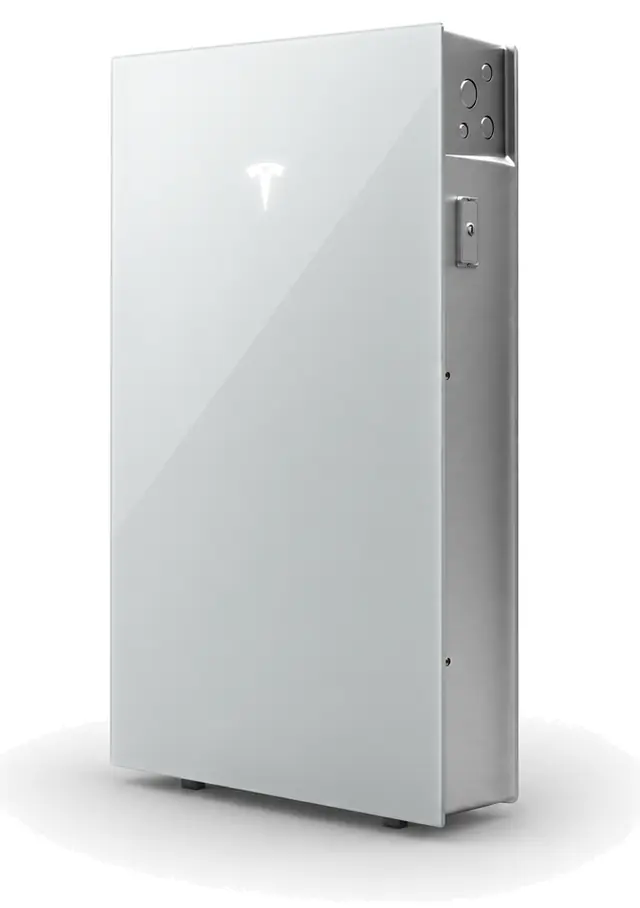
- Tesla Powerwall 3AC review: the 5 kW storage-only Powerwall 3Rated 6.8 out of 1013.5 kWh usableWarranty: 10 yearsOne difference: VPP readinessTesla Powerwall 3AC review: the 5 kW storage-only Powerwall 31.0SBR1289.0
Questions people ask
Is the Sungrow SBR128 compatible with my inverter?
Sungrow's May 2026 chart lists SBR128 with the single-phase SH5.0RS, SH6.0RS, SH8.0RS and SH10RS and with the SH5.0RT, SH10RT, SH5T, SH10T, SH15T, SH20T and SH25T. Only with the SH5.0RS, SH6.0RS, SH5.0RT and SH5T can the battery alone supply the inverter's full rated power.
Will the Sungrow SBR128 provide blackout backup?
The inverter sets backup output, not the battery. The single-phase SH6.0RS has a 6 kW rated off-grid backup output, and the battery's 7.68 kW DC figure does not make it a 7.68 kW AC system. Backup circuits need an installer-designed arrangement.
How long is the Sungrow SBR128 warranty?
Defect cover and 70% retained capacity for 120 months from installation or 126 months from manufacture, whichever comes first. Application, temperature and monitoring conditions apply.
Can I add more modules to the Sungrow SBR128 later?
Yes, with conditions: Sungrow's extension manual has the installer match old and new modules' charge levels and update firmware. Sungrow's May 2026 chart allows seven modules (SBR224) on listed single-phase SH-RS inverters and eight (SBR256) on listed SH-RT and SH-T models. Performance cover keeps the original dates.
How much does the Sungrow SBR128 cost in Australia?
No fixed Australian installed price was found in the manufacturer material checked. The price comes from an installer quote covering the four-module stack, compatible inverter, monitoring, backup wiring and switchboard work.
How long will 12.8 kWh last?
Divide 12.8 kWh by your average load: about 12.8 hours at 1 kW or 4.3 hours at 3 kW. The inverter, not the battery, sets the household AC limit.
Before you accept a quote
Sungrow doesn’t publish a price for this battery, so the installed price comes from your quotes.
- The quote names SBR128 (four modules), the exact inverter model and the iSolarCloud monitoring setup.
- It lists which circuits and phases receive backup, their simultaneous demand and the inverter's starting-load limit.
- Stack, inverter, monitoring, backup wiring and switchboard work are itemised, with any rebate shown separately.
- The battery location is checked against the warranty's annual temperature profile.
- Future expansion is checked against the inverter, and your VPP's classification is confirmed with Sungrow.
Estimate the federal battery certificates for 12.8 kWh usable (opens in a new tab)
Check the model in your quote
Check that your quote names SBR128 in the configuration this review covers. Other sizes can differ in specifications and warranty.
Other sizes in this line: SBR064, 6.4 kWh usable · SBR096, 9.6 kWh usable · SBR160, 16 kWh usable · SBR192, 19.2 kWh usable · SBR224, 22.4 kWh usable · SBR256, 25.6 kWh usable
Other Sungrow lines: Sungrow batteries
Australian support and warranty claims
- Australian presence
- Sungrow Australia Group Pty Ltd, North Sydney
- In Australia since
- 2014
- Where claims go
- You or the installer claim online; installer troubleshoots first
- Claim costs
- Freight to $200 and a labour rebate; on-site costs excluded
Sungrow Australian contact details (opens in a new tab) · Warranty document (opens in a new tab) · Checked
VPPs that list Sungrow SBR
Compare programsThese programs list the battery family. “Names SBR” marks a program whose published list names this line. Your exact battery, inverter and address still need approval; inclusion does not confirm warranty cover. How VPPs work.
All programs shown require an electricity account with the provider. If you already use that retailer, a switch may not be needed; a particular plan may still be required. Credits are before electricity costs and any program fees.
7 listings · 4 recorded as naming SBR · Program A–Z
| Provider | Program | Names SBR | States listed | Reward snapshot | Last checked |
|---|---|---|---|---|---|
| ActewAGL | Battery Power Top-Up | Yes | ACT · south-east NSW | $240/year in bill credits | |
| AGL | AGL VPP | Yes | NSW · VIC · QLD · SA | Sign-up, ongoing and event credits SA ongoing credits conflict across published sources ($80 or $180 a year); AGL confirms your amount when you join. | |
| Amber | SmartShift | Not recorded | NSW · VIC · SA · ACT · QLD (Energex) | Variable wholesale export earnings | |
| CovaU Energy | VPP · BYO battery | Yes | NSW · VIC | 15c/kWh during VPP events | |
| GloBird Energy | ZEROHERO · VPP add-on | Not recorded | NSW · VIC · SA · QLD (Energex) | Conditional daily and export credits | |
| Origin Energy | Loop · Battery Lite | Yes | NSW · SA · VIC · QLD · ACT | $1/kWh during VPP events | |
| Diamond Energy | WATTBANK | Not recorded | NSW · VIC · SA · QLD (Energex) | $250–$450/year in bill credits |







ActewAGL
Battery Power Top-UpListed: ACT · south-east NSW
Names SBR
AGL
AGL VPPListed: NSW · VIC · QLD · SA
Names SBR
Amber
SmartShiftListed: NSW · VIC · SA · ACT · QLD (Energex)
CovaU Energy
VPP · BYO batteryListed: NSW · VIC
Names SBR
GloBird Energy
ZEROHERO · VPP add-onListed: NSW · VIC · SA · QLD (Energex)
Origin Energy
Loop · Battery LiteListed: NSW · SA · VIC · QLD · ACT
Names SBR
Diamond Energy
WATTBANKListed: NSW · VIC · SA · QLD (Energex)
Reward snapshots — open the program for all credits, tariffs and conditions.
Source documents
7 documents
The documents behind this rating. Where we keep a copy, it is unmodified and dated; check the manufacturer for the latest version. We work out the rating with a fixed rubric from these documents and our VPP data. No manufacturer pays for a score or sees one before it is published.
- Sungrow Australia — HV battery limited warranty, Version 9.0 (effective 21 May 2026) (PDF, opens in a new tab)
PDF, 185 KB · Used for: Warranty, Australian backing
Retrieved from service.sungrowpower.com.au
- Sungrow Australia — SBR064/096/128/160/192/224/256 high voltage LFP battery datasheet, Version 1 (AU) (PDF, opens in a new tab)
PDF, 623 KB · Used for: Functionality, Manufacturer’s figures, Review source
Retrieved from info-support.sungrowpower.com
- Sungrow Australia — SBR and SBH battery cross-reference chart, SBH150 update (May 2026) (PDF, opens in a new tab)
PDF, 181 KB · Used for: Functionality
Retrieved from service.sungrowpower.com.au
- www.sungrowpower.com/au/en/about-us/contact-us (opens in a new tab)
Used for: Australian backing
- abr.business.gov.au/ABN/View?abn=76168258679 (opens in a new tab)
Used for: Australian backing
Also linked in the review
Copies of documents the review text links. We don’t use them for the rating.
- Sungrow Australia — SBR/SBH HV battery series extension manual, V2.1 (Jul 2025) (PDF, opens in a new tab)
PDF, 495 KB · Used for: Review text
Retrieved from service.sungrowpower.com.au
- Sungrow Australia — SH15T/SH20T/SH25T hybrid three-phase inverter datasheet, V3 (AU) (PDF, opens in a new tab)
PDF, 242 KB · Used for: Review text
Retrieved from info-support.sungrowpower.com