
Battery review · Powerwall 3AC
Tesla Powerwall 3AC review: the 5 kW storage-only Powerwall 3
By CompareVolt · Updated · Last full check
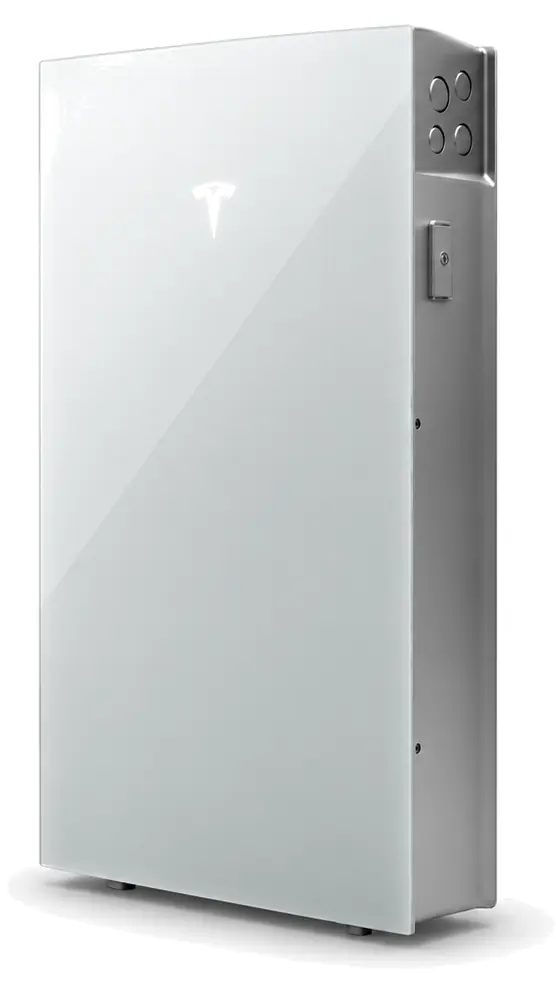
CompareVolt rating
6.8 out of 10
Adds storage beside existing solar or a Powerwall 2, but it’s held to 5 kW and no open VPP we track names it.
6.8 out of 10
- Warranty10 yrs, unlimited home use, 70% kept
- Functionality13.5 kWh, 5 kW; one-phase backup
- VPP readinessNo open program we track names 3AC
- Australian backingSince 2010; claim costs not stated
How this score adds up
| Warranty 8.0 (30%) | |
|---|---|
| Term: 10 years | 2.0 of 3 |
| Keeps 70% at year 10 | 1.5 of 2 |
| Home use: unlimited cycles | 3.0 of 3 |
| Conditions: must stay registered and online | 1.5 of 2 |
| Functionality 8.0 (35%) | |
| Power and backup 7.5 · 60% of Functionality | |
| Continuous power: 5 kW | 3.0 of 4 |
| Backup equipment: Backup Gateway 2, the datasheet's islanding device | 2.0 of 2 |
| Backup output: up to 5 kW | 1.5 of 2 |
| Three-phase homes: one phase only | 1.0 of 2 |
| Capacity and expansion 9.0 · 30% of Functionality | |
| Largest documented system: 54 kWh (one 3AC with 3 Expansion units) | 4.0 of 4 |
| Adding later: 3 Expansion units on revision J or later; up to 4 units per Gateway | 3.0 of 4 |
| Usable figure: 13.5 kWh, agreed | 2.0 of 2 |
| Enclosure 7.0 · 10% of Functionality | |
| Enclosure rating: IP55 | 7.0 of 10 |
| 7.5 × 60% + 9.0 × 30% + 7.0 × 10% = 7.9, rounded to the nearest half point: 8.0 | |
| VPP readiness 1.0 (15%) | |
| Open programs: none open | 0.0 of 8 |
| Warranty room for VPP use: 2.8 MWh per kWh | 1.0 of 2 |
| Australian backing 7.0 (20%) | |
| Presence: Tesla Motors Australia Pty Ltd, published contacts | 3.0 of 3 |
| In Australia since 2010 | 2.0 of 2 |
| Claim route: installer first, then Tesla | 1.5 of 2 |
| Claim costs: not stated | 0.5 of 3 |
| Overall: 8.0 × 30% + 8.0 × 35% + 1.0 × 15% + 7.0 × 20% = 6.75, rounded to one decimal: 6.8 | |
Rubric 1.0 · scored 17 Nov 2026 · How we rate batteries · Source documents
Rated so far: 38 batteries, from 4.4 to 8.2. Compare similar batteries · Use the quote checklist
In a nutshell
What’s good
- Keeps your solar inverter. An AC battery that sits beside an existing solar inverter, or in a home with no solar at all.
- Counted as storage only. Tesla says a 5 kW maximum and no solar input classify it as an energy storage system, with access to higher inverter capacity allowances.
- Grows to 54 kWh. Up to three Expansion units take one 3AC of revision J or later to 54 kWh usable; a system has seven units at most.
2 more good points
- Joins a Powerwall 2 system. Tesla’s 3AC manual allows one 3AC and up to three Expansion units with up to four Powerwall 2s and Backup Gateway 2.
- Unlimited home-use cycles. Under Tesla’s Powerwall warranty, solar self-consumption, time-based control and backup have no throughput cap for ten years.
What to watch
- No VPP names it. Four of the five open VPPs we track that list Tesla name Powerwall 2 and 3, not 3AC; Origin’s “AC Powerwall” we read as Powerwall 2.
- 5 kW per unit. Everything on backup shares 5 kW per unit on the backup phase; Tesla says a 5 kW setup needs two units to run a Tesla vehicle charger on backup.
- One-phase backup. On a three-phase supply only the phase chosen at set-up is backed up, and three-phase loads or solar must stay off it.
2 more things to watch
- Solar backup limit. Solar on the backup circuit is capped at 5 kW AC per 3AC, or 10 kW with Expansion units; damage from excess solar in an outage isn’t covered.
- Not on Tesla’s sales pages. Tesla Australia’s Powerwall page offers Powerwall 3 and 3P, and its order page Powerwall 3, so a 3AC comes through an installer’s quote.
Good fit for: Homes keeping their solar inverter, or Powerwall 2 owners adding storage, whose installer quotes a Powerwall 3AC and whose backup needs fit 5 kW per unit.
Look elsewhere if: You want solar panels wired to the battery, need more than 5 kW from one unit, or want to join a VPP straight away.
All specifications and notes
Capacity and power
| Usable capacity | 13.5 kWhUsable energy in the reviewed configuration. |
|---|---|
| Continuous power output | 5 kW ACFixed at 5 kW (5,000 VA), single-phase. Standard Powerwall 3 can be set to 5, 10 or 11.04 kW. |
| Solar connection | None: AC onlyStorage only: solar panels can’t connect to it, now or later. Existing solar stays on its own inverter. |
| Warranty | 10 yearsIf Tesla’s Powerwall warranty applies, as its part number indicates: keeps 70% of 13.5 kWh, and non-home uses are capped at 37.8 MWh. |
Manufacturer’s figures
As stated in the manufacturer’s Australian datasheet. Only the IP rating feeds the score; the rest are shown for reference.
| IP rating | IP55The maker’s rating for dust and water getting in, which matters on an outdoor wall.Enclosure IP55; IP67 battery and power electronics, IP55 wiring compartment. Lower one shown |
|---|---|
| Weight | 130 kgWhether it can go on a wall, and how the installer has to handle it.One Powerwall 3AC unit |
| Dimensions | 1,105 × 609 × 193 mmWhether it fits the wall or cupboard where the installer plans to put it.Includes the glass front cover |
| Charge power | 5 kWHow fast it can soak up solar, or a cheap or free power window.Maximum continuous charge power of one Powerwall 3AC (21.7 A AC) |
| Operating temperature | −20°C to 50°CWhether it suits a hot garage or an outdoor wall where you live.Performance may be de-rated above 40°C |
| Noise | < 50 dB(A) typical, < 62 dB(A) maximumMatters if it sits near a bedroom or a neighbour’s window.Measured at 1 m |
More specifications
| Part number | 1707000-70-yStandard Powerwall 3 is 1707000-30-y. Clean Energy Council certificate BAT-998, approved 5 May 2026. |
|---|---|
| Adding storage | Up to 3 Expansion unitsOn the leader 3AC, 13.5 kWh usable each, adding energy but not power. Tesla lists 3AC units of revision J or later as able to take them. |
| Warranty energy limit | Unlimited or 37.8 MWhUnlimited for solar self-consumption, time-based control and backup; 37.8 MWh for any other use, measured at AC output. |
| Motor starting | 185 A per unitLocked-rotor amps per 3AC; check air conditioners and pumps on the backup circuit against it. |
What the system needs
| Powerwall 3AC | A 13.5 kWh battery with a 5 kW AC inverter and no solar input, part number 1707000-70-y. This review doesn’t cover standard Powerwall 3. |
|---|---|
| Backup Gateway 2 | Connects the system to the grid, detects outages and provides backup. Fully off-grid systems aren’t supported. |
| Existing solar inverter | Optional. Solar stays on its own inverter; on the backup circuit it’s limited to 5 kW AC per 3AC, or 10 kW with Expansion units. |
A storage-only version of Powerwall 3, with no solar input and a fixed 5 kW output, installed with Backup Gateway 2. This review is for homes whose quote names a Powerwall 3AC.
Capacity and power
This review covers Powerwall 3AC, part number 1707000-70-y, with Backup Gateway 2. Tesla’s Australian datasheet gives 13.5 kWh usable and a fixed 5 kW output (5,000 VA) on a single phase. Standard Powerwall 3 (1707000-30-y) has the same size, weight and 13.5 kWh, and uses the same Gateway, but adds a built-in solar inverter and can be set to 5, 10 or 11.04 kW.
Tesla says a 5 kW maximum and no solar input classify the 3AC as an energy storage system, which can access higher inverter capacity allowances. Whether that lets you connect more at your address depends on your network’s rules, so ask the installer to show the network’s connection approval.
Up to three Expansion units connect to the leader 3AC, and Tesla’s installation manual gives each 13.5 kWh usable (the datasheet labels the same 13.5 kWh “nominal”), so one 3AC can reach 54 kWh. The manual says only 3AC units of revision J or later (part number 1707000-xx-J onwards) take Expansion units. The Clean Energy Council’s approved list records the same 27 to 54 kWh models. Expansion units add storage, not power: output stays at 5 kW per 3AC. Up to four 3ACs can share a Backup Gateway 2, with seven units in all at most.
Backup and installation
Plan backup around 5 kW per unit. Tesla’s design guidance says only one phase gets backup during an outage, however many Powerwalls are installed, and three-phase loads or solar must stay off the backup circuit. Where several 3ACs are spread across three phases, only those on the backup phase run in an outage. Each 3AC handles motor starts up to 185 locked-rotor amps, and Tesla says a 5 kW setup needs two units to support a Tesla vehicle charger on backup (load guidance).
Existing solar stays where it is: Tesla’s system overview says solar strings can’t be connected to a 3AC, now or in future. On the backup circuit, Tesla allows up to 5 kW AC of solar per 3AC, or 10 kW with Expansion units (solar sizing). Too much solar can damage the battery during an outage, and Tesla says that damage is out of warranty.
The same manual lets one 3AC and up to three Expansion units join an existing system of up to four Powerwall 2s with Backup Gateway 2. It points to Tesla’s application note for the procedure, which is written for Powerwall 3 and doesn’t mention the 3AC, so ask the installer to confirm the 3AC steps in writing. Powerwall 2 owners should read our Powerwall 2 review for the recall and Gateway checks. The 3AC needs a grid connection: Tesla doesn’t support fully off-grid systems.
Warranty and ownership
We found no warranty document titled for the 3AC. The installation manual refers to a “Powerwall 3AC Warranty”, but Tesla Australia’s documents page lists the 3AC datasheet under Powerwall 3, beside the Powerwall warranty for Australia and New Zealand (revision 1.17, effective 3 September 2026). That warranty covers any Powerwall with one of its listed part numbers, and its Powerwall 3 row, 1707000-xx-x, takes in the 3AC’s 1707000-70-y, so we’ve scored the 3AC on its terms. Ask Tesla or the installer to confirm in writing which warranty document applies.
It gives ten years of defect cover and promises 70% of 13.5 kWh at ten years. Solar self-consumption (storing your own solar to use at home), time-based control and backup have unlimited cycles. Any other use, or a mix that includes one, is capped at 37.8 MWh of throughput, measured at the AC output. The warranty doesn’t mention VPPs (virtual power plants).
Working the warranty’s energy limits through at one full charge and discharge a day:
- Home use: no throughput limit.
- VPP and other uses: 37.8 MWh, about 2.8 MWh per usable kWh. At one full charge and discharge a day that is reached in about 7.7 years, before the 10-year term ends.
Buy through Tesla or a Tesla Certified Installer, and keep the battery registered and online. After an extended disconnection, or without registration, cover may drop to as little as four years from installation. Australian Consumer Law rights still apply.
Brand and Australian support
Support, warranty and listing evidence checked 17 November 2026. The rating uses Tesla’s Australian support record: Tesla Motors Australia Pty Ltd, on the Australian Business Register since 2010. Claims go first to the Tesla Certified Installer who sold the system. If you can’t reach that installer, or you bought from Tesla, you claim through Tesla, which needs a return authorisation (RMA) before anything is sent back. Tesla may repair the battery, replace it with an equivalent product (possibly refurbished) or refund an equivalent product’s market price. The warranty doesn’t say who pays for diagnosis, removal, reinstallation, travel or freight on an accepted claim.
The 3AC is recent: its Clean Energy Council approval dates from 5 May 2026 and Tesla’s Australian installation manual from July 2026. The ACCC’s recall list showed no recall naming the 3AC when we searched it on 17 November 2026. A new product’s documents say nothing about how claims will go.
Price and alternatives
Tesla doesn’t publish a 3AC price. Its Australian Powerwall page offers Powerwall 3 and 3P, and its order page Powerwall 3, so a 3AC comes through a Certified Installer’s quote. For comparison, the order page displayed $11,220 for one standard Powerwall 3 with Gateway and accessories on 17 November 2026, GST included, with installation and other charges extra.
Ask for the battery, any Expansion units, Backup Gateway 2, installation and switchboard work itemised, with any federal discount shown separately. If you’re installing new solar at the same time, also get a quote for standard Powerwall 3 and read our Powerwall 3 review: it can take panels directly and be set above 5 kW.
Who it suits
Use the battery size calculator to size storage from your evening use, then check your must-run appliances against 5 kW per unit. Four of the five open VPPs we track that list Tesla name Powerwall 2 and 3, not the 3AC; we read the “AC Powerwall” on Origin’s compatible battery list as Powerwall 2. Ask each VPP you’re weighing whether it accepts the 3AC before you count on joining. Keep the part number, Gateway and commissioning details for any warranty claim.
How it compares
Other reviewed batteries closest to 13.5 kWh of usable capacity.
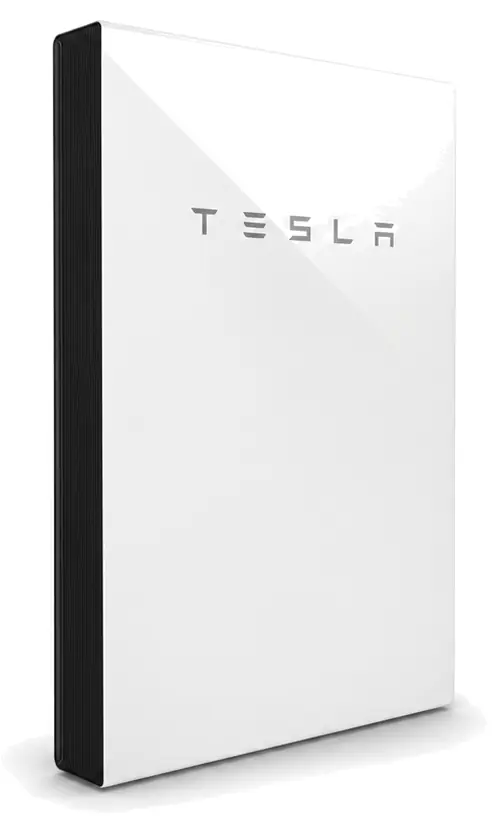
- Tesla Powerwall 2 review: recall, warranty and adding a Powerwall 3Rated 7.2 out of 1013.5 kWh usableWarranty: 10 yearsOne difference: VPP readinessTesla Powerwall 2 review: recall, warranty and adding a Powerwall 38.5Powerwall 3AC1.0
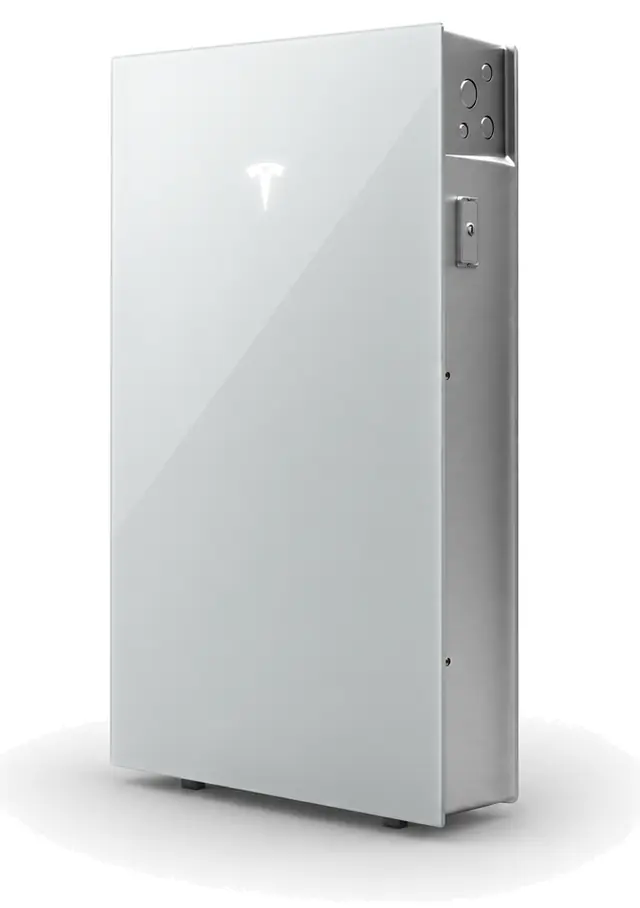
- Tesla Powerwall 3 review: Australian price and backup limitsRated 8.2 out of 1013.5 kWh usableWarranty: 10 yearsOne difference: FunctionalityTesla Powerwall 3 review: Australian price and backup limits9.0Powerwall 3AC8.0
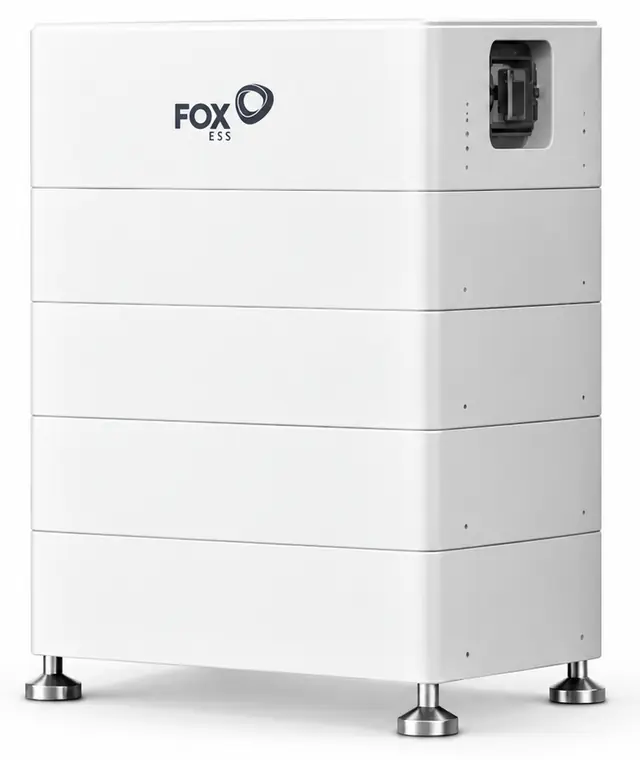
- FoxESS EQ4800-L3 battery reviewRated 6.8 out of 1013.98 kWh usablePerformance warranty: 10 years or 58.98 MWhOne difference: Australian backingFoxESS EQ4800-L3 battery5.5Powerwall 3AC7.0
Questions people ask
What is the difference between Powerwall 3 and Powerwall 3AC?
Standard Powerwall 3 has a built-in solar inverter and can be set to 5, 10 or 11.04 kW. Powerwall 3AC has no solar input and a fixed 5 kW output, so existing solar stays on its own inverter. Both store 13.5 kWh usable per unit and use Backup Gateway 2.
Can I add a Powerwall 3AC to my Powerwall 2?
Tesla’s 3AC installation manual allows one Powerwall 3AC and up to three Expansion units with up to four Powerwall 2s and Backup Gateway 2, pointing to Tesla’s application note for adding a Powerwall 3. Neurio meters aren’t compatible with the 3AC.
Can I connect solar panels to a Powerwall 3AC?
No. Tesla’s manual says it is storage only and solar strings can’t be connected, now or in future; it shuts down if they are. Solar connects through a separate inverter.
Which VPPs accept the Powerwall 3AC?
None of the open programs we track names it. ActewAGL, AGL, Amber and ENGIE list Powerwall 2 and Powerwall 3 but not 3AC; Origin lists “AC Powerwall”, which we read as Powerwall 2 (checked 14–16 November 2026). Ask each program before you sign up.
Is the Powerwall 3AC on the approved battery list?
Yes. The Clean Energy Council approved it on 5 May 2026 (certificate BAT-998, expiring 31 December 2027) at 13.5 to 54 kWh with up to three Expansion units. Your installer confirms whether your installation qualifies for any discount.
How long will 13.5 kWh last?
Divide 13.5 kWh by your average power use: about 13.5 hours at 1 kW or 4.5 hours at 3 kW. One unit supplies at most 5 kW continuously.
Before you accept a quote
Tesla doesn’t publish a price for this battery, so the installed price comes from your quotes.
- The quote names Powerwall 3AC and part number 1707000-70-y (revision J or later if you’ll add Expansion units), plus Backup Gateway 2.
- It lists the backed-up circuits, the backup phase on a three-phase supply, and how 5 kW per unit covers your largest loads.
- Existing solar on the backup circuit stays within 5 kW AC per 3AC, or 10 kW with Expansion units.
- The installer is a Tesla Certified Installer, names the warranty that applies and checks registration and internet setup.
- If you plan to join a VPP, the program confirms in writing that it accepts Powerwall 3AC.
Estimate the federal battery certificates for 13.5 kWh usable (opens in a new tab)
Check the model in your quote
Check that your quote names Powerwall 3AC in the configuration this review covers.
Other Tesla lines: Tesla batteries
Australian support and warranty claims
- Australian presence
- Tesla Motors Australia Pty Ltd, published contacts
- In Australia since
- 2010
- Where claims go
- Installer first, then Tesla
- Claim costs
- Not stated
Tesla Australian contact details (opens in a new tab) · Warranty document (opens in a new tab) · Checked
VPPs that list Tesla Powerwall
Your exact battery, inverter and address still need approval; inclusion does not confirm warranty cover. How VPPs work.
No open program in our records lists this family for the Powerwall 3AC line. This is not a provider eligibility decision. Browse all VPPs.
Not shown: ActewAGL Battery Power Top-Up, AGL VPP, Amber SmartShift, ENGIE VPP and Origin Loop (Battery Lite). Their Tesla lists don’t name Powerwall 3AC.
Source documents
6 documents
The documents behind this rating. Where we keep a copy, it is unmodified and dated; check the manufacturer for the latest version. We work out the rating with a fixed rubric from these documents and our VPP data. No manufacturer pays for a score or sees one before it is published.
- Tesla — Powerwall warranty, Australia and New Zealand (effective 3 Sept 2026) (PDF, opens in a new tab)
PDF, 201 KB · Used for: Warranty, Australian backing
Retrieved from energylibrary.tesla.com
- Tesla — Powerwall 3AC Australian datasheet (PDF, opens in a new tab)
PDF, 2.1 MB · Used for: Warranty, Functionality, Manufacturer’s figures, Review source
Retrieved from energylibrary.tesla.com
- energylibrary.tesla.com/docs/Public/EnergyStorage/Powerwall/3AC/InstallManual/BackupGateway/2/en-au/GUID-4D51ACEA-D3CE-4476-8C37-C13B5E522A16.html (opens in a new tab)
Used for: Functionality
- energylibrary.tesla.com/docs/Public/EnergyStorage/Powerwall/3AC/InstallManual/BackupGateway/2/en-au/GUID-4437D18F-8C6F-4782-B475-6AC3C9FF56B5.html (opens in a new tab)
Used for: Functionality
- www.tesla.com/en_au/support/energy/powerwall/install/installation-overview (opens in a new tab)
Used for: Australian backing
- abr.business.gov.au/ABN/View?id=68142889816 (opens in a new tab)
Used for: Australian backing