
Battery review · SBH200
Sungrow SBH battery review (SBH200)
By CompareVolt · Updated · Last full check
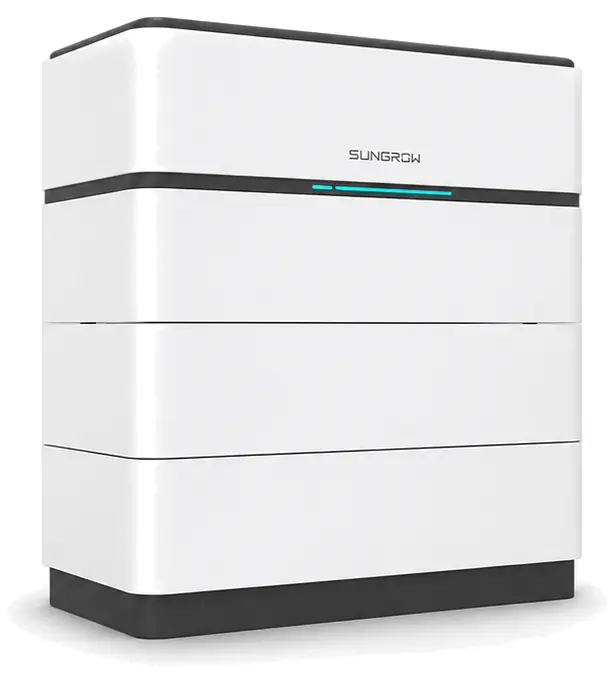
Family reference image
CompareVolt rating
7.7 out of 10
Unlimited home cycling on listed Sungrow hybrids; SH5.0/10RT, SH10T, SH15–25T need solar for full backup.
7.7 out of 10
- Warranty10 yrs, unlimited home; 3 conditions
- Functionality20 kWh, 14.08 kW DC; needs inverter
- VPP readiness6 programs; 56 MWh cap on other uses
- Australian backingSince 2014; costs partly covered
How this score adds up
| Warranty 7.0 (30%) | |
|---|---|
| Term: 10 years | 2.0 of 3 |
| Keeps 70% at year 10 | 1.5 of 2 |
| Home use: unlimited cycles | 3.0 of 3 |
| Conditions: needs iSolarCloud monitoring; ends 126 months after manufacture; heat limits | 0.5 of 2 |
| Functionality 7.5 (35%) | |
| Power and backup 7.5 · 60% of Functionality | |
| Continuous power: 14.08 kW battery DC; the inverter sets AC output | 3.5 of 4 |
| Backup equipment: needs a separate Sungrow hybrid inverter | 1.0 of 2 |
| Backup output: set by the inverter | 1.0 of 2 |
| Three-phase homes: listed with SH15T, SH20T and SH25T three-phase hybrids | 2.0 of 2 |
| Capacity and expansion 7.5 · 30% of Functionality | |
| Largest documented system: 40 kWh (SBH400: 8 modules in one stack) | 3.5 of 4 |
| Adding later: charge levels must match; SH RS takes 6 modules at most | 2.0 of 4 |
| Usable figure: 20 kWh, agreed | 2.0 of 2 |
| Enclosure 7.0 · 10% of Functionality | |
| Enclosure rating: IP55 | 7.0 of 10 |
| 7.5 × 60% + 7.5 × 30% + 7.0 × 10% = 7.45, rounded to the nearest half point: 7.5 | |
| VPP readiness 8.5 (15%) | |
| Open programs: 3 name SBH, 3 list Sungrow | 7.5 of 8 |
| Warranty room for VPP use: 2.8 MWh per kWh | 1.0 of 2 |
| Australian backing 8.5 (20%) | |
| Presence: Sungrow Australia Group Pty Ltd, North Sydney | 3.0 of 3 |
| In Australia since 2014 | 2.0 of 2 |
| Claim route: you or the installer claim online; installer troubleshoots first | 2.0 of 2 |
| Claim costs: freight to $200 and a labour rebate; on-site costs excluded | 1.5 of 3 |
| Overall: 7.0 × 30% + 7.5 × 35% + 8.5 × 15% + 8.5 × 20% = 7.7 | |
Rubric 1.0 · scored 16 Nov 2026 · How we rate batteries · Source documents
Rated so far: 38 batteries, from 4.4 to 8.2. Compare similar batteries · Use the quote checklist
In a nutshell
What’s good
- Broad Sungrow inverter fit. The chart lists SBH200 with all eleven Sungrow hybrids it covers, and rates it fully compatible with the SH5.0RS to SH10RS and the SH5T.
- 50 A battery current. Rated for 50 A continuous charge and discharge, giving 14.08 kW nominal power in Australia.
- Unlimited self-consumption cycles. Daily self-consumption and backup carry no throughput cap during the ten-year, 70% performance warranty.
1 more good point
- Room to expand. A stack takes up to eight 5 kWh modules and up to four stacks can run in parallel, subject to the inverter.
What to watch
- Inverter sets backup. The battery has no AC output of its own; household and backup power come from the paired Sungrow hybrid inverter and its wiring.
- Listed to January 2027. On 11 November 2026 the CEC list showed SBH200 listed to 4 January 2027, and the federal rebate needs the battery listed at installation.
- Coastal and weather siting. Despite IP55, the manual rules out sites within 500 m of the coast and asks for shelter from direct sun, rain and snow.
2 more things to watch
- Monitoring is a condition. Unmonitored systems are excluded, and incomplete or altered data cuts cover to at least four years from installation.
- Output caps on some inverters. The chart caps battery-only output at 8.4 kW with an SH5.0RT or SH10RT and 14.08 kW with an SH10T, SH15T, SH20T or SH25T; solar must make up the rest.
Good fit for: A household that wants about 20 kWh on a Sungrow SH5.0RS, SH6.0RS, SH8.0RS or SH10RS single-phase or SH5T three-phase inverter, which Sungrow's chart rates at full output, with room to add 5 kWh modules later.
Look elsewhere if: The site is within 500 m of the coast or can't shelter the stack from sun and rain, or you need full output on battery alone from an SH5.0RT, SH10RT, SH10T, SH15T, SH20T or SH25T.
All specifications and notes
Capacity and power
| Usable capacity | 20 kWhBattery-side usable energy at 25°C, 100% depth of discharge and 0.2C (a five-hour charge or discharge rate). Inverter losses and any backup reserve reduce what reaches household loads. |
|---|---|
| Battery nominal power | 14.08 kW DCAustralian nominal power at up to 50 A, derating with temperature and state of charge. A battery rating, not household AC output. |
| Household AC output | Depends on inverterRated fully compatible with SH5.0–10RS and SH5T. The chart caps battery output at 8.4 kW on SH5.0RT and SH10RT, and 14.08 kW on SH10T, SH15T, SH20T and SH25T. |
| Performance warranty | 10 years, 70% capacity120 months from installation or 126 from manufacture, whichever first. Unlimited cycles for self-consumption and backup; 56 MWh for other uses. |
Manufacturer’s figures
As stated in the manufacturer’s Australian datasheet. Shown for reference; they don’t change the score.
| Cell chemistry | LFP (LiFePO4), prismatic cellsThe type of battery cell the maker says is inside. |
|---|
More specifications
| Module layout | 4 × 5.0 kWh modulesStacked on a base under a switch gear unit (DC breaker and battery management unit, or BMU) and top cover. Each module weighs 45 kg. |
|---|---|
| Size and weight | 675 × 900 × 350 mm, 196 kgWidth × height × depth. Floor-standing, fixed to the wall with brackets. |
| Operating temperature | Charge 0–50°C, discharge −20–50°CStandard V11 version. The manual warns of derating above 40°C and says the heated V12 is currently available only in Europe. |
| Enclosure | IP55, indoor or outdoorThe manual still asks for shelter from direct sun, rain and snow, and rules out sites within 500 m of the coast. |
| Expansion on SH5.0–10RS | Up to 6 modulesOn SH5.0RS to SH10RS, seven or eight modules exceed the voltage range. SH5.0RT and SH10RT take up to seven; SH5T, SH10T and SH15T–SH25T eight. |
| Warranty temperature | Under 90 days at 35–40°C a yearAlso under 30 days above 40°C, and an average below 25°C for the rest of the year. |
What the system needs
| SBH200 battery stack | Four 5 kWh modules on a base, with a switch gear unit (DC breaker and BMU) and top cover. Floor-standing and bracketed to the wall. |
|---|---|
| Sungrow hybrid inverter | Converts stored energy to AC and sets backup output. The SH5.0RS and SH6.0RS take at most 30 A and 6,600 W from the battery. |
| Backup wiring | Off-grid power comes from the inverter's backup output to circuits the installer chooses. SH10RS: 9,999 W rated, switch time under 10 ms. |
| iSolarCloud monitoring | Commission monitoring and keep its data: the warranty excludes unmonitored systems and Sungrow assesses claims from the log history. |
The SBH200 stacks four 5 kWh high-voltage modules on a separate Sungrow hybrid inverter. This review covers that 20 kWh stack, which inverters Sungrow rates it with, and the listing and siting conditions to check.
Capacity and power
SBH200 is four 5 kWh modules: 20 kWh usable. The datasheet linked from Sungrow's Australian page gives a nominal (rated) voltage of 281.6 V, 50 A continuous current and 14.08 kW of "normal power". That power falls with temperature and state of charge (how full the battery is). The April 2026 manual marks the 14.08 kW as the Australian figure. The datasheet PDF dates from May 2026, though its pages carry 2024 "Version 4" and 2026 "Version 1" footers.
The 14.08 kW is a battery-side DC (direct current) figure. The inverter turns DC into AC, the mains power your home uses, and sets household output. Sungrow's SH5.0/6.0RS datasheet limits battery current to 30 A and power to 6,600 W, while the SH8.0/10RS datasheet allows 50 A and 10 kW. Sungrow's chart marks the SH5.0RS, SH6.0RS, SH5.0RT and SH10RT "Max 30A on battery".
A stack takes up to eight modules. Sungrow's product page and May 2026 cross-reference chart allow up to four stacks in parallel; the chart says they must be equal. On the single-phase SH5.0RS to SH10RS, the chart rates up to six modules compatible and seven or eight as outside the inverter's voltage range. The SH5.0RT and SH10RT take up to seven, and the SH5T, SH10T and SH15T–SH25T eight. Adding modules means matching states of charge and updating firmware under Sungrow's extension procedure.
The manual says the two- and three-module SBH100 and SBH150 are not for sale in Australia, although the datasheet, chart, product page and warranty list SBH150.
Backup and installation
Choose the inverter row before the battery. The May 2026 chart rates SBH200 fully compatible with the SH5.0RS, SH6.0RS, SH8.0RS and SH10RS single-phase inverters and the SH5T three-phase inverter. With an SH5.0RT or SH10RT it shows a battery-only maximum of 8.4 kW, and with an SH10T, SH15T, SH20T or SH25T 14.08 kW; solar has to supply the rest. Sungrow's Australian datasheet calls the SH15T, SH20T and SH25T three-phase. The product page calls SBH "fully compatible" with SHT, SHRS and SHRS-20 series inverters without those limits. The chart doesn't cover the SH3.0–4.0RS, SHRS-20, SH6.0RT, SH8.0RT, SH6T, SH8T or SH12T, so get Sungrow's written confirmation for those.
Backup comes from the inverter. The SH8.0/10RS datasheet gives the SH10RS 9,999 W of rated off-grid output, a 13,680 VA peak for 10 seconds and a switch time under 10 ms. The SH5/10T datasheet gives 5 kW and 10 kW of rated three-phase off-grid output. The product page promises "0ms" disruption; the inverter datasheets say under 10 ms. Agree the backed-up circuits and the reserve in writing.
The stack is rated IP55 (dust- and water-jet-protected) for indoor or outdoor floor installation, yet the manual asks for shelter from direct sun, rain and snow, rules out sites within 500 m of the coastline or prone to sea winds, and wants at least 600 mm clear above and in front and 350 mm at each side. The manual says the heated version is currently available only in Europe, so an Australian stack charges only from 0°C.
Warranty and ownership
Sungrow's Australian HV battery warranty, Version 9.0, effective 21 May 2026, names SBH200. It covers defects and 70% retained capacity for 120 months from installation or 126 months from manufacture, whichever comes first. Daily self-consumption and backup carry unlimited cycles. Any other use, or a combination that includes one, is limited to 56 MWh of discharge throughput (the total energy drawn out of it). Virtual power plants (VPPs) are not named. VPP control is neither self-consumption nor backup, so we take the 56 MWh limit to apply; ask Sungrow to confirm.
Working the warranty’s energy limits through at one full charge and discharge a day:
- Home use: no throughput limit.
- VPP and other uses: 56 MWh, about 2.8 MWh per usable kWh. At one full charge and discharge a day that is reached in about 7.7 years, before the 10-year term ends.
Performance cover applies where the battery's year has fewer than 90 days at 35–40°C, fewer than 30 days above 40°C and an average below 25°C otherwise; outside that, it may not apply. Unmonitored systems are excluded. With incomplete or altered iSolarCloud (Sungrow's monitoring service) data, Sungrow promises at least four years from installation or four years six months from manufacture. Over-discharge from a battery left unable to charge is also excluded, so keep the system connected through long absences.
Modules added later keep the original stack's performance dates. A new stack added on site counts as a new battery and needs its own warranty registration. Cover passes from an installer to the end user but is not otherwise transferable. Australian Consumer Law rights remain.
Brand and Australian support
Support evidence checked 11 November 2026. Sungrow was founded in 1997. The warranty names Sungrow Australia Group Pty Ltd in North Sydney as importer; that company has been registered since 26 February 2014 (checked 15 November 2026). The contact page lists a 1800 hotline and a service email. That gives you a local contact; it doesn't tell you how fast claims are handled.
You or your installer can lodge the claim online with proof of purchase, plus log data if the battery isn't on iSolarCloud; Sungrow asks you to contact the installer first for troubleshooting. Sungrow supplies parts or a new or refurbished replacement via standard freight. The installer may be eligible for a service rebate toward labour, and Sungrow covers transport both ways up to a total of $200. Travel, subsistence and on-site costs are excluded, and Sungrow can recover its costs if the battery has no defect or the warranty doesn't apply. The warranty index holds the current terms.
We found no Sungrow or SBH entry in the ACCC, CEC or Energy Safe Victoria recall registers. No independent long-term SBH test was found.
Price and alternatives
Sungrow Australia publishes no SBH price; its product page offers a contact form. Ask for an itemised installed quote covering the stack, inverter, backup wiring, switchboard work, commissioning and GST.
The federal program's eligibility rules require the battery and inverter to be on the Clean Energy Council list at installation. On 11 November 2026 the CEC list showed SBH200 (BAT-505) listed to 4 January 2027. The federal battery rebate's certificate factor also steps down on 1 January 2027, and at 20 kWh usable SBH200 sits within its first two capacity bands. If installation could fall after either date, ask the installer to confirm the listing and which factor the quote uses.
Sungrow's SBR uses 3.2 kWh modules at up to 30 A and runs from 6.4 to 25.6 kWh; SBH uses 5 kWh modules at up to 50 A, on a wider and deeper footprint. Both are covered by the same warranty document. These are specification differences, not a ranking; compare complete systems in the battery catalogue.
Who it suits
Estimate evening use with the battery size calculator and check that it, plus a backup reserve, calls for about 20 kWh. Confirm your phase supply and existing inverter first: an SH5.0RT, SH10RT, SH10T, SH15T, SH20T or SH25T changes what the battery alone can supply.
Ask the installer which circuits stay on in an outage, check the site against the coastal and clearance rules, and confirm the CEC listing on your installation date. Before paying, reconcile the module count, inverter model and warranty registration against the equipment delivered.
How it compares
Other reviewed batteries closest to 20 kWh of usable capacity.
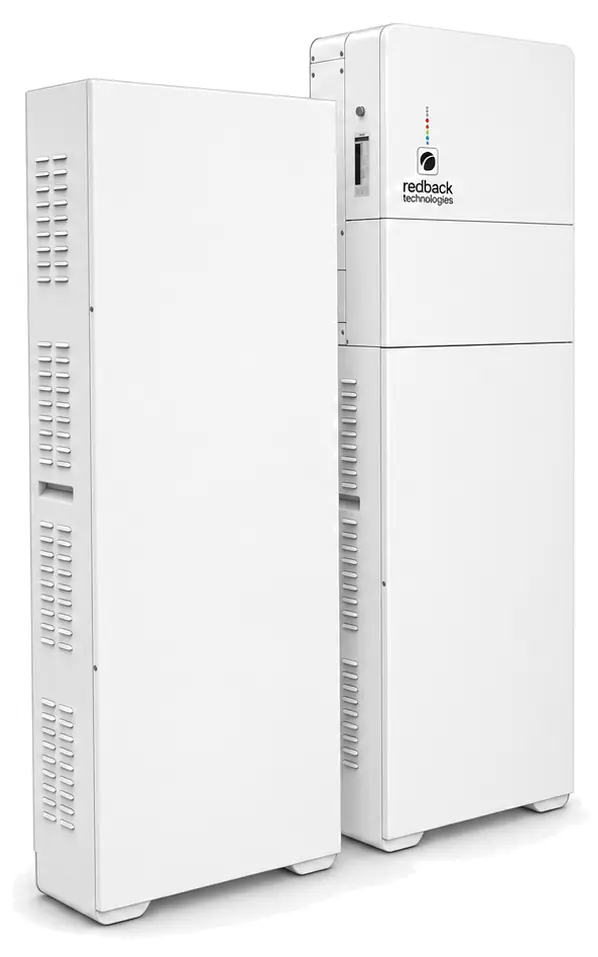
- Redback RED-P1 BE21HV reviewRated 5.4 out of 1019.95 kWh usableModule warranty: 10 years, 5 offlineOne difference: VPP readinessRedback RED-P1 BE21HV2.5SBH2008.5
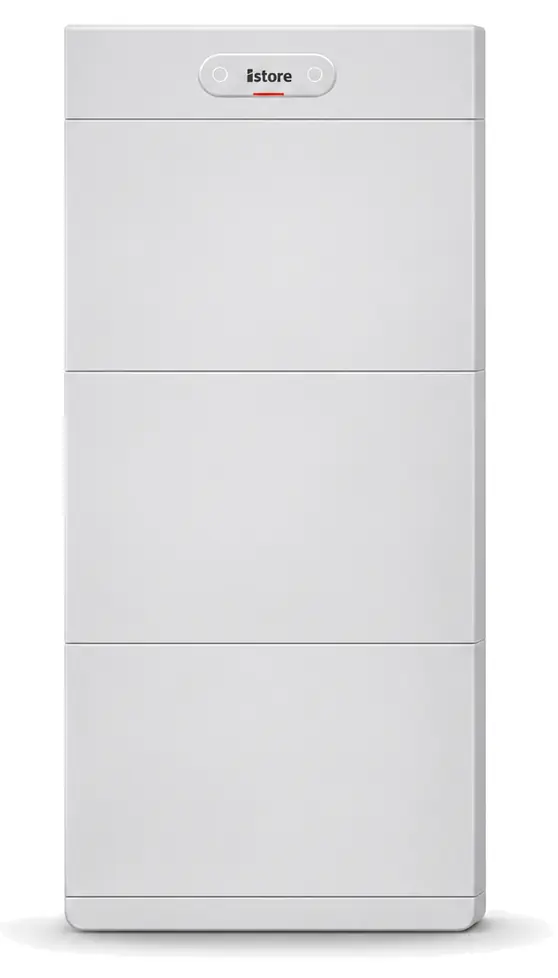
- iStore Smart Battery S1 review (IS-BATT-21000-S1)Rated 6.2 out of 1020.7 kWh usablePerformance warranty: 15 years or 28.84 MWhOne difference: WarrantyiStore Smart Battery S1 review (IS-BATT-21000-S1)6.0SBH2007.0
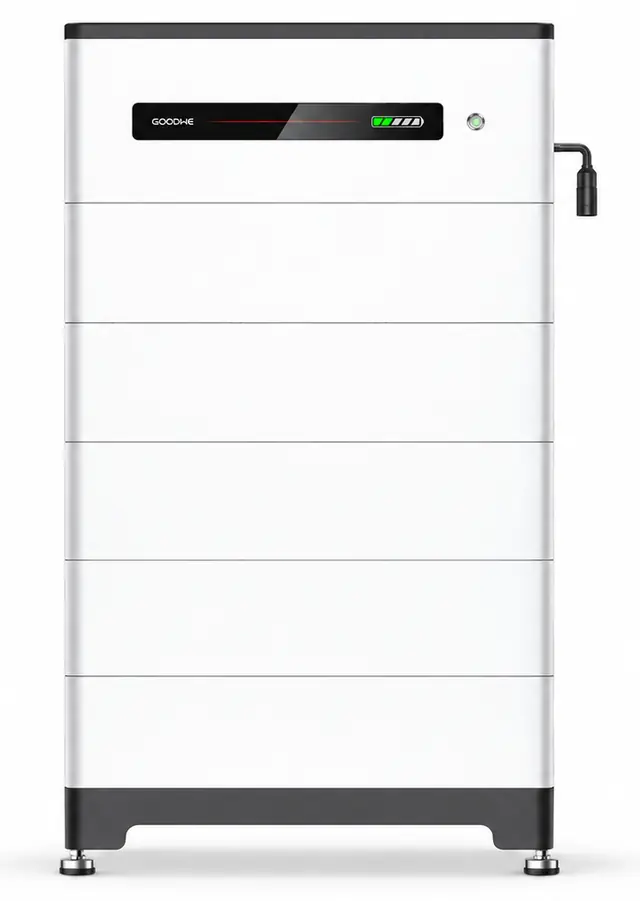
- GoodWe Lynx Home LX F16.4-H reviewRated 6.3 out of 1016.38 kWh usablePerformance warranty: 10 years or 41.93 MWhOne difference: FunctionalityGoodWe Lynx Home LX F16.4-H6.5SBH2007.5
Questions people ask
Which inverter works with the Sungrow SBH200?
Sungrow's May 2026 chart rates SBH200 fully compatible with SH5.0RS, SH6.0RS, SH8.0RS, SH10RS and SH5T. It caps battery-only output at 8.4 kW with an SH5.0RT or SH10RT and 14.08 kW with an SH10T, SH15T, SH20T or SH25T; solar makes up the rest.
Will the Sungrow SBH200 provide blackout backup?
Only through the inverter and its backup wiring. The SH10RS datasheet gives 9,999 W rated off-grid output, a 13,680 VA peak for 10 seconds and a switch time under 10 ms. Which circuits stay on is set by the installation.
How long is the Sungrow SBH200 warranty?
Defect cover and 70% retained capacity for 120 months from installation or 126 months from manufacture, whichever comes first. iSolarCloud monitoring is a condition, and performance cover also depends on an annual temperature profile.
Is the Sungrow SBH200 eligible for the battery rebate?
On 11 November 2026 the CEC list showed SBH200 (BAT-505) listed to 4 January 2027. The federal program needs the battery listed at installation, so have the installer confirm it on the day.
How much does the Sungrow SBH200 cost in Australia?
Sungrow Australia publishes no SBH price; its product page offers a contact form. The installed price comes from an itemised quote covering the stack, inverter, backup wiring and any rebate.
How long will 20 kWh last?
Divide 20 kWh by your average load: about 20 hours at 1 kW or 6.7 hours at 3 kW. That is battery-side energy, so inverter losses and a backup reserve reduce what reaches appliances.
Before you accept a quote
Sungrow doesn’t publish a price for this battery, so the installed price comes from your quotes.
- The quote names SBH200 (four 5 kWh modules with base, switch gear and top cover) and the exact Sungrow inverter model.
- For an SH5.0RT, SH10RT, SH10T, SH15T, SH20T or SH25T, it states the chart's battery-only power limit and how solar covers the rest.
- It lists the backed-up circuits and reserve, and shows the site meets the clearances, the 500 m coastal limit and the warranty temperature profile.
- It shows the CEC listing (BAT-505) on the install date, the number of STCs (small-scale technology certificates, the rebate unit), their price and factor.
- The installer commissions iSolarCloud monitoring and registers the warranty, and you keep the invoice and commissioning report.
Estimate the federal battery certificates for 20 kWh usable (opens in a new tab)
Check the model in your quote
Check that your quote names SBH200 in the configuration this review covers. Other sizes can differ in specifications and warranty.
Other sizes in this line: SBH150, 15 kWh usable · SBH250, 25 kWh usable · SBH300, 30 kWh usable · SBH350, 35 kWh usable · SBH400, 40 kWh usable
Other Sungrow lines: Sungrow batteries
Australian support and warranty claims
- Australian presence
- Sungrow Australia Group Pty Ltd, North Sydney
- In Australia since
- 2014
- Where claims go
- You or the installer claim online; installer troubleshoots first
- Claim costs
- Freight to $200 and a labour rebate; on-site costs excluded
Sungrow Australian contact details (opens in a new tab) · Warranty document (opens in a new tab) · Checked
VPPs that list Sungrow SBH
Compare programsThese programs list the battery family. “Names SBH” marks a program whose published list names this line. Your exact battery, inverter and address still need approval; inclusion does not confirm warranty cover. How VPPs work.
All programs shown require an electricity account with the provider. If you already use that retailer, a switch may not be needed; a particular plan may still be required. Credits are before electricity costs and any program fees.
6 listings · 3 recorded as naming SBH · Program A–Z
| Provider | Program | Names SBH | States listed | Reward snapshot | Last checked |
|---|---|---|---|---|---|
| ActewAGL | Battery Power Top-Up | Yes | ACT · south-east NSW | $240/year in bill credits | |
| AGL | AGL VPP | Yes | NSW · VIC · QLD · SA | Sign-up, ongoing and event credits SA ongoing credits conflict across published sources ($80 or $180 a year); AGL confirms your amount when you join. | |
| Amber | SmartShift | Not recorded | NSW · VIC · SA · ACT · QLD (Energex) | Variable wholesale export earnings | |
| CovaU Energy | VPP · BYO battery | Yes | NSW · VIC | 15c/kWh during VPP events | |
| GloBird Energy | ZEROHERO · VPP add-on | Not recorded | NSW · VIC · SA · QLD (Energex) | Conditional daily and export credits | |
| Diamond Energy | WATTBANK | Not recorded | NSW · VIC · SA · QLD (Energex) | $250–$450/year in bill credits |






ActewAGL
Battery Power Top-UpListed: ACT · south-east NSW
Names SBH
AGL
AGL VPPListed: NSW · VIC · QLD · SA
Names SBH
Amber
SmartShiftListed: NSW · VIC · SA · ACT · QLD (Energex)
CovaU Energy
VPP · BYO batteryListed: NSW · VIC
Names SBH
GloBird Energy
ZEROHERO · VPP add-onListed: NSW · VIC · SA · QLD (Energex)
Diamond Energy
WATTBANKListed: NSW · VIC · SA · QLD (Energex)
Reward snapshots — open the program for all credits, tariffs and conditions.
Source documents
8 documents
The documents behind this rating. Where we keep a copy, it is unmodified and dated; check the manufacturer for the latest version. We work out the rating with a fixed rubric from these documents and our VPP data. No manufacturer pays for a score or sees one before it is published.
- Sungrow Australia — HV battery limited warranty, Version 9.0 (effective 21 May 2026) (PDF, opens in a new tab)
PDF, 185 KB · Used for: Warranty, Australian backing
Retrieved from service.sungrowpower.com.au
- Sungrow — SBH150/200/250/300/350/400 high voltage LFP battery datasheet (PDF, opens in a new tab)
PDF, 346 KB · Used for: Functionality, Manufacturer’s figures, Review source
Retrieved from info-support.sungrowpower.com
- Sungrow Australia — SBR and SBH battery cross-reference chart, SBH150 update (May 2026) (PDF, opens in a new tab)
PDF, 181 KB · Used for: Functionality
Retrieved from service.sungrowpower.com.au
- www.sungrowpower.com/au/en/about-us/contact-us (opens in a new tab)
Used for: Australian backing
- abr.business.gov.au/ABN/View?abn=76168258679 (opens in a new tab)
Used for: Australian backing
Also linked in the review
Copies of documents the review text links. We don’t use them for the rating.
- Sungrow Australia — SBR/SBH HV battery series extension manual, V2.1 (Jul 2025) (PDF, opens in a new tab)
PDF, 495 KB · Used for: Review text
Retrieved from service.sungrowpower.com.au
- Sungrow Australia — SH15T/SH20T/SH25T hybrid three-phase inverter datasheet, V3 (AU) (PDF, opens in a new tab)
PDF, 242 KB · Used for: Review text
Retrieved from info-support.sungrowpower.com
- Sungrow Australia — SBR064/096/128/160/192/224/256 high voltage LFP battery datasheet, Version 1 (AU) (PDF, opens in a new tab)
PDF, 623 KB · Used for: Review text
Retrieved from info-support.sungrowpower.com