
Battery review · RED-P1 BE21HV
Redback RED-P1 BE21HV review
By CompareVolt · Updated · Last full check
CompareVolt rating
5.4 out of 10
Older model · availability not confirmed
About 20 kWh in one cabinet on listed Redback hybrids, but who backs its battery warranty is unclear.
5.4 out of 10
- Warranty10 yrs, 70%; 5 yrs if kept offline
- Functionality19.95 kWh, 10.56 kW DC; add inverter
- VPP readiness1 program only; lists Redback
- Australian backingSince 2015, but 2024 administration
How this score adds up
| Warranty 6.0 (30%) | |
|---|---|
| Term: 10 years | 2.0 of 3 |
| Keeps 70% at year 10 | 1.5 of 2 |
| Home use: 3.65 MWh per kWh | 2.0 of 3 |
| Conditions: 5 yrs if offline; 11-yr cap from manufacture; 50°C site limit | 0.5 of 2 |
| Functionality 7.5 (35%) | |
| Power and backup 7.5 · 60% of Functionality | |
| Continuous power: 10.56 kW battery DC; the inverter sets AC output | 3.5 of 4 |
| Backup equipment: comes from a separate Redback hybrid inverter | 1.0 of 2 |
| Backup output: set by the inverter | 1.0 of 2 |
| Three-phase homes: listed with Redback's RED-H3-T three-phase hybrids | 2.0 of 2 |
| Capacity and expansion 7.5 · 30% of Functionality | |
| Largest documented system: 33.25 kWh (one cabinet: BE35HV, which the manual fits only as a second) | 3.5 of 4 |
| Adding later: one more cabinet, on three-phase only; charge levels must match | 2.0 of 4 |
| Usable figure: 19.95 kWh, agreed | 2.0 of 2 |
| Enclosure 7.0 · 10% of Functionality | |
| Enclosure rating: IP54 | 7.0 of 10 |
| 7.5 × 60% + 7.5 × 30% + 7.0 × 10% = 7.45, rounded to the nearest half point: 7.5 | |
| VPP readiness 2.5 (15%) | |
| Open programs: 1 lists Redback | 1.0 of 8 |
| Warranty room for VPP use: 3.65 MWh per kWh | 1.5 of 2 |
| Australian backing 3.0 (20%) | |
| Presence: Redback Operations (ACN 605 542 541) had administrators appointed 5 Mar 2024 | 3.0 of 3 |
| In Australia since 2015 | 2.0 of 2 |
| Claim route: installer lodges the claim; faults can also be reported to Redback by phone | 1.5 of 2 |
| Claim costs: not stated | 0.5 of 3 |
| Capped at 3.0: insolvency event recorded | 7.0 becomes 3.0 |
| Overall: 6.0 × 30% + 7.5 × 35% + 2.5 × 15% + 3.0 × 20% = 5.4 | |
Rubric 1.0 · scored 17 Nov 2026 · How we rate batteries · Source documents
Rated so far: 38 batteries, from 4.4 to 8.2. Compare similar batteries · Use the quote checklist
In a nutshell
What’s good
- Single- or three-phase. Redback lists the cabinet with both its single-phase RED-H3-S and three-phase RED-H3-T hybrid inverters.
- One usable figure. Redback's datasheet and the CEC list agree on 19.95 kWh usable; the datasheet puts it at 95% depth of discharge.
- CEC-listed to 2027. All four RED-P1 sizes are on the CEC approved battery list as BAT-927, listed until 31 December 2027.
1 more good point
- Second cabinet on three-phase. A RED-H3-T system can take a second cabinet beside the first; single-phase systems can't.
What to watch
- Unclear warranty backing. The module warranty prints the company number of Redback Operations, which had administrators appointed in 2024.
- Not named; no seller found. Redback's homepage offers RED-H3 systems with a quote form, but its product pages don't name RED-P1, and we found no Australian seller listing that does.
- Support wound back, says Amber. Amber stopped new Redback SmartShift registrations, saying Redback's support teams had been wound back.
2 more things to watch
- Cover halves offline. Module cover falls from ten years to five without internet, and both warranties exclude damage caused by the owner not keeping a stable cloud connection.
- Redback inverters only. Both warranties exclude connection to non-approved third-party inverters or battery modules.
Good fit for: A household holding a quote for a Redback RED-H3 hybrid system, single- or three-phase, or an owner of one checking warranty cover and expansion.
Look elsewhere if: You want to keep another brand's inverter, can't keep the system online, or need a supplier who can show stock and support before you pay.
All specifications and notes
Capacity and power
| Usable capacity | 19.95 kWh95% of the 21 kWh storage capacity, battery side, per Redback's datasheet and the CEC list. Inverter losses and any backup reserve reduce what reaches your appliances. |
|---|---|
| Battery power | 10.56 kW DCThe cabinet's nominal power at 211.2 V and the recommended 50 A. What your home gets is the lower of this and the Redback inverter's rating. |
| Inverter | Redback hybrid onlyRedback's compatibility statement lists only its own RED-H3-S and RED-H3-T hybrids, RED-H4.1-T models and the ST10000. |
| Module warranty | 10 years, 5 offlineRED-P1-7000HV modules: ten years if the system stays online, five if not, and never more than 11 years from manufacture. |
Manufacturer’s figures
As stated in the manufacturer’s Australian datasheet. Shown for reference; they don’t change the score.
| Noise | <35 dBAMatters if it sits near a bedroom or a neighbour’s window.Measured in Redback's laboratory at 1 m in front of the cabinet |
|---|---|
| Cell chemistry | LiFePO4The type of battery cell the maker says is inside. |
More specifications
| Inside the cabinet | 3 × RED-P1-7000HV + BMS moduleEach battery is 7 kWh and 62 kg. BE14HV is the same cabinet with two batteries. |
|---|---|
| Size and weight | 1300 × 652 × 315 mm, 242 kgHeight × width × depth, installed with the BMS and batteries. The inverter stands on top. |
| Single-phase expansion | None: one cabinet maximumThe RED-H3-S system takes one BE14HV or BE21HV, so BE21HV is its largest size. |
| Three-phase expansion | One more cabinet beside itA RED-H3-T can take a second cabinet. The v1.2 manual uses BE28HV and BE35HV only in that second place. |
| Operating temperature | Charge −10–55°C, discharge −20–55°CThe module warranty excludes installations where the ambient temperature goes outside −20°C to 50°C. |
| Enclosure rating | IP54, indoor or outdoorThe manuals rule out full-sun sites and spots where wind-driven rain can get in. |
What the system needs
| BE21HV cabinet and batteries | The cabinet, one RED-P1-BMSHV module and three RED-P1-7000HV batteries. The inverter stands on top of this first cabinet. |
|---|---|
| Listed Redback hybrid inverter | A RED-H3-S05 to S10HV single-phase or RED-H3-T10 to T30HV three-phase hybrid. Its rating and the battery's both limit household and backup output. |
| Backup circuit | A dedicated backup circuit wired to the inverter's backup output, kept clear of heavy loads such as hot water and air conditioning. |
| Internet connection | Ethernet, 2.4 GHz Wi-Fi or an optional 4G module. The installation can't be completed without internet, and 5 GHz Wi-Fi isn't supported. |
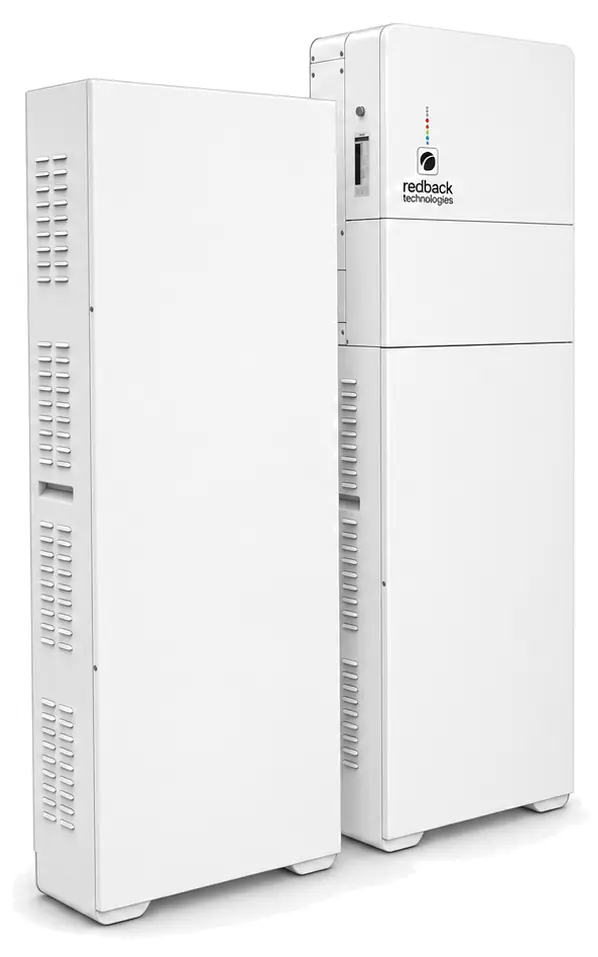
The RED-P1 BE21HV is a high-voltage battery cabinet for Redback's own RED-H3 hybrid inverters. This review covers it, Redback's two warranties and who stands behind them.
Capacity and power
RED-P1 BE21HV is a cabinet holding three 7 kWh batteries and a battery-management module. Redback's February 2026 datasheet gives it 21 kWh of storage and 19.95 kWh usable at 95% depth of discharge, at 211.2 V nominal. It has no inverter of its own: a Redback RED-H3 hybrid inverter stands on top of it, and Redback's inverter compatibility statement lists only Redback's own inverters. BE14HV is the same cabinet with two batteries. The taller BE28HV and BE35HV hold four and five.
The 10.56 kW nominal power is a battery rating. What reaches your power points is limited by both the battery and the inverter. The single-phase RED-H3-S datasheet gives a 50 A battery port rated from 4,999 to 9,999 W, depending on the model. The three-phase RED-H3-T datasheet gives two 50 A battery inputs and up to 29,999 W.
Growing the system depends on the phase. Redback's single-phase installation manual allows one cabinet, BE14HV or BE21HV, so BE21HV is as big as a single-phase system gets. Its three-phase installation manual lets a RED-H3-T take a second cabinet beside the first, and uses BE28HV and BE35HV only in that second place. When batteries are added or replaced, the installer must charge-balance them and update their firmware.
Some figures need Redback's confirmation. The three-phase inverter lists a nominal battery voltage of 180 to 800 V. BE21HV's 211.2 V nominal sits inside that, but its 165 V minimum falls below it, and the documents don't say what happens there. Redback's homepage puts the three-phase maximum at 56 kWh, while its October 2026 flyer says 70 kWh and gives a 380 mm cabinet depth against the datasheet's 315 mm.
Backup and installation
Backup comes from the inverter's backup output, wired to the circuits you choose. Redback's three-phase manual rates continuous battery-only backup from 9,999 VA on the T10HV to 29,999 VA on the T30HV, with higher peaks for three seconds. One BE21HV's nominal power is 10.56 kW, so ask Redback what a T15HV or larger delivers from a single cabinet. The single-phase manual gives 4,999 to 9,999 VA for the S05HV to S10HV. If the load goes over the limit, the system shuts itself down. Output drops above 45°C and stops above 60°C.
Keep heavy loads and medical equipment off the backup circuit. The manual lists fridges, freezers, fans, low-energy LED lights, small appliances and electronics as suitable, and rules out critical medical devices, hot water, air conditioners and heaters, ovens, cooktops, spas, saunas and pool pumps. Both manuals say the system isn't meant for life-support or other medical equipment. Batteries must be fitted if a backup circuit is connected, because solar alone can't hold it up.
The cabinet is IP54 and can go indoors or out. The manuals rule out full-sun sites, exposed spots where wind-driven rain can get in, off-grid homes, generators and 5 GHz Wi-Fi. Installation can't be completed without internet, and the owner must keep a stable connection to the Redback cloud. The three-phase manual sets out the AS/NZS 5139 clear zones around the system. An existing grid-tied solar inverter can be AC-coupled to charge the battery.
Warranty and ownership
Two Redback warranties apply, one for the cabinet and one for the batteries inside it. Redback's document centre lists both, along with the installation manuals; the warranties forbid copying, so we keep no copies.
The vJ502 cabinet warranty, effective 19 March 2026, covers RED-P1 cabinets made from 1 April 2025 and installed in Australia by an accredited installer. It ends 10 years after installation or 11 years after manufacture, whichever comes first, and gives included network adaptors and meters two years. It states no capacity figure.
The battery-module warranty, vF112 (effective 1 June 2026), covers RED-P1-7000HV batteries made from 1 January 2025. It runs ten years if the system stays connected to the internet through its monitoring, and five years if not, ending 10 years after installation or 11 after manufacture, whichever comes first. Its capacity promise runs from the earlier of installation or manufacture, in practice the day the battery was made: no more than 30% degradation for ten years "and for a minimum cumulative energy throughout of 3.65MWh per kWh usable capacity, whichever occurs later". Read literally, that never ends cover before ten years; our rating counts the 3.65 MWh per kWh as the limit, the stricter reading.
Working the warranty’s energy limits through at one full charge and discharge a day:
- Energy limit: 3.65 MWh per usable kWh. At one full charge and discharge a day that is reached in about 10.0 years, so the 10-year term ends first.
Both warranties exclude damage caused by failing to keep a stable connection to the Redback cloud, off-grid use and non-approved third-party products. The module warranty also excludes installations where the ambient temperature goes outside −20°C to 50°C, and asks for faults to be reported within 30 days. If the product is no longer available, Redback may supply a refurbished or equivalent one. The same passage describes a "time value replacement guarantee" based on straight-line depreciation over ten years, without making clear when it applies. The cabinet warranty excludes normal wear and tear, and a claim lodged outside a "Claim Period" Redback sets at its "reasonable discretion". Moving the system without Redback's written approval voids cover. A new owner must register with Redback. Neither warranty mentions VPP use, and Australian Consumer Law rights are separate.
Brand and Australian support
Support evidence checked 17 November 2026. The datasheet, the CEC listing and the cabinet warranty name the manufacturer as Redback Energy Pty Ltd, and the datasheet and cabinet warranty give its address in Salisbury, Queensland, and its company number, ACN 682 761 548. Its ABN has been active since 2 December 2024, and we found no ASIC insolvency notice under that company number.
The module warranty, which covers the batteries, also names Redback Energy but prints ACN 605 542 541. That number belongs to Redback Operations Pty Ltd, which gave the previous RED-P1 module warranty (vF111, in force from June 2025 to February 2026). ASIC's notice of 8 March 2024 shows administrators appointed to Redback Operations on 5 March 2024, and a notice dated 15 July 2024 lists it as subject to a deed of company arrangement. Both warranties list Redback Operations and Luceo Australia as importers. Our rating follows Redback Operations, the company whose number the module warranty prints: its ABN record dates from 2 June 2015, and its 2024 administration caps Australian backing. Ask Redback in writing which company accepts a RED-P1 battery claim.
Claims start with your installer, who diagnoses the fault and lodges the claim with Redback Customer Support; the module warranty also lets you report a fault to Redback by phone. Redback's contact page lists an address in Salisbury, Queensland, 1300 240 182 (weekdays 8am to 4pm) and customersupport@redbacktech.com. Redback repairs or replaces on site or at an authorised repair facility. Neither warranty says who pays labour, travel or freight on an accepted claim. If a claim is rejected after testing, you may have to repay Redback's costs, and if you dispute its finding on a battery, you pay for independent testing unless the claim proves valid. Both warranties say to contact your installer, supplier or Redback, but neither sets out a process if your installer has closed.
Amber stopped accepting new Redback systems for SmartShift, saying Redback's support teams "have been wound back". Systems already connected may keep working, Amber says, but it can't guarantee they'll stay stable long term. That is Amber's account, updated 27 October 2026, not Redback's. RED-P1 joined the CEC list in March 2026, so there is no long field record yet, and a decade-old brand name doesn't tell you how claims go now.
Price and alternatives
Redback publishes no RED-P1 price, and its product pages don't name it. Its homepage lists the RED-H3 single-phase and three-phase systems with a quote form, and we found no installer, retailer or wholesaler listing that names RED-P1. Redback's All-Energy 2026 range shows the three-phase system, which the flyer pairs with RED-P1 cabinets. Its single-phase systems there are the low-voltage Gen-3 and the new Gen-4 with RED-P2 cabinets; the RED-H3-S system that takes RED-P1 isn't shown. Before paying, get written stock and delivery dates for the exact cabinet and inverter.
RED-P1-BE21HV is on the CEC approved battery list as BAT-927, listed until 31 December 2027, which the federal battery rebate requires. Have the quote show the certificate count and price.
RED-P1 is a different product from Redback's Smart Battery SB9600, which has its own 4.5 kW inverter, is AC-coupled to existing solar and is documented only for single-phase homes. RED-P1 has no inverter, needs a listed Redback hybrid and works on single- or three-phase. These are specification differences, not a ranking; compare complete systems in the battery catalogue.
Who it suits
If you already own one, keep it online: the module warranty drops to five years without internet. Report faults to your installer within 30 days, register with Redback if you bought a house that has one, and remember that on three-phase a second cabinet means charge-balancing and a firmware update.
If you're comparing a quote, estimate your evening use with the battery size calculator and check whether about 20 kWh, less any backup reserve, covers it. On single-phase, BE21HV is the end of the road: there is no second cabinet. When the equipment arrives, match the labels and manufacture dates against the quote, because a battery made long before installation has less warranty left.
How it compares
Other reviewed batteries closest to 19.95 kWh of usable capacity.
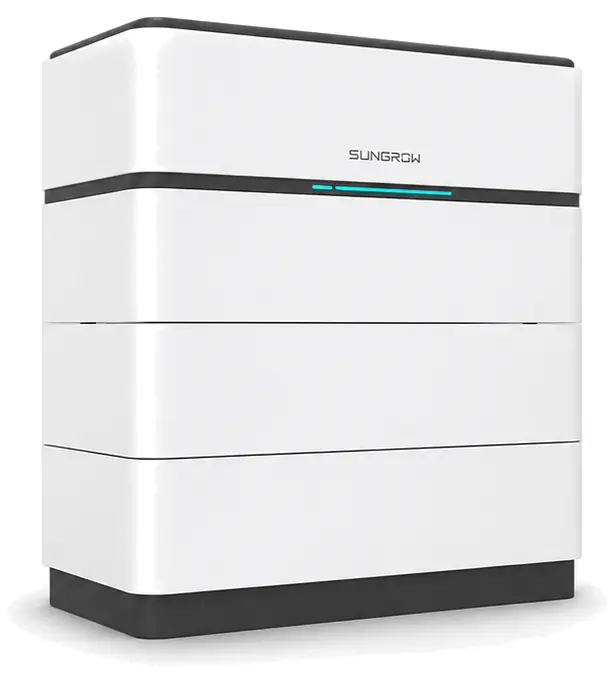
- Family reference imageSungrow SBH battery review (SBH200)Rated 7.7 out of 1020 kWh usablePerformance warranty: 10 years, 70% capacityOne difference: VPP readinessSungrow SBH battery review (SBH200)8.5RED-P1 BE21HV2.5
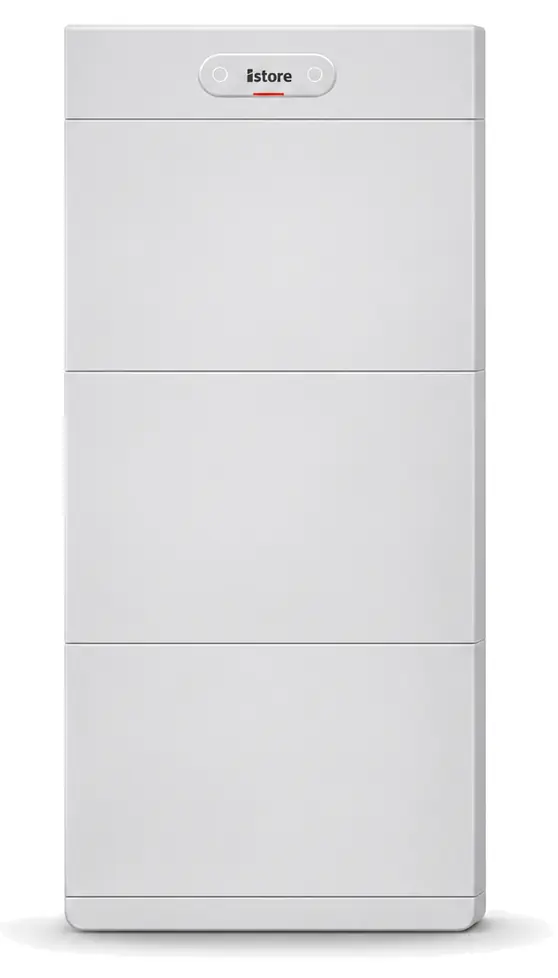
- iStore Smart Battery S1 review (IS-BATT-21000-S1)Rated 6.2 out of 1020.7 kWh usablePerformance warranty: 15 years or 28.84 MWhOne difference: Australian backingiStore Smart Battery S1 review (IS-BATT-21000-S1)8.5RED-P1 BE21HV3.0
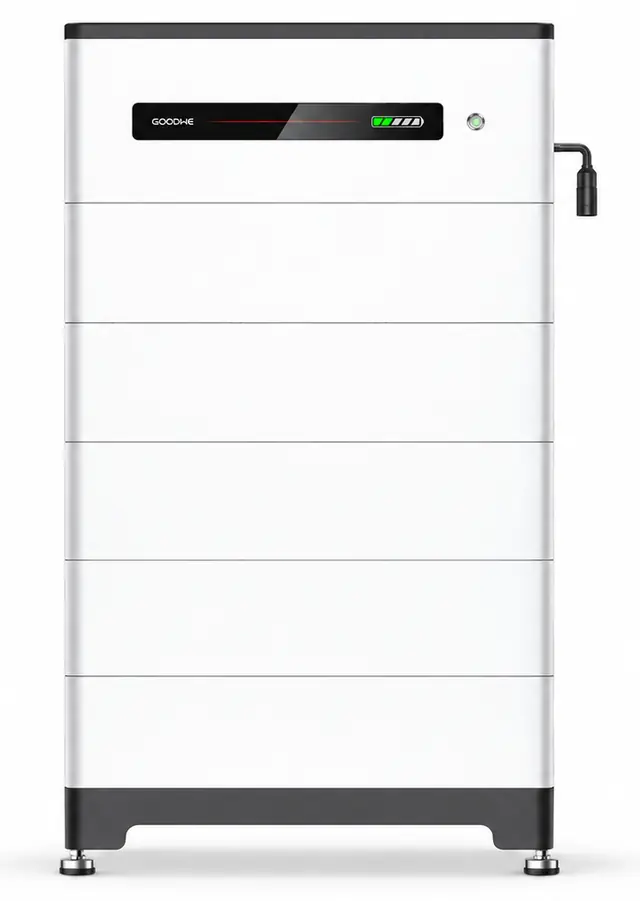
- GoodWe Lynx Home LX F16.4-H reviewRated 6.3 out of 1016.38 kWh usablePerformance warranty: 10 years or 41.93 MWhOne difference: FunctionalityGoodWe Lynx Home LX F16.4-H6.5RED-P1 BE21HV7.5
Questions people ask
Is the Redback RED-P1 still sold in Australia?
Not confirmed. Redback's product pages don't name RED-P1: its homepage offers RED-H3 hybrid systems with a quote form, and only its documents and October 2026 three-phase flyer name the cabinets. We found no seller listing or price, so ask for written stock and delivery dates.
Which inverter works with the Redback RED-P1?
Redback lists only its own: the RED-H3-S05 to S10HV single-phase and RED-H3-T10 to T30HV three-phase hybrids, RED-H4.1-T models and the ST10000. Its warranties exclude non-approved third-party inverters.
How long is the Redback RED-P1 warranty?
The battery-module warranty runs ten years if the system stays online and five if not, ending no later than 11 years after manufacture. A separate warranty covers the cabinet for ten years from installation, also ending no later than 11 years after manufacture, with no shorter offline term.
Will the RED-P1 back up my home in a blackout?
Only the circuits wired to the inverter's backup output. Redback's manuals rule out critical medical devices, hot water, air conditioners, ovens, cooktops, spas and pool pumps on them, and say the system isn't meant for life-support or other medical equipment.
How much does the Redback RED-P1 cost?
Redback publishes no price; its website takes quote and support enquiries. We found no installer price for RED-P1, so the installed price comes from an itemised quote.
How long will 19.95 kWh last?
Divide 19.95 kWh by your average load: about 20 hours at 1 kW or 6.7 hours at 3 kW. That's battery-side energy, so inverter losses and any backup reserve cut what reaches your appliances.
Before you accept a quote
Redback Technologies doesn’t publish a price for this battery, so the installed price comes from your quotes.
- The quote names RED-P1-BE21HV, three RED-P1-7000HV batteries, the RED-P1-BMSHV module and the exact RED-H3 inverter model.
- You have written stock and delivery dates and the batteries' manufacture date, which starts the capacity promise and caps cover at 11 years.
- It lists the backup circuits and, for a T15HV or larger, what the inverter delivers from one cabinet with no solar.
- It says how the system stays online (Ethernet, 2.4 GHz Wi-Fi or 4G): the module warranty drops to five years without internet.
- Redback confirms in writing which of its companies accepts a RED-P1 claim and who pays on-site costs.
Estimate the federal battery certificates for 19.95 kWh usable (opens in a new tab)
Check the model in your quote
Check that your quote names RED-P1 BE21HV in the configuration this review covers. Other sizes can differ in specifications and warranty.
Other sizes in this line: RED-P1 BE14HV, 13.3 kWh usable · RED-P1 BE28HV, 26.6 kWh usable · RED-P1 BE35HV, 33.25 kWh usable
Other Redback lines: Redback batteries
Australian support and warranty claims
- Australian presence
- Redback Operations (ACN 605 542 541) had administrators appointed 5 Mar 2024
- In Australia since
- 2015
- Where claims go
- Installer lodges the claim; faults can also be reported to Redback by phone
- Claim costs
- Not stated
Redback Technologies Australian contact details (opens in a new tab) · Warranty document (opens in a new tab) (PDF on Redback Technologies’ site) · Checked
VPPs that list Redback Technologies Battery
Compare programsThese programs list the battery family. Your exact battery, inverter and address still need approval; inclusion does not confirm warranty cover. How VPPs work.
This program requires an electricity account with the provider. If you already use that retailer, a switch may not be needed; a particular plan may still be required. Credits are before electricity costs and any program fees.
1 listing · Program A–Z
| Provider | Program | States listed | Reward snapshot | Last checked |
|---|---|---|---|---|
| GloBird Energy | ZEROHERO · VPP add-on | NSW · VIC · SA · QLD (Energex) | Conditional daily and export credits |

GloBird Energy
ZEROHERO · VPP add-onListed: NSW · VIC · SA · QLD (Energex)
Reward snapshots — open the program for all credits, tariffs and conditions.
Source documents
9 documents
The documents behind this rating. Where we keep a copy, it is unmodified and dated; check the manufacturer for the latest version. We work out the rating with a fixed rubric from these documents and our VPP data. No manufacturer pays for a score or sees one before it is published.
- digital.redbacktech.com/support-document/public/Redback%20Product%20Warranty%20Batteries%20vF112_20260703.pdf (opens in a new tab)
Used for: Warranty, Australian backing
No copy kept: the document does not permit reproduction, checked on
- digital.redbacktech.com/support-document/public/Hybrid%20HV%20Battery%20Warranty%20vJ502_20260319.pdf (opens in a new tab)
Used for: Warranty, Australian backing
No copy kept: the document does not permit reproduction, checked on
- Redback — RED-P1-BExxHV data sheet v1.0 (28 Feb 2026) (PDF, opens in a new tab)
PDF, 820 KB · Used for: Functionality, Manufacturer’s figures, Review source
Retrieved from digital.redbacktech.com
- Redback — RED-P1 inverter compatibility statement (23 Sep 2025) (PDF, opens in a new tab)
PDF, 493 KB · Used for: Functionality
Retrieved from digital.redbacktech.com
- digital.redbacktech.com/support-document/public/RED-P1-BE35HV%20series_Installation%20Manual%20v1.2_20260320.pdf (opens in a new tab)
Used for: Functionality
No copy kept: the document does not permit reproduction, checked on
- digital.redbacktech.com/support-document/public/Installation%20Manual%20-%20Redback%201-Phase%20HV%20Hybrid%20System%20v0.7.pdf (opens in a new tab)
Used for: Functionality
No copy kept: the document does not permit reproduction, checked on
- www.redbacktech.com/contact (opens in a new tab)
Used for: Australian backing
- abr.business.gov.au/ABN/View?abn=36605542541 (opens in a new tab)
Used for: Australian backing
- publishednotices.asic.gov.au/browsesearch-notices/notice-details/Redback-Operations-Pty-Ltd-605542541/9ef241c0-0e5d-4b72-96a0-455a6324f75b (opens in a new tab)
Used for: Australian backing