
FoxESS EQ4800-L3 battery review
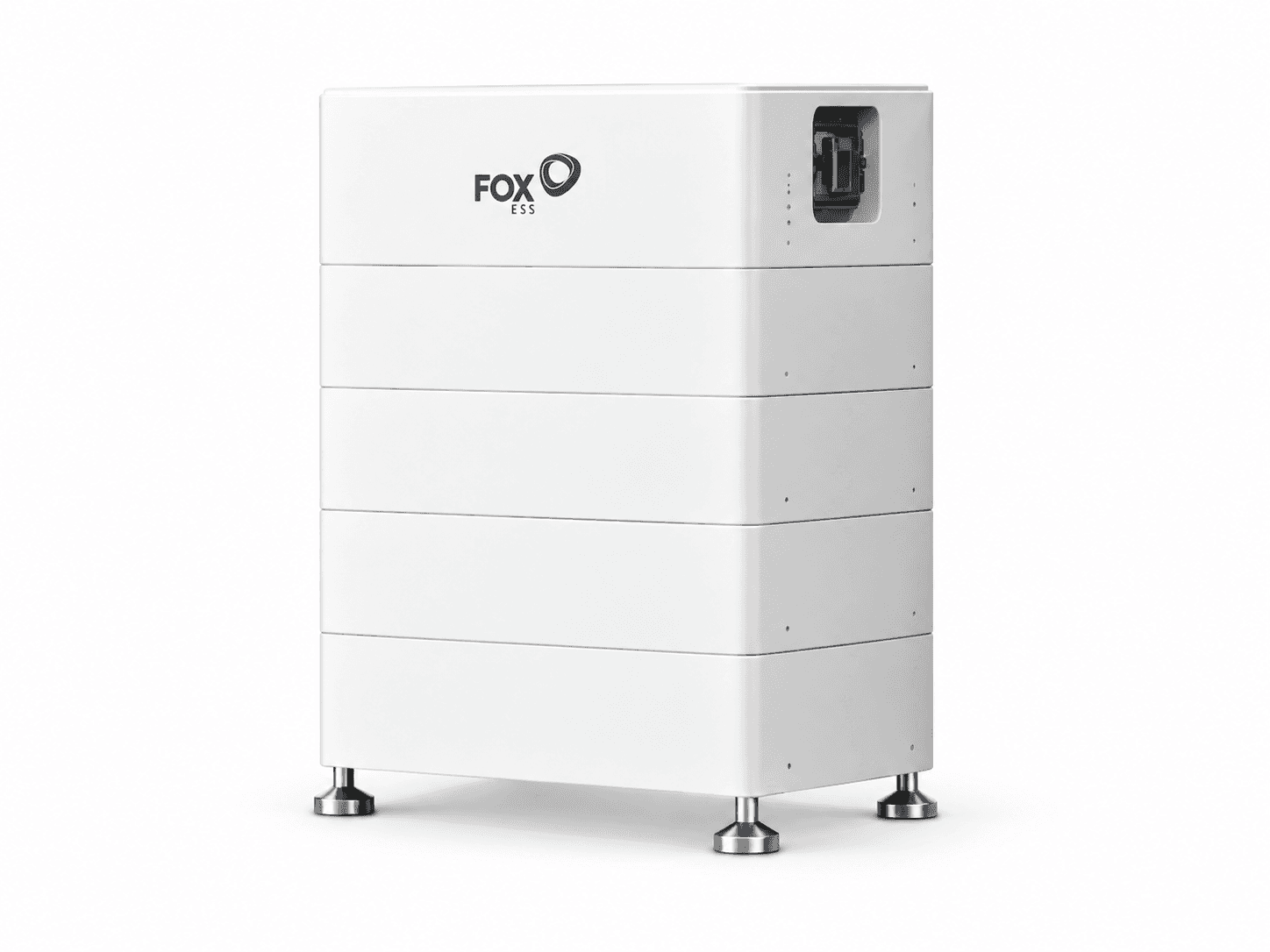
Australian model: EQ4800-L3 (3 modules)
The EQ4800-L3 combines three high-voltage battery modules with a separate FoxESS inverter. This review covers that stack, with particular attention to the inverter choice and its effect on backup.
Manufacturer sources checked 20 Sep 2026.
Our verdict
A useful modular option with a listed single-phase FoxESS inverter, but the three-module stack needs careful matching: current documents conflict on H3 Smart compatibility.
- Good fit for
- A household choosing a listed H1/AC1-G2 or KH/KA inverter and sizing storage around its evening use and essential loads.
- Consider another option if
- Your quote pairs three modules with H3 Pro, or assumes confirmed H3 Smart support without resolving FoxESS's conflicting guidance.
At a glance
- Usable capacity
- 13.98 kWh
- Published battery-side usable capacity at 100% depth of discharge. Inverter losses and a backup reserve reduce energy available to household loads.
- Source
- Battery nominal power
- 6.72 kW DC
- Battery rating, not guaranteed household AC or backup output. Current varies with temperature, cell voltage and state of charge.
- Source
- Household AC output
- Depends on inverter
- The exact inverter and module count must match. H3 Smart guidance conflicts; the listed H3 Pro configurations require at least four modules.
- Source
- Performance warranty
- 10 years or 58.98 MWh
- Whichever comes first, with 70% energy retention; also capped at 125 months from manufacture. Conditions apply.
- Source
Strengths
- The modular tower can grow beyond this three-module configuration, subject to inverter and installation requirements.
- The current compatibility table lists the three-module stack with H1/AC1-G2 and KH/KA single-phase inverters.
Limitations
- H3 Smart support is unresolved: the compatibility guide's summary allows three modules, while its detailed table rejects them.
- The battery needs a separate inverter and a commissioned backup circuit; buying the tower alone does not provide blackout protection.
- The specified charging range starts at 0°C, so a cold installation site can restrict when the battery charges.
System essentials
Three-module battery tower
SourceOne EQ4800-M main pack contains the controller and a battery module; two EQ4800-S support packs complete L3. Include the base and connection hardware.
Matched FoxESS inverter
SourceSelect the exact listed inverter for this module count. Its AC rating and battery limits determine simultaneous household output.
Backup wiring and commissioning
SourceFor H1/AC1-G2, emergency loads use the EPS port/internal bypass or a separately purchased external contactor. The installer must enable EPS and verify load limits.
Capacity and power
EQ4800-L3 means one main pack and two support packs. The August 2026 Australian datasheet gives this stack 13.98 kWh of nominal and usable storage. It is a battery with a DC connection to a separate inverter; EP11, ECS4800 and other EQ module counts are outside this review.
Stored energy and simultaneous appliance power are different. The nominal battery power above cannot be treated as guaranteed output at your power points. The compatibility table also flags combinations where the battery cannot supply the inverter's full rating without solar contributing.
The published series permits up to nine modules, but later additions need an installer to check compatibility and match the batteries' charge state. The installation manual also contains inconsistent maximum-count wording, so confirm the proposed expansion against the current configuration guide before ordering extra modules.
Backup and installation
Settle three-phase compatibility before accepting an L3 quote. The current EQ4800 guide's opening summary and H3 Smart illustration permit three modules, but its detailed table marks L3 as incompatible with every listed H3 Smart model. H3 Pro requires at least four modules. Obtain written FoxESS confirmation for an H3 Smart proposal.
For a listed H1/AC1-G2 pairing, the Australian inverter manual describes emergency loads connected through the EPS backup port/internal bypass or an external contactor. EPS is off by default and must be commissioned. Specify the circuits, appliance starting loads and reserve setting; the battery's capacity alone cannot establish whole-home backup or runtime. Other inverters need their own backup design.
The battery manual requires a ventilated position protected from direct sun, rain exposure and snow accumulation, despite its indoor/outdoor rating. Have the installer confirm the location, clearances and temperature limits before comparing quotes.
Warranty and ownership
The performance promise retains 70% energy until ten years from installation or 58.98 MWh throughput, whichever comes first, subject to a 125-month limit from manufacture. Older stock can therefore shorten the term. The policy covers battery modules; inverter and ancillary cover are separate.
Registration and connection to FoxESS at commissioning are stated preconditions, although a later clause recommends registration within six weeks and says within 36 months. Have the installer register at commissioning and retain proof. The policy requires accredited installation and operation between −10°C and 50°C; its upper limit is below the datasheet's 55°C operating maximum.
Claims go through the installer or FoxESS-authorised personnel. Keep purchase and commissioning records. The document does not state a continuous-internet deadline or name VPP use: obtain written clarification for your proposed program rather than infer coverage. Australian Consumer Law rights remain.
Brand and Australian support
Support evidence checked 21 September 2026. FoxESS's Australian site says the company was founded in 2019 and established an Australian branch in 2022; its contact page lists Springvale and St Leonards offices, a local email and phone numbers. That is a published route to support, not evidence of response times or failure rates. (company history, Australian contact page)
The current AU battery warranty V2.7 makes the installer or Fox-authorised personnel the claimants. If the installer enters administration or insolvency, it allows the end user or installer to appoint a local installer at their discretion and expense. Fox says it will approve and dispatch an available replacement within three working days, subject to availability; the installer must arrange return freight within 30 days. The policy does not clearly promise free labour, travel, removal/reinstallation or all freight, and may charge inspection or recover replacement costs for a non-defective return. Australian Consumer Law rights remain separate.
We did not verify an Australian recall for the reviewed EQ4800 configuration in the ACCC, CEC or Energy Safe Victoria registers checked on that date. No independent long-term EQ4800-L3 reliability test was verified. A small, self-selected SolarQuotes sample includes both prompt fault resolution and installation disputes, mostly for larger L9 systems; it cannot establish typical support or failure rates. Before paying, name the servicing installer, register the system at commissioning and obtain written labour and logistics responsibility if that installer disappears.
Price and alternatives
No fixed manufacturer installed price was verified. FoxESS's Australian contact page for product, price and availability enquiries provides a useful starting point. Request an itemised installed quote covering the three modules, base, inverter, backup switching, electrical work, commissioning and GST. The live product page does not establish local stock or lead time.
Compare complete systems in the solar-battery catalogue, particularly options with an integrated inverter if retaining your existing solar setup is a priority. For a three-phase proposal, compare a properly confirmed larger EQ configuration rather than assuming L3 will work. Current rebates and exact-model program eligibility were not reverified; have the supplier substantiate any deduction in the quote.
Who it suits
Bring overnight energy use and the appliances you need during an outage to the installer. Ask for an explanation of what the proposed inverter can run when solar is unavailable, and how much charge will be reserved for backup. Before paying, reconcile the module count, inverter row, installation location and warranty start dates against the actual equipment supplied.
Check the model in your quote
Check that your quote names this exact model and configuration.
Reviewed configuration
EQ4800-L3 (3 modules)
13.98 kWh usable
Published battery-side usable capacity at 100% depth of discharge. Inverter losses and a backup reserve reduce energy available to household loads.
Other models in the family
Specifications, warranty terms and installation requirements can differ between models. Check current availability with your supplier.
- EQ4800-L2 (2 modules)9.32 kWh usable
- EQ4800-L4 (4 modules)18.64 kWh usable
- EQ4800-L5 (5 modules)23.3 kWh usable
- EQ4800-L6 (6 modules)27.96 kWh usable
- EQ4800-L7 (7 modules)32.61 kWh usable
- EQ4800-L8 (8 modules)37.27 kWh usable
- EQ4800-L9 (9 modules)41.93 kWh usable
- EP1110.36 kWh usable
VPPs that list FoxESS EQ4800 / EP11
Compare programsThese programs list the battery family. Your exact battery, inverter and address still need approval; inclusion does not confirm warranty cover. How VPPs work.
All programs shown require an electricity account with the provider. If you already use that retailer, a switch may not be needed; a particular plan may still be required.
Compare the required electricity plan as well as VPP rewards. Credits are before electricity costs and any program fees.
5 family listings · Program A–Z
Amber
SmartShift
Listed: NSW · VIC · SA · ACT · QLD (Energex)
- Reward snapshot
Variable wholesale export earnings
Automation responds to market prices. There is no fixed export rate or guaranteed return.
- Program costs
$25/month membership
Setup fee unknown. No exit fee. Additional charges may apply.
CovaU Energy
VPP · BYO battery
Listed: NSW · VIC
- Reward snapshot
15c/kWh during VPP events
For discharged energy in the 5–9pm event window. Events have no fixed schedule.
- Program costs
No exit fee
Membership fee unknown. Setup fee unknown.
EnergyAustralia
Battery Ease
Listed: NSW · address check required
- Reward snapshot
$15/month in bill credits
Paid whether or not the VPP uses your battery. Grid charging is billed at your plan rates.
- Program costs
No membership, setup or exit fees
GloBird Energy
ZEROHERO · VPP add-on
Listed: NSW · VIC · SA · QLD (Energex)
- Reward snapshot
Conditional daily and export credits
Daily credits depend on evening imports. Export rewards have separate windows and limits.
- Program costs
No membership, setup or exit fees
Origin Energy
Loop · Battery Lite
Listed: NSW · SA · VIC · QLD · ACT
- Reward snapshot
$1/kWh during VPP events
Dispatch limit: 200 kWh/year. The dispatch limit applies to Battery Lite event credits; Origin may change the rate with notice.
- Program costs
No Battery Lite exit fee
Membership fee unknown. Setup fee unknown. Incentive-linked terms can differ.





Reward snapshots — open the program for all credits, tariffs and conditions.