
Anker SOLIX X1-H5K-S 10 kWh review
Australian model: SOLIX X1-H5K-S with X1-B10-HC (10 kWh)
A single-phase hybrid system pairing the X1-H5K-S inverter with two X1-B5-H batteries, known together as X1-B10-HC. This review covers the 10 kWh configuration with selected-circuit backup.
Manufacturer sources checked 20 Sep 2026.
Our verdict
A practical modular option for single-phase solar and selected-circuit backup, provided 5 kW meets your loads and Anker confirms the two-module warranty throughput in writing.
- Good fit for
- Homes planning a single-phase solar-and-battery installation, or a compatible retrofit, with an identified set of essential backup circuits.
- Consider another option if
- You need three-phase backup or more than 5 kW of sustained output from this inverter.
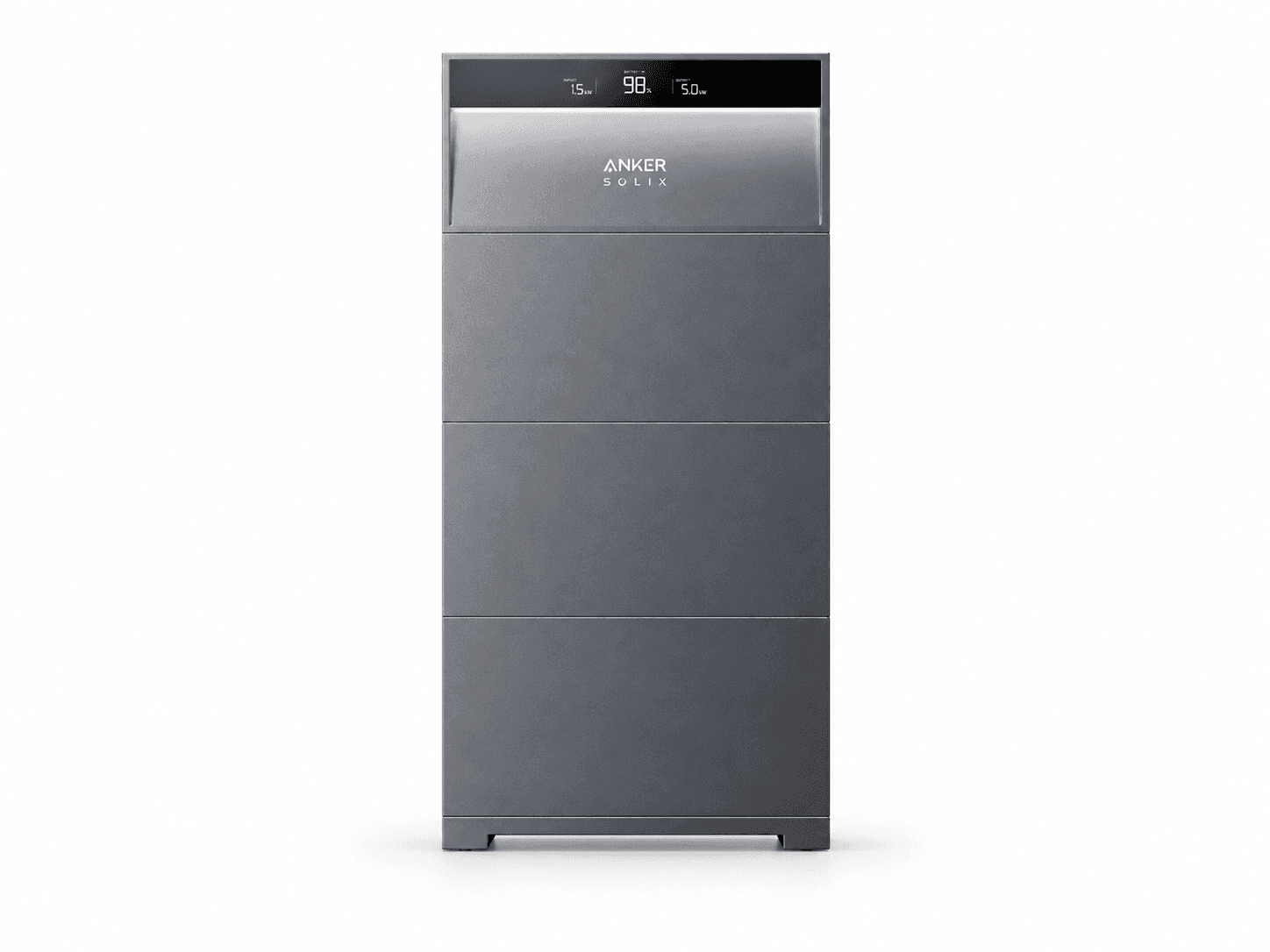
Family reference image
At a glance
- Usable capacity
- 10 kWh
- Manufacturer's initial usable battery capacity at 100% depth of discharge. Reserve settings, conditions and conversion losses affect energy delivered to appliances.
- Source
- Rated AC output
- 5 kW single-phase
- X1-H5K-S rating on-grid and off-grid. Battery-side power is a separate figure; output derates above 45°C ambient.
- Source
- Backup scope
- Selected circuits
- The base hybrid system uses its AC backup port and a backup subpanel. Power Dock Pro whole-home claims concern a different package.
- Source
- Battery warranty
- Up to 10 years
- 70% initial-capacity retention; time or discharge throughput, whichever comes first. Confirm the two-module limit in writing.
- Source
Strengths
- The hybrid inverter accepts solar panels directly and has a separate backup output.
- The system supports up to six X1-B5-H modules, giving a documented expansion path beyond this two-module configuration.
Limitations
- Adding storage does not increase this inverter's 5 kW rated AC output.
- The July 2026 warranty groups several stack sizes under one 14 MWh figure without explaining how the limit scales.
System essentials
Two X1-B5-H battery modules
SourceTogether these form the X1-B10-HC battery stack. Include its mounting base and required mounting hardware.
X1-H5K-S hybrid inverter
SourceThe matching single-phase power module manages solar, storage and AC output. X1-H6K-S and three-phase variants are outside this review.
Metering and backup subpanel
SourceInclude the required power sensors, protection and wiring to selected backup circuits. Retrofitting existing solar requires an additional PV-side sensor.
Commissioning and app handover
SourceThe installer configures the network, firmware, metering and Australian grid settings, then tests the system and hands over owner access.
Capacity and power
The two-module X1-B10-HC stack has both nominal and initial usable capacity of 10 kWh in Anker's battery guide, at 100% depth of discharge. This is battery-side energy; keeping a blackout reserve reduces what is available for everyday use.
The batteries have a combined 6 kW DC rating, but the X1-H5K-S limits rated AC output to 5 kW, including backup. Size simultaneous appliance loads around the inverter. Its datasheet lists a 10 kVA off-grid peak for ten seconds; that is apparent power, not a sustained 10 kW household supply, and does not establish which motors this two-module system can start.
Expansion can increase stored energy to six modules. Confirm the mounting arrangement and installation work before relying on a later upgrade; more modules do not raise this inverter's sustained rating.
Backup and installation
The documented base system supplies selected loads through a separate AC backup port and subpanel. Its manual includes new-solar and existing-solar layouts. Have the installer identify the protected circuits, required sensors and protection equipment, and what the existing solar inverter will do during a blackout.
Anker's current Australian page promotes whole-home backup and 0 ms load-side switching with Power Dock Pro. Those claims do not describe the base package reviewed here. A quote including that device needs its own exact-model backup design and equipment list.
Allow space for ventilation and servicing. The installer manual restricts exposed outdoor installations in salt-affected locations, despite coastal-durability marketing. Have the installer approve the proposed position. Commissioning includes Internet setup, firmware and metering configuration, Australian grid settings and system testing.
Warranty and ownership
The Australian policies promise 70% of initial battery capacity, ending at ten years from installation or the discharge-throughput limit, whichever comes first. The power module has separate ten-year cover.
Confirm the two-module throughput allowance. The March 2026 web policy gives X1-B5-H 14 MWh and lists 28 MWh for a differently labelled X1-B10-H row. The July battery policy names X1-B10-HC but puts the grouped battery systems under one 14 MWh figure. Neither clearly reconciles that naming and scaling difference. Do not assume a 28 MWh allowance for this stack.
Use a certified installer and an authorised sales channel; Anker asks purchasers from unlisted sellers to confirm coverage. The policy excludes dismantling, installation and troubleshooting costs, and costs associated with refusing firmware updates. Damage from leaving a depleted battery uncharged for more than seven days is excluded. Keep the invoice, serial numbers and commissioning records. The policies do not expressly address VPP operation, so obtain written confirmation for your intended use. Australian Consumer Law rights remain.
Brand and Australian support
Support evidence checked 21 September 2026. The Australian X1 page provides a certified-installer route. Anker’s 1 April 2025 market-access announcement says CEC certification opened the Australian market and its 3 November 2025 release says X1 launched in Sydney in April 2025; these are manufacturer claims. The X1 warranty is controlling for this two-module configuration.
The 14 July 2026 warranty directs defects to Anker with the serial and receipt; Anker may supply parts/units, repair or refund in limited circumstances. It expressly excludes dismantling, installation, troubleshooting, software recovery/reinstallation and relocation costs, while RMA shipping follows Anker’s instructions. Ask the seller to name the servicing party and state who pays site labour and travel if the installer closes or becomes insolvent. Australian Consumer Law rights remain separate from Anker’s contractual terms.
We did not verify an Australian recall for the reviewed X1-H5K-S/X1-B10-HC configuration in the ACCC, CEC or Energy Safe Victoria registers checked on 21 September 2026. The ARENA/ITP test index does not identify this stack, and no model-specific owner/installer sample with a stated denominator was verified in targeted SolarQuotes/ProductReview searches. Before paying, document the inverter, two X1-B5-H modules, backup subpanel, registration and servicing escalation in writing.
Price and alternatives
Anker's Australian site currently markets X1 through its certified installer directory and quote links. We verified that sales route, but no fixed manufacturer installed price or local stock commitment for this exact configuration.
Request an itemised price for the inverter, two batteries, mounting hardware, sensors, backup work, commissioning and GST. If Power Dock Pro is included, have it priced and described explicitly. Have the installer confirm eligibility for any incentive deducted from the quote, using the proposed equipment and installation.
If 5 kW cannot run your essential loads together, compare higher-output systems in the solar-battery catalogue. If you want to retain existing solar, compare the proposed retrofit wiring and blackout behaviour with a dedicated AC-coupled alternative. Use the same backed-up circuits in both quotes.
Who it suits
Bring overnight consumption and an essential-appliance list to the installer, including starting loads for pumps and air conditioning. Ask for the two-module configuration, a backup demonstration and written warranty clarification. For a VPP, confirm that the provider accepts this exact inverter and battery combination in your location, and how dispatch affects your reserve and throughput.
Check the model in your quote
Check that your quote names this exact model and configuration.
Reviewed configuration
SOLIX X1-H5K-S with X1-B10-HC (10 kWh)
10 kWh usable
Manufacturer's initial usable battery capacity at 100% depth of discharge. Reserve settings, conditions and conversion losses affect energy delivered to appliances.
Other models in the family
Specifications, warranty terms and installation requirements can differ between models. Check current availability with your supplier.
- SOLIX X1 Battery Module (X1-B5-H)5 kWh usable
VPPs that list Anker SOLIX X1
Compare programsThese programs list the battery family. Your exact battery, inverter and address still need approval; inclusion does not confirm warranty cover. How VPPs work.
All programs shown require an electricity account with the provider. If you already use that retailer, a switch may not be needed; a particular plan may still be required.
Compare the required electricity plan as well as VPP rewards. Credits are before electricity costs and any program fees.
4 family listings · Program A–Z
Amber
SmartShift
Listed: NSW · VIC · SA · ACT · QLD (Energex)
- Reward snapshot
Variable wholesale export earnings
Automation responds to market prices. There is no fixed export rate or guaranteed return.
- Program costs
$25/month membership
Setup fee unknown. No exit fee. Additional charges may apply.
EnergyAustralia
Battery Ease
Listed: NSW · address check required
- Reward snapshot
$15/month in bill credits
Paid whether or not the VPP uses your battery. Grid charging is billed at your plan rates.
- Program costs
No membership, setup or exit fees
GloBird Energy
ZEROHERO · VPP add-on
Listed: NSW · VIC · SA · QLD (Energex)
- Reward snapshot
Conditional daily and export credits
Daily credits depend on evening imports. Export rewards have separate windows and limits.
- Program costs
No membership, setup or exit fees
Origin Energy
Loop · Battery Lite
Listed: NSW · SA · VIC · QLD · ACT
- Reward snapshot
$1/kWh during VPP events
Dispatch limit: 200 kWh/year. The dispatch limit applies to Battery Lite event credits; Origin may change the rate with notice.
- Program costs
No Battery Lite exit fee
Membership fee unknown. Setup fee unknown. Incentive-linked terms can differ.




Reward snapshots — open the program for all credits, tariffs and conditions.