
Battery review · EQ5500-L5 (5 modules)
FoxESS EQ5500 battery review (EQ5500-L5)
By CompareVolt · Updated · Last full check
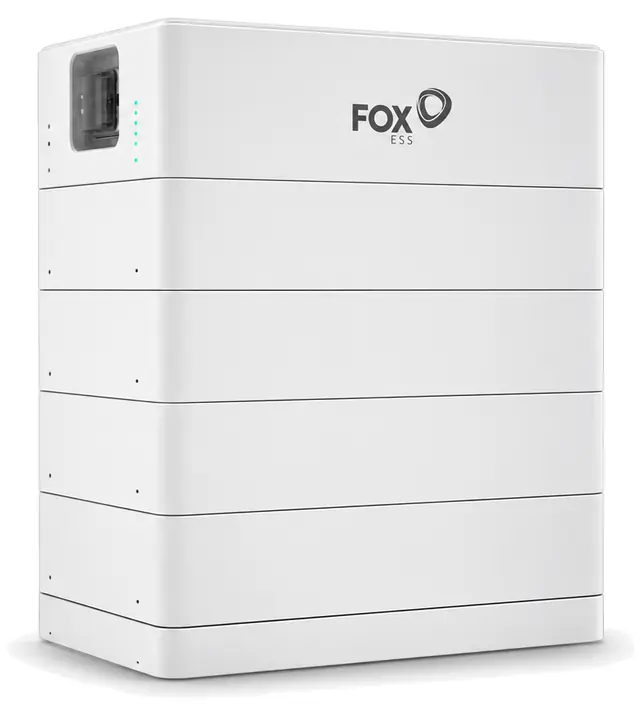
Family reference image
CompareVolt rating
6.8 out of 10
Pairs well with listed FoxESS single-phase hybrids; above 11.2 kW, H3 Pros and 12–15 kW H3 Smarts need solar.
6.8 out of 10
- Warranty10 yrs, capped by manufacture date
- Functionality27.3 kWh, 11.2 kW DC; needs inverter
- VPP readiness3 programs; only 1 names the EQ5500
- Australian backingSince 2020; installer-only claims
How this score adds up
| Warranty 7.0 (30%) | |
|---|---|
| Term: 10 years | 2.0 of 3 |
| Keeps 70% at year 10 | 1.5 of 2 |
| Home use: 115.18 MWh, 4.22 MWh per kWh | 2.5 of 3 |
| Conditions: ends 125 months after manufacture; narrower temperature range | 1.0 of 2 |
| Functionality 8.0 (35%) | |
| Power and backup 7.5 · 60% of Functionality | |
| Continuous power: 11.2 kW battery DC; the inverter sets AC output | 3.5 of 4 |
| Backup equipment: needs a separate FoxESS inverter | 1.0 of 2 |
| Backup output: set by the inverter | 1.0 of 2 |
| Three-phase homes: listed with H3 Smart and H3 Pro | 2.0 of 2 |
| Capacity and expansion 7.5 · 30% of Functionality | |
| Largest documented system: 49.14 kWh (9 modules in one stack) | 3.5 of 4 |
| Adding later: charge levels must match within 5%; 9 modules at most | 2.0 of 4 |
| Usable figure: 27.3 kWh, agreed | 2.0 of 2 |
| Enclosure 10.0 · 10% of Functionality | |
| Enclosure rating: IP65 | 10.0 of 10 |
| 7.5 × 60% + 7.5 × 30% + 10.0 × 10% = 7.75, rounded to the nearest half point: 8.0 | |
| VPP readiness 5.5 (15%) | |
| Open programs: 1 names EQ5500, 2 list FoxESS | 3.5 of 8 |
| Warranty room for VPP use: 4.22 MWh per kWh | 2.0 of 2 |
| Australian backing 5.5 (20%) | |
| Presence: FoxESS Australia Pty Ltd, Springvale | 3.0 of 3 |
| In Australia since 2020 | 1.5 of 2 |
| Claim route: installer or authorised personnel only | 0.5 of 2 |
| Claim costs: not stated | 0.5 of 3 |
| Overall: 7.0 × 30% + 8.0 × 35% + 5.5 × 15% + 5.5 × 20% = 6.825, rounded to one decimal: 6.8 | |
Rubric 1.0 · scored 15 Nov 2026 · How we rate batteries · Source documents
Rated so far: 38 batteries, from 4.4 to 8.2. Compare similar batteries · Use the quote checklist
In a nutshell
What’s good
- Full single-phase output. FoxESS's earlier compatibility list marks five modules 'Yes' with every listed H1/AC1-G2 and KH/KA model up to 10.5 kW: the inverter can discharge at its full rated output.
- Ten-year performance warranty. EQ5500-L5 keeps 70% energy for ten years or 115.18 MWh of throughput, whichever comes first.
- Room to grow. H1, KH and H3 Smart inverters take up to nine modules (49.14 kWh), subject to matching the charge state of added modules.
1 more good point
- Controller built in. The EQ5500-M contains the system controller, and its box includes the footstand, wall brackets, BMS cable and DC output cable.
What to watch
- Three-phase output limits. FoxESS's earlier list caps the battery at 11.2 kW on the 12 and 15 kW H3 Smart and on one H3 Pro input, and prints 'Max. 08kW' beside 'Yes' for the H3-9.9 and H3-10.0 Smart.
- Fire suppression unclear. The manual says each battery unit has a fire protection module; the compatibility list calls the module optional and not available in Australia.
- Inverter required. The stack needs a separate FoxESS inverter and commissioned backup wiring; the battery alone gives no blackout protection.
2 more things to watch
- Shelter still needed. Despite IP65, the manual asks for protection from direct sun, rain and snow and says the modules are not water resistant.
- Flat-battery warranty risk. A battery at 0% must be recharged within seven days; the manual puts permanent faults from delayed charging outside warranty.
Good fit for: A household wanting about 27 kWh on a listed FoxESS hybrid inverter, single- or three-phase, with room to grow to nine modules.
Look elsewhere if: Your quote is really a Power Cube, or it counts on fire suppression or on full output from a 12 or 15 kW H3 Smart or an H3 Pro.
All specifications and notes
Capacity and power
| Usable capacity | 27.3 kWhBattery-side usable capacity at 100% depth of discharge, per the Australian datasheet and CEC list. FoxESS's global EQ5500 datasheet states 90%, so don't compare with overseas figures. |
|---|---|
| Battery nominal power | 11.2 kW DCBattery rating at the 50 A current limit, not household AC output. Current varies with temperature, cell voltage and state of charge. |
| Household AC output | Depends on inverterFoxESS's earlier list gives full rated output with every listed H1/AC1-G2 (3–6 kW) and KH/KA (7–10.5 kW). A 12 or 15 kW H3 Smart, or an H3 Pro, gets up to 11.2 kW from the battery. |
| Performance warranty | 10 years or 115.18 MWhWhichever comes first, with 70% energy retention; capped at 125 months from manufacture. Registration and accredited installation apply. |
Manufacturer’s figures
As stated in the manufacturer’s Australian datasheet. Shown for reference; they don’t change the score.
| Round-trip efficiency | >95%How much of the energy you store comes back out when you use it.Battery pack only; the datasheet states no conditions |
|---|---|
| Cell chemistry | LFP (LiFePO4)The type of battery cell the maker says is inside. |
More specifications
| Module layout | 1 EQ5500-M + 4 EQ5500-SThe EQ5500-M holds the system controller. A system takes one EQ5500-M and at most eight EQ5500-S. |
|---|---|
| Size and weight | 570 × 800 × 380 mm, 208 kgWidth × height × depth. Floor-mounted, indoors or outdoors. |
| Operating temperature | Charge 0–55°C, discharge −10–55°CThe Australian datasheet lists no heated version. |
| Enclosure | IP65, indoor or outdoorThe manual still asks for shelter from direct sun, rain and snow, 300 mm clearance, 2 m from heat sources and, indoors, a room of at least 10 m². |
| Expansion limit | Up to 9 modules (49.14 kWh)H1 and KH take two to nine modules, H3 Smart three to nine. H3 Pro needs at least four per battery input. |
| Warranty temperature | −10°C to 50°C ambientNarrower than the datasheet's 55°C operating maximum. |
What the system needs
| Five-module battery stack | One EQ5500-M (controller and battery) and four EQ5500-S modules. The EQ5500-M box holds the footstand, wall brackets, BMS cable, grounding cable and DC output cable. |
|---|---|
| Listed FoxESS hybrid inverter | Choose a row the compatibility list marks for five modules. The inverter's AC rating and its 40 A or 50 A battery-current limit set household output. |
| Backup wiring and commissioning | For H1/AC1-G2, emergency loads use the EPS (backup) port and internal bypass or a separately bought contactor, and EPS is off until enabled. KH and H3 Smart need their own backup design. |
| Warranty registration | The installer registers the battery with FoxESS and connects it at commissioning, a stated warranty precondition. |
The EQ5500-L5 stacks five 5.46 kWh modules on a separate FoxESS hybrid inverter. This review covers that stack, not the Power Cube all-in-one that uses the same modules.
Capacity and power
EQ5500-L5 means one EQ5500-M and four EQ5500-S modules. FoxESS's August 2026 Australian datasheet rates the stack at 27.30 kWh, all of it usable, from 5.46 kWh modules, with a nominal voltage of 224 V. The EQ5500-M carries the system controller. Other module counts, and FoxESS's Power Cube, which stacks EQ5500-S modules under its own PQ inverter, are outside this review.
The 11.2 kW nominal power is the battery's own DC (direct current) rating at its 50 A current limit. The inverter turns DC into AC, the mains power your home uses, so its AC rating and its own battery-current limit set what reaches your power points. FoxESS's compatibility list gives that limit as 40 A for H1/AC1-G2 and 50 A for KH and H3 Smart.
How it differs from EQ4800 and CQ7. Against the EQ4800 datasheet, the EQ5500 keeps the 570 mm-wide footprint, string voltages, nine-module limit and 50 A maximum. Each module holds 5.46 kWh instead of 4.66 kWh, the recommended current is 50 A rather than 30 A, and the rated altitude is 3,000 m rather than 2,000 m. The CQ7 datasheet uses 6.96 kWh modules, up to fourteen of them, an 80 A limit and a heated (w) version; the EQ5500's Australian datasheet lists no heated version. These are specification differences, not a ranking.
We found no FoxESS statement that EQ5500 replaces EQ4800. FoxESS's battery page still lists both, and the Clean Energy Council approved EQ5500 on 16 June 2026 and EQ4800 on 14 November 2024.
Backup and installation
Settle the inverter row before the battery. FoxESS's May 2026 declaration, the compatibility document its EQ5500 page links, lists five modules with every H1/AC1-G2 (3–6 kW) and KH/KA (7–10.5 kW) model it names and with the H3 Smart and H3 Pro, but gives no output figures. FoxESS's earlier compatibility list (May 2026), which its Australian download centre lists beside the declaration, does. It marks five modules "Yes", meaning the inverter can discharge at its full rated output, with every listed H1/AC1-G2 and KH/KA model and with the H3 Smart up to 8 kW. With the H3-12.0 and H3-15.0 Smart, and on one H3 Pro battery input, it shows "Yes*": the battery alone supplies up to 11.2 kW and solar must make up the rest. For L5 on the H3-9.9 and H3-10.0 Smart, the cells print "Max. 08kW" beside a full-output "Yes", so ask FoxESS for that figure in writing. For H3 Pro, the list requires at least four modules per battery input, while the declaration lists strings from three; five modules meet both.
Backup comes from the inverter, not the stack. With an H1/AC1-G2, the Australian manual describes emergency loads on the EPS (backup) port and internal bypass, or on a separately bought contactor (an electrically controlled switch), and says EPS is off by default. The KH datasheet gives 7–10.5 kVA of EPS output with a 60-second peak of 10–12 kW. FoxESS's AIRGATE datasheet lists whole-home backup with H1-G2, KH, H3 Smart and H3 Pro inverters. Specify the backed-up circuits and the reserve (the charge kept for blackouts). Capacity alone doesn't tell you what will run in an outage.
The stack is rated IP65 (dust and water) for indoor or outdoor floor mounting, yet the EQ5500 manual (on FoxESS's download page) asks for shelter from direct sun, rain and snow, 300 mm of clearance, 2 m from heat sources and, indoors, a room of at least 10 m². The manual also describes a fire protection module in each battery unit, but the compatibility list calls that module optional and "not available in Australia market". Don't count on it unless FoxESS confirms it in writing for your units.
Warranty and ownership
The battery warranty promises EQ5500-L5 keeps 70% of its energy for ten years from installation or 115.18 MWh of throughput (total energy passed through it), whichever comes first. Cover is capped at 125 months from manufacture. It covers the battery modules only; the inverter has its own warranty.
Working the warranty’s energy limits through at one full charge and discharge a day:
- Energy limit: 115.18 MWh, about 4.22 MWh per usable kWh. At one full charge and discharge a day that is reached in about 11.6 years, so the 10-year term ends first.
Registration and connection to FoxESS at commissioning (the installer's final set-up and switch-on) are stated preconditions, although a later clause asks for registration within 36 months and recommends six weeks. Have the installer register at commissioning and keep proof. The policy also requires accredited installation and an ambient temperature between −10°C and 50°C.
The manual adds an ownership condition: a battery left at 0% must be recharged within seven days, and permanent faults from delayed charging are outside warranty. Keep the system connected and charging through long absences. The policy does not mention virtual power plant (VPP) use, so get written confirmation for a specific program.
A Power Cube is covered by a separate Power Cube warranty, which applies to "EQ5500-S batteries used with Power Cube". If your quote shows PQ1 or PQ3 system codes, read that document instead. Australian Consumer Law rights remain under either.
Brand and Australian support
Support evidence checked 11 November 2026. FoxESS was founded in 2019 and opened its Australian branch in 2022. The warranty names FoxESS Australia Pty Ltd in Springvale, Victoria, as importer; that company has been registered since 19 May 2020 (checked 15 November 2026). The contact page lists Springvale and St Leonards offices, a 1300 number and a service email. That gives you a local contact; it doesn't tell you how fast claims are handled.
Under the battery warranty, only the installer or people FoxESS has authorised can make claims. If the installer goes into administration, the end user or installer may appoint a local installer at their discretion and expense. FoxESS says it will approve and dispatch a replacement within three working days, subject to availability, and may charge an inspection fee or recover costs when a returned unit has no qualifying defect. It does not clearly promise free labour or freight.
We found no FoxESS recall in the ACCC, CEC or Energy Safe Victoria registers. The EQ5500 listing dates from 16 June 2026, so there is no long-term field record for this model.
Price and alternatives
FoxESS's EQ5500 page shows no price; its Australian contact page takes price and availability enquiries. We found no dated Australian offer for this stack, so ask for an itemised installed quote covering the five modules, inverter, backup hardware, electrical work, commissioning and GST.
The federal program's eligibility rules require a battery on the Clean Energy Council list. On 11 November 2026 EQ5500-L2 to L9 were listed as BAT-1030, expiring 31 December 2027; single-phase Power Cube systems had separate listings, and three-phase Power Cube systems were listed on 13 November 2026 (BAT-1115). At 27.30 kWh usable, EQ5500-L5 sits within the first two capacity bands of the federal battery rebate, just under 28 kWh. Have the quote show the count of STCs (small-scale technology certificates, the rebate's unit), their price and the installation date.
Program lists differ by line. On the day we checked, CovaU's list named EQ5500-L2 to L9, while AGL's FoxESS table named EQ4800 and CQ7 but not EQ5500. Compare complete systems in the battery catalogue.
Who it suits
Estimate overnight use with the battery size calculator and check whether that use, plus any backup reserve, needs about 27 kWh. Confirm your phase supply: FoxESS's earlier list gives a single-phase H1 or KH inverter its full output from five modules, while a 12 or 15 kW H3 Smart, or an H3 Pro, relies on solar above the battery's 11.2 kW.
Read the model codes on the quote first. EQ5500-M plus EQ5500-S means this stack on a separate inverter; PQ1 or PQ3 means Power Cube, with a different warranty and separate CEC listings. Before paying, reconcile the module labels, inverter row, installation location and warranty registration against the equipment delivered.
How it compares
Other reviewed batteries closest to 27.3 kWh of usable capacity.
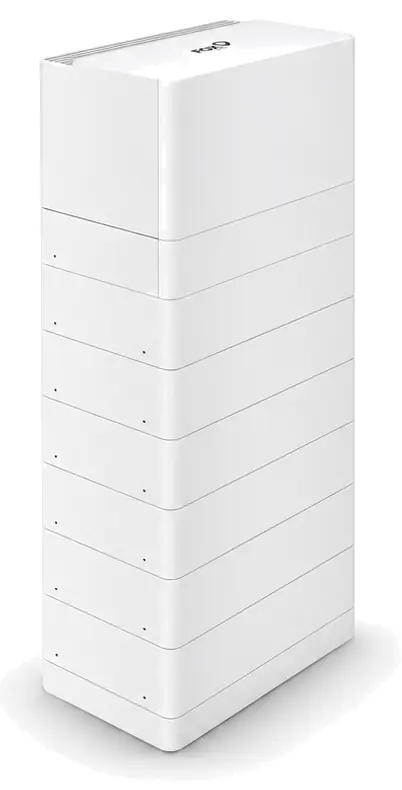
- Family reference imageFoxESS Power Cube review (five EQ5500-S modules)Rated 7.1 out of 1027.3 kWh usablePerformance warranty: 10 years or 115.18 MWhOne difference: VPP readinessFoxESS Power Cube review (five EQ5500-S modules)4.0EQ5500-L5 (5 modules)5.5
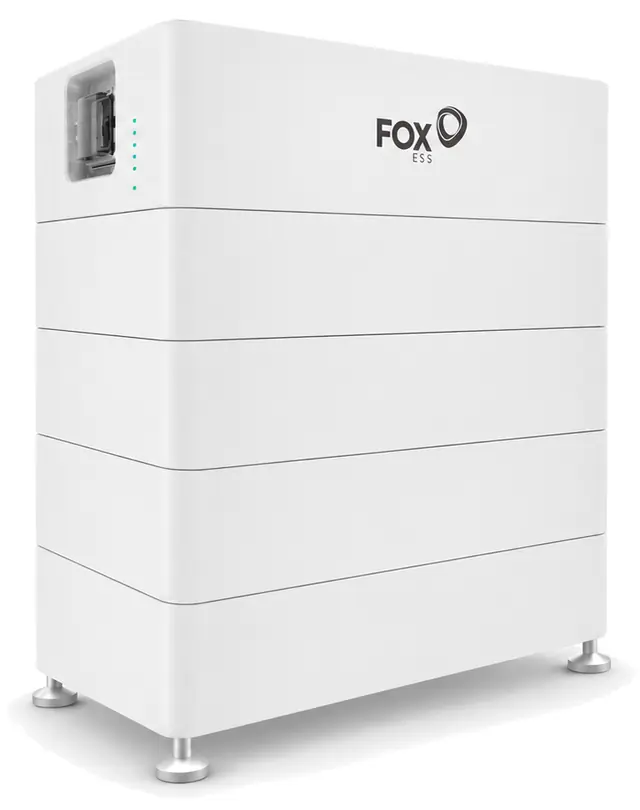
- Family reference imageFoxESS CQ7 battery review (CQ7-L4)Rated 7.3 out of 1027.84 kWh usableWarranty (whichever comes first): 10 years or 141.53 MWhOne difference: VPP readinessFoxESS CQ7 battery review (CQ7-L4)8.5EQ5500-L5 (5 modules)5.5
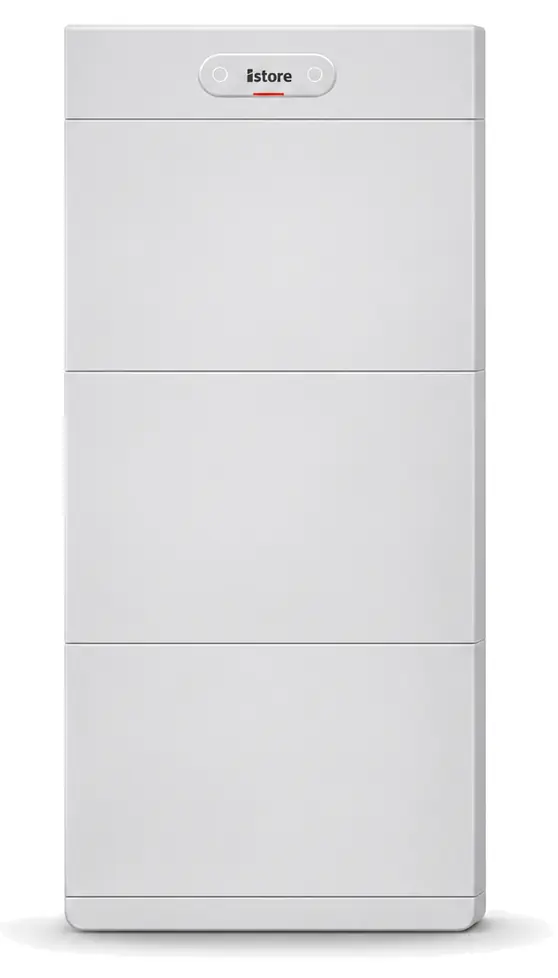
- iStore Smart Battery S1 review (IS-BATT-21000-S1)Rated 6.2 out of 1020.7 kWh usablePerformance warranty: 15 years or 28.84 MWhOne difference: Australian backingiStore Smart Battery S1 review (IS-BATT-21000-S1)8.5EQ5500-L5 (5 modules)5.5
Questions people ask
Which inverter works with the FoxESS EQ5500-L5?
FoxESS's earlier list gives every listed H1/AC1-G2 and KH/KA inverter, and the H3 Smart up to 8 kW, its full rated output from five modules. It prints "Max. 08kW" for the 9.9 and 10 kW H3 Smart; 12 and 15 kW H3 Smart and H3 Pro on one input get up to 11.2 kW.
Is the FoxESS EQ5500 the same as the Power Cube?
No. Power Cube stacks EQ5500-S modules under a FoxESS PQ inverter with no EQ5500-M, and has its own warranty policy covering EQ5500-S batteries used with Power Cube. This review covers the EQ5500-L5 stack on a separate inverter.
What is the difference between the FoxESS EQ5500 and EQ4800?
The EQ4800 datasheet gives 4.66 kWh modules and a 30 A recommended current; EQ5500 has 5.46 kWh and 50 A, with the same footprint, string voltages, nine-module limit and 50 A maximum. We found no FoxESS statement that EQ5500 replaces EQ4800.
How long is the FoxESS EQ5500 battery warranty?
EQ5500-L5 keeps 70% energy for ten years from installation or 115.18 MWh of throughput, whichever comes first, capped at 125 months from manufacture. Registration and accredited installation are conditions.
Will the EQ5500-L5 back up my home in a blackout?
Not on its own. Backup comes from the inverter's EPS output, wired to chosen circuits. FoxESS's H1/AC1-G2 manual says EPS is off by default until the installer turns it on.
How much does the FoxESS EQ5500-L5 cost in Australia?
FoxESS publishes no EQ5500 price. Its Australian contact page takes price and availability enquiries; the installed price comes from an itemised quote.
Before you accept a quote
FoxESS doesn’t publish a price for this battery, so the installed price comes from your quotes.
- The quote names one EQ5500-M and four EQ5500-S modules, not a PQ1 or PQ3 Power Cube system code, which falls under a different warranty.
- It names the exact inverter and its five-module compatibility row; for a 12 or 15 kW H3 Smart or an H3 Pro, it states what the battery alone can supply.
- It lists the backed-up circuits, the EPS or AIRGATE wiring and the reserve setting, checked against your appliances' starting loads.
- It shows the location, shelter and 300 mm clearance, and names the installer who will register the warranty at commissioning.
- It itemises the federal battery discount with the CEC-listed model EQ5500-L5, usable capacity, STC count and certificate price.
Estimate the federal battery certificates for 27.3 kWh usable (opens in a new tab)
Check the model in your quote
Check that your quote names EQ5500-L5 (5 modules) in the configuration this review covers. Other sizes can differ in specifications and warranty.
Other sizes in this line: EQ5500-L2 (2 modules), 10.92 kWh usable · EQ5500-L3 (3 modules), 16.38 kWh usable · EQ5500-L4 (4 modules), 21.84 kWh usable · EQ5500-L6 (6 modules), 32.76 kWh usable · EQ5500-L7 (7 modules), 38.22 kWh usable · EQ5500-L8 (8 modules), 43.68 kWh usable · EQ5500-L9 (9 modules), 49.14 kWh usable
Other FoxESS lines: FoxESS batteries
Australian support and warranty claims
- Australian presence
- FoxESS Australia Pty Ltd, Springvale
- In Australia since
- 2020
- Where claims go
- Installer or authorised personnel only
- Claim costs
- Not stated
FoxESS Australian contact details (opens in a new tab) · Warranty document (opens in a new tab) · Checked
VPPs that list FoxESS Battery
Compare programsThese programs list the battery family. “Names EQ5500” marks a program whose published list names this line. Your exact battery, inverter and address still need approval; inclusion does not confirm warranty cover. How VPPs work.
All programs shown require an electricity account with the provider. If you already use that retailer, a switch may not be needed; a particular plan may still be required. Credits are before electricity costs and any program fees.
3 listings · 1 recorded as naming EQ5500 · Program A–Z
| Provider | Program | Names EQ5500 | States listed | Reward snapshot | Last checked |
|---|---|---|---|---|---|
| Amber | SmartShift | Not recorded | NSW · VIC · SA · ACT · QLD (Energex) | Variable wholesale export earnings | |
| CovaU Energy | VPP · BYO battery | Yes | NSW · VIC | 15c/kWh during VPP events | |
| GloBird Energy | ZEROHERO · VPP add-on | Not recorded | NSW · VIC · SA · QLD (Energex) | Conditional daily and export credits |



Amber
SmartShiftListed: NSW · VIC · SA · ACT · QLD (Energex)
CovaU Energy
VPP · BYO batteryListed: NSW · VIC
Names EQ5500
GloBird Energy
ZEROHERO · VPP add-onListed: NSW · VIC · SA · QLD (Energex)
Not shown: AGL VPP, ENGIE VPP and Origin Loop (Battery Lite). Their FoxESS lists don’t name EQ5500.
Reward snapshots — open the program for all credits, tariffs and conditions.
Source documents
10 documents
The documents behind this rating. Where we keep a copy, it is unmodified and dated; check the manufacturer for the latest version. We work out the rating with a fixed rubric from these documents and our VPP data. No manufacturer pays for a score or sees one before it is published.
- FoxESS — HV battery warranty policy, Australia and New Zealand, V2.7 (PDF, opens in a new tab)
PDF, 644 KB · Used for: Warranty, Australian backing
Retrieved from au.fox-ess.com
- FoxESS Australia — EQ5500 datasheet, V1.2 (PDF, opens in a new tab)
PDF, 374 KB · Used for: Functionality, Manufacturer’s figures, Review source
Retrieved from au.fox-ess.com
- FoxESS Australia — EQ5500 manufacturer declaration of inverter battery compatibility (PDF, opens in a new tab)
PDF, 235 KB · Used for: Functionality
Retrieved from au.fox-ess.com
- au.fox-ess.com/Public/Uploads/uploadfile/files/20260612/AUEQ5500UserManualENV1.0.020260610.pdf (opens in a new tab)
Used for: Functionality
No copy kept: the document does not permit reproduction, checked on
- au.fox-ess.com/contact-us (opens in a new tab)
Used for: Australian backing
- abr.business.gov.au/ABN/View?abn=31641059841 (opens in a new tab)
Used for: Australian backing
Also linked in the review
Copies of documents the review text links. We don’t use them for the rating.
- FoxESS Australia — Power Cube single-phase (PQ1 + EQ5500) datasheet, V6.0 (PDF, opens in a new tab)
PDF, 950 KB · Used for: Review text
Retrieved from au.fox-ess.com
- FoxESS Australia — EQ4800 datasheet, V1.3 (PDF, opens in a new tab)
PDF, 363 KB · Used for: Review text
Retrieved from au.fox-ess.com
- FoxESS Australia — CQ7 datasheet, V1.2 (PDF, opens in a new tab)
PDF, 380 KB · Used for: Review text
Retrieved from au.fox-ess.com
- FoxESS — Power Cube AIO warranty policy, Australia, V1.1 (16 Sep 2026) (PDF, opens in a new tab)
PDF, 190 KB · Used for: Review text
Retrieved from au.fox-ess.com