
Battery review · T-BAT H 11.5 V3
SolaX T-BAT H V3 battery review (T-BAT H 11.5 V3)
By CompareVolt · Updated · Last full check
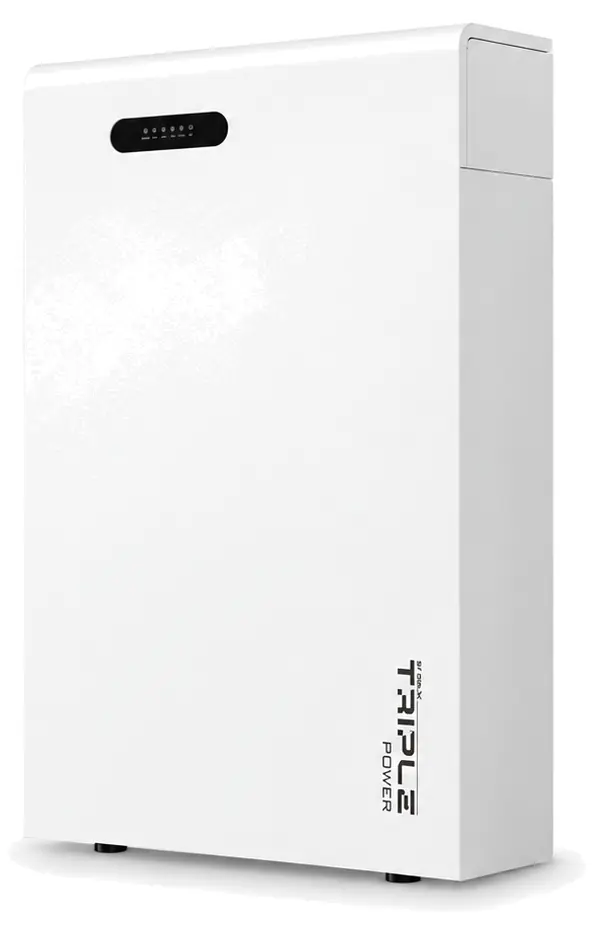
Family reference image
CompareVolt rating
6.6 out of 10
About 11 kWh on listed SolaX hybrids, but only two open VPPs we track list SolaX.
6.6 out of 10
- Warranty10 yrs, capped by manufacture date
- Functionality10.9 kWh, 5.8 kW DC; needs inverter
- VPP readiness2 programs; neither names the V3
- Australian backingSince 2018; partial claim costs
How this score adds up
| Warranty 7.0 (30%) | |
|---|---|
| Term: 10 years | 2.0 of 3 |
| Keeps 70% at year 10 | 1.5 of 2 |
| Home use: 6,000 cycles, 6.0 MWh per kWh | 2.5 of 3 |
| Conditions: ends 129 months after manufacture; narrower temperature range | 1.0 of 2 |
| Functionality 7.0 (35%) | |
| Power and backup 6.5 · 60% of Functionality | |
| Continuous power: 5.8 kW battery DC; the inverter sets AC output | 2.5 of 4 |
| Backup equipment: needs a separate SolaX hybrid inverter | 1.0 of 2 |
| Backup output: set by the inverter | 1.0 of 2 |
| Three-phase homes: listed with SolaX X3 hybrids for Australia; module count depends on inverter | 2.0 of 2 |
| Capacity and expansion 7.5 · 30% of Functionality | |
| Largest documented system: 32.9 kWh (6 units, one cluster; datasheet: 12 units, 69.1 kWh nominal, on two ports) | 3.5 of 4 |
| Adding later: SolaX's consent after year one; packs pre-charged to match | 2.0 of 4 |
| Usable figure: 10.9 kWh, agreed within 1% (other SolaX documents: 10.944 kWh) | 2.0 of 2 |
| Enclosure 10.0 · 10% of Functionality | |
| Enclosure rating: IP66 | 10.0 of 10 |
| 6.5 × 60% + 7.5 × 30% + 10.0 × 10% = 7.15, rounded to the nearest half point: 7.0 | |
| VPP readiness 3.5 (15%) | |
| Open programs: 2 list SolaX | 2.0 of 8 |
| Warranty room for VPP use: 3.28 MWh per kWh | 1.5 of 2 |
| Australian backing 7.5 (20%) | |
| Presence: SolaX Power AUS Pty Ltd, Dandenong South VIC | 3.0 of 3 |
| In Australia since 2018 | 1.5 of 2 |
| Claim route: distributor or installer first, then SolaX's service team | 1.5 of 2 |
| Claim costs: freight to AUD 200 a case in some areas; AUD 150 service charge per case | 1.5 of 3 |
| Overall: 7.0 × 30% + 7.0 × 35% + 3.5 × 15% + 7.5 × 20% = 6.575, rounded to one decimal: 6.6 | |
Rubric 1.0 · scored 15 Nov 2026 · How we rate batteries · Source documents
Rated so far: 38 batteries, from 4.4 to 8.2. Compare similar batteries · Use the quote checklist
In a nutshell
What’s good
- Voltage fits SolaX hybrids. Its 200–260 V range sits inside every current SolaX hybrid battery window we checked; SolaX's global G4 PRO manual allows two V3 modules.
- Room to grow. One BMS takes up to five packs: 34.6 kWh nominal, or 32.9 kWh usable, in a single cluster.
- Slim wall or floor units. Each unit is 474 × 715 × 150 mm and about 60 kg, for wall or floor mounting.
2 more good points
- Warranty names V3. SolaX's Australian warranty lists all six V3 sizes at ten years, with 70% capacity retention.
- CEC-listed to 2027. Certificate BAT-1110 lists the 11.5 V3 at 10.944 kWh usable and 5.8 kW, valid to 31 December 2027.
What to watch
- Datasheets disagree. SolaX's September and October datasheets, both labelled V1.2, give 10.9 and 10.944 kWh usable and word depth of discharge differently.
- Inverter limits mostly unpublished. SolaX's Australian declaration lists five inverters but no module counts; the X1-Hybrid G4 manual still allows just two slave packs and does not mention V3.
- Mounting kit may differ. The manual lists the wall bracket and anchors among parts not included in the Australian accessory kit.
2 more things to watch
- No independent evidence yet. We found no independent Australian evidence on V3; its CEC approval dates from 4 November 2026.
- Cover can end early. Cover ends 129 months from manufacture, so older stock shortens the ten-year term.
Good fit for: A single- or three-phase home with, or buying, a SolaX hybrid that SolaX lists for V3, wanting about 11 kWh of storage and perhaps more packs later.
Look elsewhere if: You need a battery with its own AC inverter, or want to extend an existing T58 V2 stack without SolaX's written confirmation.
All specifications and notes
Capacity and power
| Usable capacity | 10.9 kWhBattery-side usable energy at 95% depth of discharge, 0.2C (a five-hour charge or discharge rate) and 25°C, per SolaX's September datasheet. Its October datasheet and the CEC list give 10.944 kWh of 11.52 kWh nominal. |
|---|---|
| Battery rated power | 5.8 kW DCBattery-side rating at 25 A; maximum 8.1 kW. Household output is set by the inverter's AC rating and battery-current limit. |
| Three-phase minimum | 2 modules (G4 PRO)SolaX's global X3-HYB-G4 PRO manual allows 2–6 T58 V3 modules per battery terminal. SolaX's Australian declaration lists V3 with X1 and X3 hybrids but gives no module counts. |
| Performance warranty | Up to 10 years70% retention, capped at 129 months from manufacture. 6,000 cycles for self-consumption and backup; 35.8 MWh for other uses. |
Manufacturer’s figures
As stated in the manufacturer’s Australian datasheet. Shown for reference; they don’t change the score.
| Charge power | Rated 5.8 kW; max 8.1 kW (charge / discharge)How fast it can soak up solar, or a cheap or free power window.T-BAT H 11.5 V3; max current 35 A, set by number of batteries, temperature and SOC |
|---|---|
| Cell chemistry | LFPThe type of battery cell the maker says is inside.Battery type, battery model HV11550-A V3 |
More specifications
| Size and weight | Two 474 × 715 × 150 mm units, 121 kgWidth × height × depth. BMS 61.5 kg and pack 59.5 kg (±1 kg). Wall or floor mounting, 320–380 mm between units. |
|---|---|
| Enclosure | IP66, indoor or outdoorThe manual still recommends protection from direct sun, rain and snow; sun can reduce performance. |
| Operating temperature | Charge 0–55°C, discharge −20–55°CCharge current falls below 25°C and above 45°C. The datasheet's −30°C figures need its heating function on. |
| Expansion | 1 BMS + up to 5 packs, 34.6 kWhV3 can't be used with the BMS Parallel Box-II G2 or T-BAT-Charger, per the manual. |
| Warranty temperature | −10°C to 50°C ambientNarrower than the datasheet's −20°C to 55°C operating range. |
| Mixing with V2 | Not recommended by SolaXAllowed only per the manual's table; a V2 BMS needs an irreversible V3 firmware update to take V3 packs. |
What the system needs
| BMS module and one battery pack | One T-BAT H 5.8 V3 (BMS with a built-in module) and one HV11550-A V3 pack, the version SolaX's manual says is delivered to Australia. |
|---|---|
| Compatible SolaX hybrid inverter | The battery has no AC output. Confirm the quoted X1 or X3 model, firmware and battery-current limit support two V3 modules. |
| Backup wiring | Backup comes from the inverter's EPS (backup) output; SolaX's Matebox G2 is its whole-home switching option. The installer specifies the circuits. |
| Mounting and siting | A solid brick or concrete wall at least 100 mm thick, or a floor, 320–380 mm between units and sheltered where practical. Confirm bracket and anchors are supplied. |
The T-BAT H 11.5 V3 pairs one SolaX V3 BMS module with one battery pack and runs on a separate SolaX hybrid inverter. This review covers that two-module configuration as documented for Australia.
Capacity and power
T-BAT H 11.5 V3 is one T-BAT H 5.8 V3 BMS module plus one HV11550-A V3 pack, the pack SolaX's Australian manual says is delivered to Australia. SolaX's October datasheet and the CEC approved list give 11.52 kWh nominal and 10.944 kWh usable at 95% depth of discharge. The September datasheet, also labelled V1.2, rounds these to 11.5 and 10.9 kWh and describes depth of discharge as "Max.100 % DOD (settable)". Heated H models and other module counts are outside this review.
The 5.8 kW rated and 8.1 kW maximum figures are the battery's own DC (direct current) power, at 25 A recommended and 35 A maximum current. Current falls when cells are cold or hot: charging slows below 25°C. The inverter sets what reaches your power points, and the X1-Hybrid G4 and X3-Hybrid G4 datasheets give a 30 A battery-current limit.
Against the V2 master, the V2.5 datasheet lists IP65, 193 mm thickness, 72.2 kg and 90% depth of discharge; V3 lists IP66, 150 mm, 61.5 kg and 95%.
Backup and installation
Settle the inverter before the battery. The stack's 200–260 V range sits inside the battery-voltage window of every current Australian SolaX hybrid datasheet we checked: the X1-Hybrid G4 and X1-VAST at 80–480 V, the X3-Hybrid G4 at 120–800 V and the X3-HYB-G4 PRO at 130–800 V. A single module's 100–130 V fits only the X1 range. SolaX's Australian compatibility declaration, dated 7 September 2026, lists all six V3 sizes, the 11.5 V3 included, with the X1-Hybrid G4, X1-VAST, X3-Hybrid G4, X3-ULTRA and X3-HYB-G4 PRO. The three X3 models are three-phase, so V3 is listed for three-phase homes. The declaration adds that the number of battery modules depends on the inverter, without giving the numbers. SolaX's global G4 PRO manual allows 2–6 V3 modules per battery terminal. The X1-Hybrid G4 manual still lists one T-BAT H 5.8 with up to two slave packs and does not mention V3. The X3-Hybrid G4 manual names only V1 and V2 of the HV11550 pack, and the X3-ULTRA Australian manual's change log notes that "the T58 may not be compatible in some areas". Have the installer get your inverter and firmware confirmed by SolaX in writing.
Backup comes from the inverter, not the battery, which has no AC output. The X1-Hybrid G4 gives 3–7.5 kVA of backup (EPS) output with under 10 ms switchover; SolaX presents the X1-Matebox G2 as its whole-home backup option. The manual also describes a black start that lets the inverter and battery run with the grid and solar both down. Specify the backed-up circuits and the reserve.
SolaX's Australian datasheet rates the units IP66 (a dust and water rating) for indoor or outdoor use. One paragraph of SolaX's V3 product page says IP65 and depth of discharge "up to 90%", though the same page's spec table says IP66. SolaX's T-BAT SYS-HV-5.8 user manual still recommends shelter from direct sun, rain and snow, a solid brick or concrete wall at least 100 mm thick (or a floor) and 320–380 mm between units. It lists the wall bracket, anchors and cover plates among parts not included in the Australian accessory kit, so confirm what will be supplied.
Warranty and ownership
SolaX's Australian warranty, in a file dated 3 November 2026 that keeps the V1.6 title, lists all six V3 sizes at ten years. Cover ends at the earlier of 120 months after installation or 129 months after manufacture, so older stock gets less; qualifying installations under NSW's Peak Demand Reduction Scheme (PDRS) get ten years from installation.
Capacity is promised at 70% within that period, subject to 6,000 cycles for daily self-consumption and backup. Any other use, or a combination that includes one, is limited to 35.8 MWh (megawatt-hours of total output) for the 11.5 V3.
Working the warranty’s energy limits through at one full charge and discharge a day:
- Home use: 6,000 cycles, about 6.0 MWh per usable kWh. At one full charge and discharge a day that is reached in about 16.4 years, so the 10-year term ends first.
- VPP and other uses: 35.8 MWh, about 3.28 MWh per usable kWh. At one full charge and discharge a day that is reached in about 9.0 years, before the 10-year term ends.
The warranty does not mention VPPs, so we count VPP use as one of those other uses. It excludes damage from third-party control equipment or software without SolaX's written authorisation, so ask before joining a program. It treats operation below −10°C or above 50°C ambient (surrounding air) as non-compliance, a narrower range than the datasheet's.
Report faults within four weeks and keep commissioning records. Adding packs more than a year after installation needs SolaX's prior consent. For any extension, the electrician must follow SolaX's extension procedure, and the policy asks for the new and existing batteries to be charged to full and installed together. Mixing generations needs more care: the manual says pairing V2 and V3 units is not recommended. If it is done, a V3 BMS can take V2 packs (not as the fourth or fifth), while a V2 BMS takes V3 packs only after an irreversible V3 firmware update. Get those conditions confirmed in writing before mixing generations.
Brand and Australian support
Support evidence checked 11 November 2026; warranty and ABR record re-read 15 November 2026. SolaX was founded in 2012 and has an Australian subsidiary; its contact page lists an office in Dandenong South, Victoria, on 1300 476 529. The warranty is given by the Chinese maker, SolaX Power Network Technology (Zhejiang) Co., Ltd., and names SolaX Power AUS Pty Ltd as its Australian importer. That company has held an ABN since 25 September 2018 (checked 15 November 2026). Claim through the distributor or installer first; if they can't help or you're not satisfied, the warranty lets you escalate to SolaX's service team. SolaX may update software, repair, or supply a new, refurbished or upgraded equivalent. In certain areas of Australia it covers outbound and inbound freight by normal ground transport, up to AUD 200 per case. The policy also lists a standard service charge of AUD 150 (excluding GST) per case, which applies once checks confirm the returned product is faulty. It doesn't name the payer outright, but when no fault is found SolaX invoices you for the replacement, delivery and standard service charges. SolaX must authorise any site visit first. Travel and on-site installation costs are excluded. Australian Consumer Law rights sit alongside the written warranty.
The only SolaX recall in the ACCC and CEC records concerns LG batteries supplied in other SolaX systems, not Triple Power. ACCC searches for SolaX, T-BAT, T58 and Triple Power found no V3 entry, and neither did Energy Safe Victoria's notices. V3 was CEC-listed on 4 November 2026, and we found no independent Australian evidence on its reliability or support; that is an evidence gap, not a fault.
Price and alternatives
On 11 November 2026, SolaX Australia's T58 page showed no price for any V3 configuration, only contact, distributor and installer links. We found no Australian retail listing that names V3; listings for older T58 batteries do not apply. Ask installers from SolaX's directory for an itemised quote covering the BMS module, pack, inverter, backup equipment, mounting hardware, installation and GST, with stock and lead time.
The 11.5 V3 is on the CEC list as BAT-1110 from 4 November 2026 to 31 December 2027. The federal scheme requires the battery and inverter to be listed at the time of installation, so check the installation date. Its 10.944 kWh usable capacity sits in the scheme's first band; check the quote's count of STCs (small-scale technology certificates, the rebate's unit) with the federal battery rebate guide.
For alternatives, compare quotes for the same usable capacity and backup scope, including a battery with its own inverter if you want to keep an existing solar inverter. The solar battery catalogue lists other systems; compare the installed total before incentives.
Who it suits
It suits a buyer committed to a SolaX hybrid who wants about 11 kWh, with SolaX's stated route to 34.6 kWh (32.9 kWh usable) in one cluster if the inverter allows it. Adding packs after the first year needs SolaX's consent. SolaX's Australian declaration lists V3 with single-phase X1 and three-phase X3 hybrids, but leaves the module count to the inverter, so get the quoted inverter confirmed for two modules. Use the battery size calculator to check evening use against 10.9 kWh, and ask the installer to check essential loads against the inverter's backup rating rather than the battery's 8.1 kW maximum.
Owners extending a T58 V2 system should treat V3 packs as a firmware and warranty question first. Two open programs in our VPP records, GloBird and Origin Loop, list SolaX at brand level; neither names V3. On 11 November 2026 Origin's list named T-BAT H 5.8 V2 and generic T-BAT H entries but not V3, so confirm V3 with the provider.
How it compares
Other reviewed batteries closest to 10.9 kWh of usable capacity.
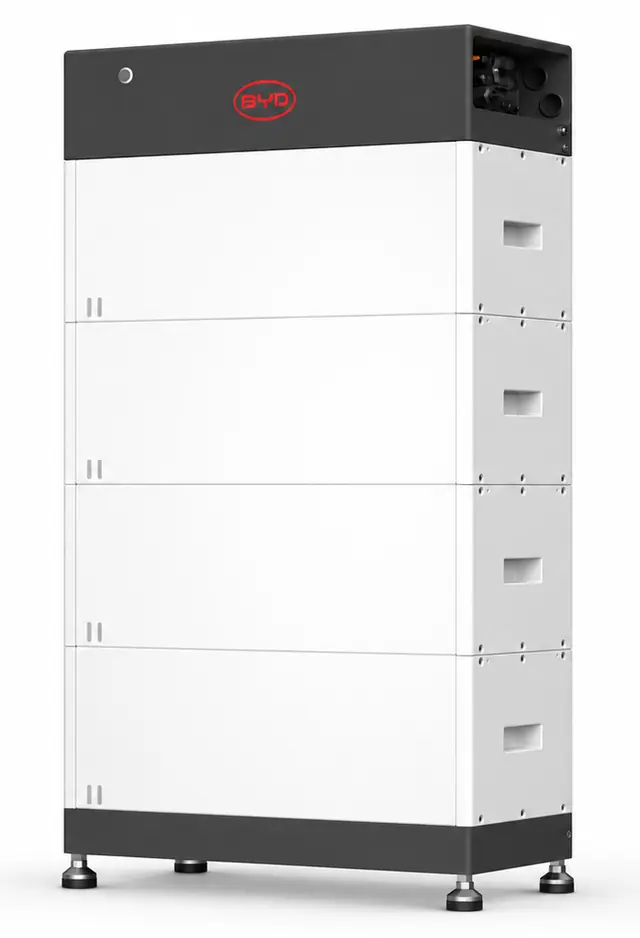
- BYD Battery-Box Premium HVM 11.0 reviewRated 6.5 out of 1011.04 kWh usablePerformance warranty: 10 years or 34.15 MWhOne difference: WarrantyBYD Battery-Box Premium HVM 11.06.5T-BAT H 11.5 V37.0
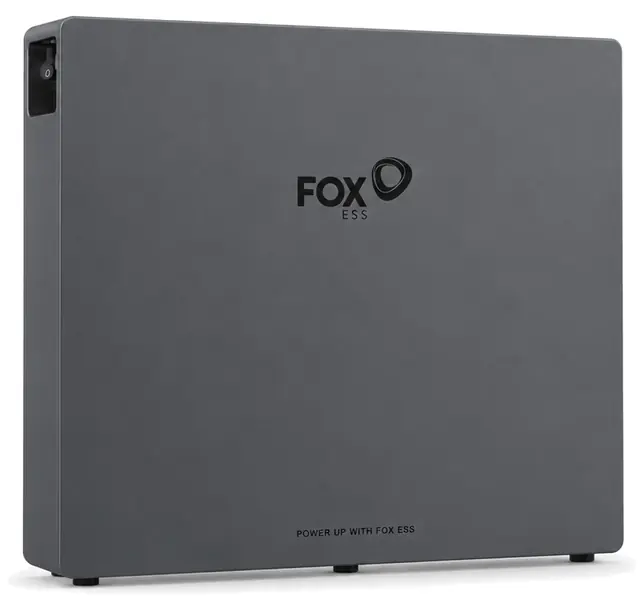
- FoxESS EP11 battery reviewRated 6.9 out of 1010.36 kWh usablePerformance warranty: 10 years or 38.4 MWhOne difference: VPP readinessFoxESS EP11 battery9.5T-BAT H 11.5 V33.5
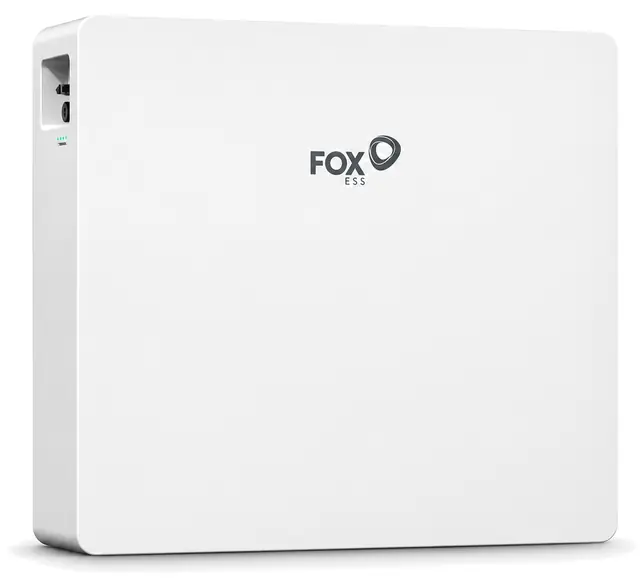
- FoxESS EP12 Plus (w) battery reviewRated 6.4 out of 1011.52 kWh usablePerformance warranty: 10 years or 42.6 MWhOne difference: Australian backingFoxESS EP12 Plus (w) battery5.5T-BAT H 11.5 V37.5
Questions people ask
Which inverter works with the SolaX T-BAT H 11.5 V3?
A SolaX hybrid. SolaX's Australian declaration lists V3 with the X1-Hybrid G4, X1-VAST, X3-Hybrid G4, X3-ULTRA and X3-HYB-G4 PRO, and says the number of modules depends on the inverter. SolaX's global G4 PRO manual allows 2–6 per battery terminal. Get your inverter and firmware confirmed in writing.
Can I add a SolaX T58 V3 pack to my T58 V2 battery?
SolaX's manual says mixing is not recommended. A V2 BMS can take up to three V3 packs only after an irreversible V3 firmware update; a V3 BMS can take V2 packs, but not as the fourth or fifth pack.
How long is the SolaX T-BAT H 11.5 V3 warranty?
Ten years from installation or 129 months from manufacture, whichever comes first, with 70% capacity retention. Daily self-consumption and backup are limited to 6,000 cycles; other uses to 35.8 MWh.
Will the SolaX T-BAT H 11.5 V3 power my home in a blackout?
Only through the inverter's backup (EPS) output and the circuits wired to it; the battery has no AC output. The X1-Hybrid G4, for example, gives 3–7.5 kVA of backup output and switches in under 10 ms.
How much does the SolaX T-BAT H 11.5 V3 cost in Australia?
SolaX Australia publishes no price; its product page points buyers to distributors and installers. The installed price comes from an itemised quote.
How long will 10.9 kWh last?
Divide 10.9 kWh by your average load: about 10.9 hours at 1 kW or 3.6 hours at 3 kW. This is battery-side energy, so inverter losses and any reserve setting reduce what reaches appliances.
Before you accept a quote
SolaX Power doesn’t publish a price for this battery, so the installed price comes from your quotes.
- The quote names one T-BAT H 5.8 V3 BMS and one HV11550-A V3 pack (not V2 or heated H units), plus the inverter model and firmware.
- SolaX's written confirmation that the quoted inverter supports two V3 modules, with its battery-current limit and backup (EPS) rating.
- The mounting hardware supplied: SolaX's manual says the wall bracket and anchors are not in the Australian accessory kit.
- The backed-up circuits, any Matebox, the reserve setting, and a sheltered site with 320–380 mm between units.
- The CEC-listed model, installation date, STC count and price itemised, and the warranty registered at commissioning.
Estimate the federal battery certificates for 10.9 kWh usable (opens in a new tab)
Check the model in your quote
Check that your quote names T-BAT H 11.5 V3 in the configuration this review covers. Other sizes can differ in specifications and warranty.
Other sizes in this line: T-BAT H 5.8 V3, 5.5 kWh usable · T-BAT H 17.3 V3, 16.4 kWh usable · T-BAT H 23.0 V3, 21.9 kWh usable · T-BAT H 28.8 V3, 27.4 kWh usable · T-BAT H 34.6 V3, 32.9 kWh usable
Other SolaX lines: SolaX batteries
Australian support and warranty claims
- Australian presence
- SolaX Power AUS Pty Ltd, Dandenong South VIC
- In Australia since
- 2018
- Where claims go
- Distributor or installer first, then SolaX's service team
- Claim costs
- Freight to AUD 200 a case in some areas; AUD 150 service charge per case
SolaX Power Australian contact details (opens in a new tab) · Warranty document (opens in a new tab) · Checked
VPPs that list SolaX Power Triple Power T-BAT H
Compare programsThese programs list the battery family. Your exact battery, inverter and address still need approval; inclusion does not confirm warranty cover. How VPPs work.
All programs shown require an electricity account with the provider. If you already use that retailer, a switch may not be needed; a particular plan may still be required. Credits are before electricity costs and any program fees.
2 listings · Program A–Z
| Provider | Program | States listed | Reward snapshot | Last checked |
|---|---|---|---|---|
| GloBird Energy | ZEROHERO · VPP add-on | NSW · VIC · SA · QLD (Energex) | Conditional daily and export credits | |
| Origin Energy | Loop · Battery Lite | NSW · SA · VIC · QLD · ACT | $1/kWh during VPP events |


GloBird Energy
ZEROHERO · VPP add-onListed: NSW · VIC · SA · QLD (Energex)
Origin Energy
Loop · Battery LiteListed: NSW · SA · VIC · QLD · ACT
Reward snapshots — open the program for all credits, tariffs and conditions.
Source documents
5 documents
The documents behind this rating. Where we keep a copy, it is unmodified and dated; check the manufacturer for the latest version. We work out the rating with a fixed rubric from these documents and our VPP data. No manufacturer pays for a score or sees one before it is published.
- SolaX Australia — warranty terms and conditions V1.6 (installs from 1 Feb 2025; file dated 3 Nov 2026) (PDF, opens in a new tab)
PDF, 340 KB · Used for: Warranty, Australian backing
Retrieved from au.solaxpower.com
- SolaX — T-BAT-SYS-HV-5.8 V3 compatibility declaration, for the AU market (7 Sept 2026) (PDF, opens in a new tab)
PDF, 411 KB · Used for: Functionality, Review source
Retrieved from au.solaxpower.com
- SolaX Australia — T-BAT H 5.8 V3 (T58 V3) datasheet, V1.2 (15 Sept 2026) (PDF, opens in a new tab)
PDF, 220 KB · Used for: Functionality, Manufacturer’s figures, Review source
Retrieved from au.solaxpower.com
- au.solaxpower.com/contact-us.html (opens in a new tab)
Used for: Australian backing
- abr.business.gov.au/ABN/View?abn=69628495367 (opens in a new tab)
Used for: Australian backing