
Battery review · ESA with 1 × GW8.3-BAT-D-G20
GoodWe ESA GW8.3-BAT-D-G20 review
By CompareVolt · Updated · Last full check
CompareVolt rating
7.5 out of 10
Inverter and battery in one single-phase stack that can grow; the quoted power module sets backup power.
7.5 out of 10
- Warranty10 yrs from purchase; 1 cycle a day
- Functionality8 kWh, 8 kW DC; power module sets AC
- VPP readiness4 programs; all 4 name the ESA
- Australian backingSince 2015; partial claim costs
How this score adds up
| Warranty 6.5 (30%) | |
|---|---|
| Term: 10 years | 2.0 of 3 |
| Keeps 70% at year 10 | 1.5 of 2 |
| Home use: 3.0 MWh per kWh | 2.0 of 3 |
| Conditions: runs from purchase; install within 6 months of production; one cycle a day | 1.0 of 2 |
| Functionality 8.0 (35%) | |
| Power and backup 7.0 · 60% of Functionality | |
| Continuous power: 8 kW battery DC; the inverter sets AC output | 3.0 of 4 |
| Backup equipment: back-up port on every EHA-G20 power module | 2.0 of 2 |
| Backup output: set by the inverter | 1.0 of 2 |
| Three-phase homes: single-phase only | 1.0 of 2 |
| Capacity and expansion 9.5 · 30% of Functionality | |
| Largest documented system: 48 kWh (6 modules in one stack) | 3.5 of 4 |
| Adding later: the warranty permits it, followed by a full charge and discharge cycle | 4.0 of 4 |
| Usable figure: 8 kWh, agreed | 2.0 of 2 |
| Enclosure 10.0 · 10% of Functionality | |
| Enclosure rating: IP66 | 10.0 of 10 |
| 7.0 × 60% + 9.5 × 30% + 10.0 × 10% = 8.05, rounded to the nearest half point: 8.0 | |
| VPP readiness 7.5 (15%) | |
| Open programs: 4 name ESA | 6.0 of 8 |
| Warranty room for VPP use: 3.0 MWh per kWh | 1.5 of 2 |
| Australian backing 8.0 (20%) | |
| Presence: GoodWe Australia Pty Ltd, Rowville VIC | 3.0 of 3 |
| In Australia since 2015 | 2.0 of 2 |
| Claim route: seller or installer first, then a GoodWe ticket | 1.5 of 2 |
| Claim costs: hardware; capped freight in some areas; labour rebate at GoodWe's discretion | 1.5 of 3 |
| Overall: 6.5 × 30% + 8.0 × 35% + 7.5 × 15% + 8.0 × 20% = 7.475, rounded to one decimal: 7.5 | |
Rubric 1.0 · scored 16 Nov 2026 · How we rate batteries · Source documents
Rated so far: 38 batteries, from 4.4 to 8.2. Compare similar batteries · Use the quote checklist
In a nutshell
What’s good
- 8.0 kW battery module. Rated 8.0 kW (12 kW for 10 s); only the 8 and 9.999 kW power modules can draw more than 6.6 kW from it.
- Mixable module sizes. The manual lets 5, 6, 8 and 9 kWh class modules mix in parallel; adding a heater-less G21 disables battery heating.
- Cold-weather charging. The G20 module has integrated heating and is rated to charge from −18°C; the heater-less G21 version starts at +2°C.
What to watch
- Backup overload limits. In an outage, loads above the power module's rating trip overload protection; only the 8 and 9.999 kW ones have the 63 A grid bypass.
- Limited claim costs. The warranty pays hardware material by default; freight only in some areas, up to a cap; labour is a discretionary, pre-authorised rebate.
- G21 not in warranty. The Lynx D G2 warranty names only the four G20 module codes, not the G21 versions in the datasheet and CEC list.
Good fit for: Single-phase homes wanting an integrated inverter and battery stack that can take more modules later under the battery warranty.
Look elsewhere if: You expect whole-home blackout power from the 63 A figure, or you need to keep an existing hybrid inverter.
All specifications and notes
Capacity and power
| Usable capacity | 8 kWhBeginning-of-life DC usable energy at 96% depth of discharge, 0.2P and 25°C. GoodWe says actual energy varies with charge rate, temperature, transport and storage. |
|---|---|
| Backup output | Power module: 3–10 kVARated backup output of the GW3K–GW9.999K-EHA-G20 power modules. One GW8.3 module caps battery-only output at 8.0 kW (12 kW for 10 s). |
| Performance warranty | 10 years or ≈24 MWhWhichever comes first, with 70% retention. 24 MWh is our arithmetic: 3.0 MWh per usable kWh × 8.0 kWh. One full cycle a day. |
| Later expansion | Permitted by warrantyThe Lynx D G2 warranty says it supports capacity expansion. Plan the stack against the manual's module limits. |
Manufacturer’s figures
As stated in the manufacturer’s Australian datasheet. Only the IP rating feeds the score; the rest are shown for reference.
| IP rating | IP66The maker’s rating for dust and water getting in, which matters on an outdoor wall. |
|---|---|
| Weight | 79 ± 1 kgWhether it can go on a wall, and how the installer has to handle it.GW8.3-BAT-D-G20 battery module only; the power module (EHA-G20) adds 24 to 26 kg |
| Dimensions | 800 × 326 × 270 mm (W × H × D)Whether it fits the wall or cupboard where the installer plans to put it.Battery module only; the power module is 800 × 300 × 270 mm |
| Charge power | 8.0 kW (Max. Input Power (System))How fast it can soak up solar, or a cheap or free power window.Battery module; derates with temperature and SOC. Power module figure differs |
| Operating temperature | Charge −18°C to 55°C; discharge −20°C to 55°CWhether it suits a hot garage or an outdoor wall where you live.Battery module. Warranty says −20°C to 55°C for both, out of direct sun |
| Noise | ≤29 dBMatters if it sits near a bedroom or a neighbour’s window.Battery module only; the power module is ≤30 to ≤35 dB |
More specifications
| Battery chemistry | LFPOne module is 8.32 kWh rated and 8.0 kWh usable. |
|---|---|
| Power module range | 3 to 9.999 kW (EHA-G20)Sets grid export, backup output, bypass current and solar input. |
| Stack limit | Up to 6 modules on a floor baseOn a wall bracket the manual limits a stack to two 8.3-class modules. |
| Cold-weather charging | From −18°C (G20 module)The G20 has integrated heating; the heater-less G21 starts at +2°C. |
| Metering | Built-in, CTs at the switchboardThe power module has a built-in meter; GoodWe says no gateway is needed. |
What the system needs
| EHA-G20 power module | The hybrid inverter, 3 to 9.999 kW. It sets grid export, backup output, bypass current and solar input, and has its own inverter warranty. |
|---|---|
| GW8.3-BAT-D-G20 module | One 8.32 kWh rated, 8.0 kWh usable LFP module on a base, connected by blind-mate plugs. Up to six stack on a floor base. |
| Metering and optional STS | A built-in meter reads CTs at the switchboard. A static transfer switch is optional, needs an STS-version power module and is not needed for backup. |
| Backup wiring | The installer decides which circuits sit on the backup side. The manual's whole-home diagrams still depend on the power module's rated output. |
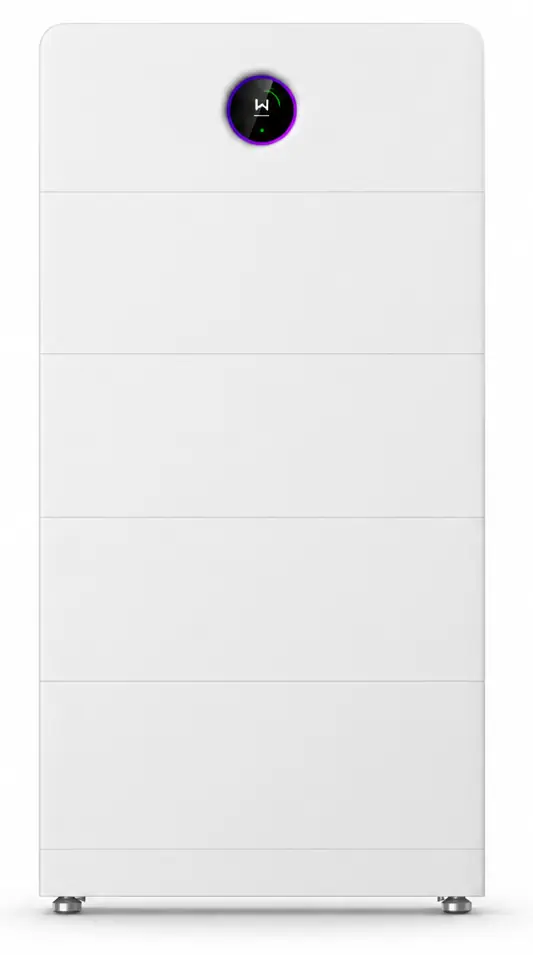
GoodWe's single-phase ESA stacks battery modules under a hybrid power module. This review covers ESA with one GW8.3-BAT-D-G20 module, 8.0 kWh usable, and explains what the power module you choose decides.
Capacity and power
ESA is a system, not a single battery. A GW EHA-G20 power module, GoodWe's single-phase hybrid inverter, sits on a stack of Lynx D G2 battery modules. This review covers one GW8.3-BAT-D-G20 module: 8.32 kWh rated and 8.0 kWh usable at the beginning of life. The Clean Energy Council lists the module under certificate BAT-655, approved 14 August 2025 and valid to 31 December 2027. The list approves modules, not whole ESA systems.
Output depends on both halves. One GW8.3 module is rated for 8.0 kW maximum output and 12 kW for 10 seconds, with derating that depends on temperature and state of charge. The power module then sets what reaches the house. Single-phase EHA-G20 models run from 3 kW to 9.999 kW. The 5 kW model, for example, discharges at most 5.5 kW from the battery and supplies 5.0 kVA of backup, or 10 kVA for 10 seconds. With the 9.999 kW model and one module, the module's 8.0 kW becomes the battery-side limit.
Model codes matter. GoodWe sells G20 and G21 versions of the 8.3 module. The datasheet gives them the same energy and power, but only the G20 has integrated heating; it charges from −18°C, while the G21 needs +2°C. The datasheet also lists 6.0 and 9.0 kWh modules with lower power ratings; their figures do not transfer to this review.
Backup and installation
Read "Up to 63A Bypass Current / Whole-home backup" carefully. The datasheet explains it as an internal bypass that passes grid power through to the house, and only the 8 kW and 9.999 kW power modules reach 63 A; the 3–6 kW models are rated 27.3–50 A. The product page goes further and calls it "UPS-level, full house back-up (63A)". GoodWe's global ESA user manual sets the limit that matters in a blackout: if connected loads exceed the power module's rated power, it stops output on overload protection, and you have to switch loads off. Whole-home wiring therefore still needs a power module sized for the loads you expect to run, or a backed-up circuit list.
GoodWe says no gateway is needed, and the manual bears that out: the power module has a built-in meter that reads current transformers at the switchboard, and switches its own grid relay. A static transfer switch is optional, applies only to single-unit systems with an STS-version power module, and gives a generator its own port. The manual requires the grid-side and backup-side neutrals to be joined, so the backup wiring is a design job, not a plug-in.
The stack is rated IP66 and can stand on the floor or hang on a wall. On a wall bracket, GoodWe's Australian ESA installation manual (PDF on GoodWe's site) limits a stack to two 8.3-class modules. A floor base takes up to six, and the manual puts one stack's maximum at 48 kWh. The newer datasheet lists 12 modules and 5–108 kWh, with at most six in one column, but the manual's installation steps cover one stack only. The product page's "up to 6x stacks in parallel" appears to describe paralleled systems, and the manual says not to combine several inverters. Ask the installer to confirm in writing any plan beyond one stack of six.
Warranty and ownership
Two documents apply. The battery module carries GoodWe's Australian Lynx D G2 warranty, Rev 1.1 of 17 September 2026, for systems sold and installed after October 2024. It gives ten years of product cover from purchase and a ten-year performance promise of 70% usable energy or a minimum throughput of 3.0 MWh per usable kWh, whichever comes first. For one 8.0 kWh module, that throughput works out to 24 MWh. Cover assumes the equivalent of one full cycle a day. The power module falls under GoodWe's separate inverter warranty, Rev 5.9, which gives the single-phase ESA 3–10K series ten years. That warranty "may not apply" if GoodWe cannot update firmware remotely because the system is not connected to its SEMS portal or an equivalent access path, so keep the power module online.
Working the warranty’s energy limits through at one full charge and discharge a day:
- Energy limit: 3.0 MWh per usable kWh. At one full charge and discharge a day that is reached in about 8.2 years, before the 10-year term ends.
Unlike GoodWe's original Lynx Home F warranty, which forbids expansion, this one says: "Support capacity expansion, unlimited production time." After adding modules, the warranty asks for a full charge and discharge cycle with the inverter. The manual's stacking limits still apply, and GoodWe's global manual says mixed models and split-type expansion need BMS and DC-DC software at version V06 or later.
Conditions carry weight. Keep proof of purchase: both promises run from the purchase date, not installation. The module must be installed within six months of production, kept out of direct sun and run within −20°C to 55°C. Report any fault within two weeks, and make the claim within one month of the failure. The battery warranty covers hardware material by default. Freight is covered only in some areas, by ground transport up to a cap, and labour is a discretionary rebate that GoodWe must authorise before the site visit. GoodWe may repair the module or replace it with a new, refurbished or upgraded one; the remaining term transfers, with at least six months. The battery warranty does not mention VPPs or internet connection. It keeps Australian Consumer Law rights.
Brand and Australian support
Support evidence checked 7 November 2026. GoodWe Technologies, based in Suzhou, China, was founded in 2010 and listed on the Shanghai Stock Exchange in 2020. The warranty names GoodWe Australia Pty Ltd of Rowville VIC as importer. That company has held an ABN since 27 October 2015 (checked 15 November 2026). The Australian contact page gives service.au@goodwe.com and 03 9918 3905. That gives you a local contact; it doesn't tell you how fast claims are handled.
Both warranties send claims first to the distributor that sold the equipment or the installer who installed the inverter. If that fails, you can open a ticket with GoodWe directly. If your installer disappears, ask GoodWe and the seller in writing who will diagnose, remove and freight a faulty module, and what the labour rebate covers. The inverter warranty adds capped freight and either GoodWe-arranged engineers or a discretionary labour rebate; the battery warranty starts from hardware material only.
On 7 November 2026, an ACCC recall search for GoodWe returned two inverter recalls: EHB and GEH series inverters in September 2025 and MS-30 inverters in December 2023. The CEC recalls page lists the same two. Neither names ESA, EHA-G20 or Lynx D G2 hardware. The ARENA/ITP test index, checked the same day, does not mention GoodWe, and we did not verify an ESA-specific owner or installer sample.
Price and alternatives
GoodWe Australia publishes no ESA price. Its product page and download page offer datasheets and a contact link. Installed prices come from quotes, and an ESA quote needs to list the power module, every battery module code, the base, CTs, any STS, backup wiring, installation and GST. Find an installer through GoodWe Australia to request one; this is an installer directory, not a price.
A CEC listing is one requirement for federal battery incentives, not proof of eligibility. Have the installer confirm the exact module, power module and installation against current rules before subtracting a rebate.
For VPPs, GoodWe announced on 10 October 2026 that compatible ESA systems can join Amber's SmartShift in ACT, NSW, SA, south-east Queensland and Victoria, after confirming the individual system through Amber. In our VPP data, all four open programs that count for ESA name it: AGL, ENGIE and Origin Loop in their model lists, and Amber as "GoodWe (ESA Series)". A listing does not confirm your exact configuration.
If you want to keep a separate GoodWe hybrid inverter, the Lynx Home LX F16.4-H review covers GoodWe's older external-inverter tower. For another integrated inverter-and-module design, see the Sigenergy SigenStor-5S-5 review. The solar-battery catalogue lists other families by usable capacity.
Who it suits
Start with your loads, not the module count. Estimate overnight use with the battery size calculator, then list what must run in a blackout and the largest motor or heater among it. That list decides the power module; the energy figure decides how many modules. Compare 8.0 kWh, a beginning-of-life figure, with your overnight estimate before deciding on one module. If you expect to add modules, ask the installer to show the planned stack against the manual's limits and to record the module codes, manufacture dates and software versions at commissioning.
How it compares
Other reviewed batteries closest to 8 kWh of usable capacity.
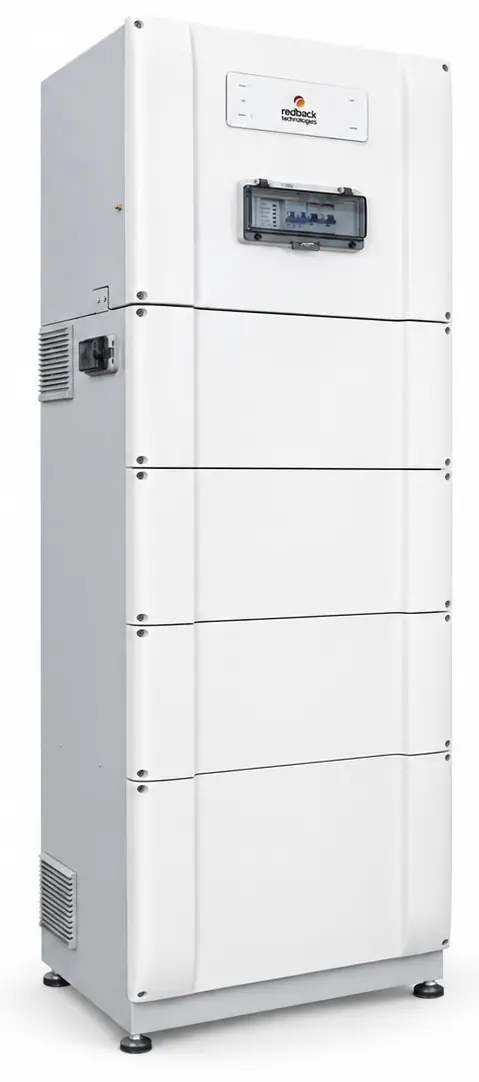
- Redback Smart Battery SB9600 reviewRated 4.4 out of 108.64 kWh usableSystem warranty: Two date limitsOne difference: VPP readinessRedback Smart Battery SB96002.5ESA with 1 × GW8.3-BAT-D-G207.5
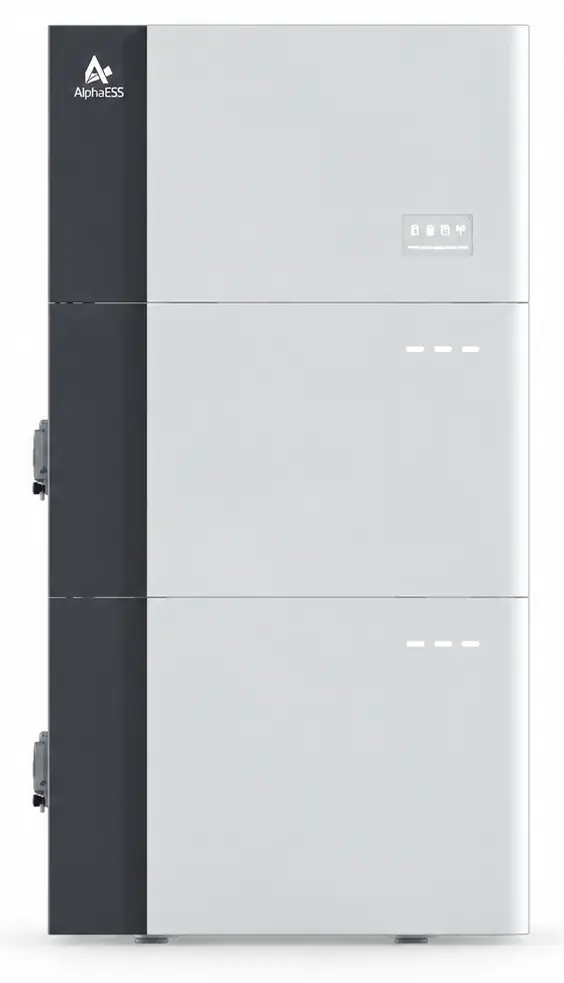
- AlphaESS SMILE-G3-S5 with SMILE-G3-BAT-9.3S reviewRated 6.8 out of 109.3 kWh usable9.3S warranty: Confirm in writingOne difference: WarrantyAlphaESS SMILE-G3-S5 with SMILE-G3-BAT-9.3S5.0ESA with 1 × GW8.3-BAT-D-G206.5
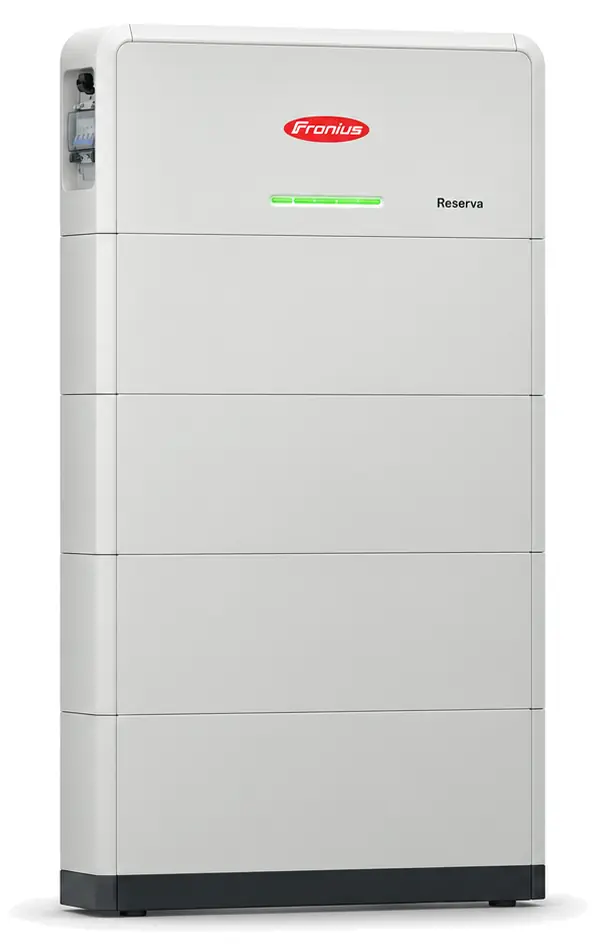
- Family reference imageFronius Reserva battery review (Reserva 9.5)Rated 6.7 out of 109.47 kWh usablePerformance warranty: 10 years or 29.36 MWhOne difference: Australian backingFronius Reserva battery review (Reserva 9.5)10.0ESA with 1 × GW8.3-BAT-D-G208.0
Questions people ask
Does the GoodWe ESA include an inverter?
Yes. An EHA-G20 power module, GoodWe's single-phase hybrid inverter, sits on a stack of Lynx D G2 battery modules. The power module sets backup output, grid export and solar input.
How much backup power does the GoodWe ESA give in a blackout?
It depends on the power module, from 3 to 10 kVA. One GW8.3 module caps battery-only output at 8.0 kW (12 kW for 10 seconds). The 63 A bypass on the 8 and 9.999 kW modules passes grid power through; it is not battery backup.
How long is the GoodWe ESA battery warranty?
Ten years of product cover and a ten-year performance promise of 70% usable energy or 3.0 MWh per usable kWh, whichever comes first. That is 24 MWh for one 8.0 kWh module; cover assumes the equivalent of one full cycle a day.
Can I add more GoodWe ESA battery modules later?
Yes. The Lynx D G2 warranty says it supports capacity expansion, followed by a full charge and discharge cycle. Plan the stack against the manual's module limits and ask the installer to show it in the quote.
How much does the GoodWe ESA cost in Australia?
GoodWe Australia publishes no ESA price; its ESA page links datasheets, a contact form and an installer directory. Installed prices come from quotes.
How long will 8.0 kWh last?
Divide 8.0 kWh by your average load: about 8 hours at 1 kW or 2.7 hours at 3 kW. This is a beginning-of-life figure, and the power module you choose limits backup output.
Before you accept a quote
GoodWe doesn’t publish a price for this battery, so the installed price comes from your quotes.
- The quote names the exact EHA-G20 power module, not just GoodWe ESA.
- Every battery module is listed as GW8.3-BAT-D-G20 (not G21), with its manufacture date.
- It lists the backed-up circuits and checks them against the power module's rated backup output.
- Base, CTs, any STS, backup wiring, installation and GST are itemised.
- You have a written answer on who diagnoses, removes and freights a faulty module.
Estimate the federal battery certificates for 8 kWh usable (opens in a new tab)
Check the model in your quote
Check that your quote names ESA with 1 × GW8.3-BAT-D-G20 in the configuration this review covers. Other sizes can differ in specifications and warranty.
Other sizes in this line: ESA with 1 × GW5.1-BAT-D-G20, 5 kWh usable · ESA with 1 × GW5.1-BAT-D-G21, 5 kWh usable · ESA with 1 × GW6.0-BAT-D-G20, 5.9 kWh usable · ESA with 1 × GW8.3-BAT-D-G21, 8 kWh usable · ESA with 1 × GW9.0-BAT-D-G20, 8.85 kWh usable
Other GoodWe lines: GoodWe batteries
Australian support and warranty claims
- Australian presence
- GoodWe Australia Pty Ltd, Rowville VIC
- In Australia since
- 2015
- Where claims go
- Seller or installer first, then a GoodWe ticket
- Claim costs
- Hardware; capped freight in some areas; labour rebate at GoodWe's discretion
GoodWe Australian contact details (opens in a new tab) · Warranty document (opens in a new tab) · Checked
VPPs that list GoodWe ESA
Compare programsThese programs list the battery family. “Names ESA” marks a program whose published list names this line. Your exact battery, inverter and address still need approval; inclusion does not confirm warranty cover. How VPPs work.
All programs shown require an electricity account with the provider. If you already use that retailer, a switch may not be needed; a particular plan may still be required. Credits are before electricity costs and any program fees.
4 listings · 4 recorded as naming ESA · Program A–Z
| Provider | Program | Names ESA | States listed | Reward snapshot | Last checked |
|---|---|---|---|---|---|
| AGL | AGL VPP | Yes | NSW · VIC · QLD · SA | Sign-up, ongoing and event credits SA ongoing credits conflict across published sources ($80 or $180 a year); AGL confirms your amount when you join. | |
| Amber | SmartShift | Yes | NSW · VIC · SA · ACT · QLD (Energex) | Variable wholesale export earnings | |
| ENGIE | ENGIE VPP | Yes | NSW · VIC · SA | Monthly credits that vary by state | |
Check this configuration: ENGIE requires at least 10 kWh. This review covers one 8.0 kWh GW8.3-BAT-D-G20 module. | |||||
| Origin Energy | Loop · Battery Lite | Yes | NSW · SA · VIC · QLD · ACT | $1/kWh during VPP events | |




AGL
AGL VPPListed: NSW · VIC · QLD · SA
Names ESA
Amber
SmartShiftListed: NSW · VIC · SA · ACT · QLD (Energex)
Names ESA
ENGIE
ENGIE VPPListed: NSW · VIC · SA
Names ESA
Check this configuration: ENGIE requires at least 10 kWh. This review covers one 8.0 kWh GW8.3-BAT-D-G20 module.
Origin Energy
Loop · Battery LiteListed: NSW · SA · VIC · QLD · ACT
Names ESA
Reward snapshots — open the program for all credits, tariffs and conditions.
Source documents
5 documents
The documents behind this rating. Where we keep a copy, it is unmodified and dated; check the manufacturer for the latest version. We work out the rating with a fixed rubric from these documents and our VPP data. No manufacturer pays for a score or sees one before it is published.
- GoodWe — Lynx D G2 battery limited warranty, Australia and New Zealand, Rev 1.1 (17 Sept 2026) (PDF, opens in a new tab)
PDF, 819 KB · Used for: Warranty, Australian backing
Retrieved from goodwe.com.au
- GoodWe — ESA Series 3-10kW Australian datasheet, V2.1 (1 Nov 2026) (PDF, opens in a new tab)
PDF, 1.4 MB · Used for: Functionality, Manufacturer’s figures, Review source
Retrieved from en.goodwe.com
- www.goodwe.com.au/contact-us (opens in a new tab)
Used for: Australian backing
- abr.business.gov.au/ABN/View?abn=81608126254 (opens in a new tab)
Used for: Australian backing
Also linked in the review
Copies of documents the review text links. We don’t use them for the rating.
- GoodWe — Lynx LX F (first generation) battery limited warranty, Australia and New Zealand, Rev 1.4 (29 Aug 2023) (PDF, opens in a new tab)
PDF, 631 KB · Used for: Review text
Retrieved from goodwe.com.au