
Buying guide
Home EV chargers for everyday and solar charging
By CompareVolt
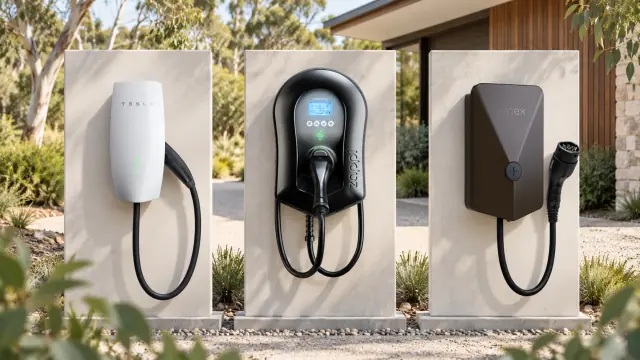
Choose Tesla for app scheduling and a long cable, Evnex for single-phase solar with Wi-Fi, or the current multiphase zappi for a three-phase solar setup. Ocular adds RFID control; zappi GLO offers a screen-free single-phase alternative. Hardware prices exclude installation and extra metering.
The shortlist
Choose for the way you’ll use it.
Options for different needs, based on manufacturer specifications and seller offers. We haven’t tested them hands-on.
For scheduling and cable reach
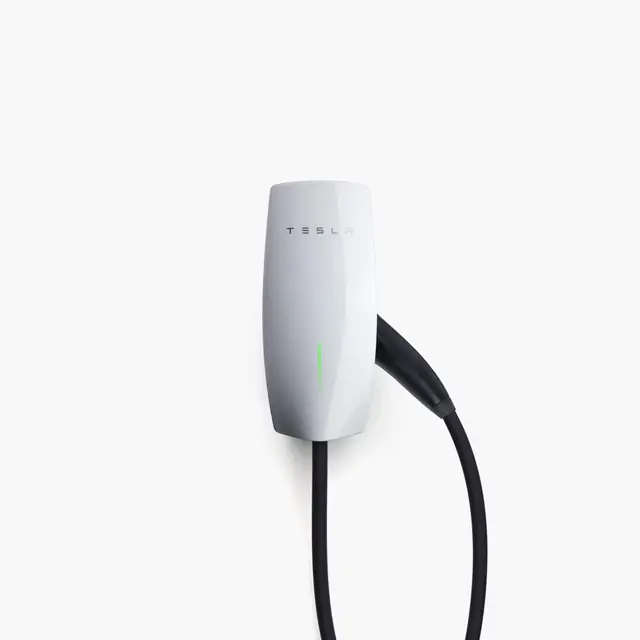
Tesla Gen 3 Wall Connector — AU Type 2, 7.3m
App scheduling with a long cable
A documented scheduling choice for Type 2 cars, with the longest tethered lead here.
- Cable
- 7.3m Type 2
- Supply
- Single or three phase
- Control
- Wi-Fi / Tesla app
The trade-off: Universal solar diversion is not included; dynamic load management needs a separate meter.
Listed price
Price perspective: A$770
AU charger incl GST; installation, delivery and dynamic meter extra · Checked
For multiphase solar control
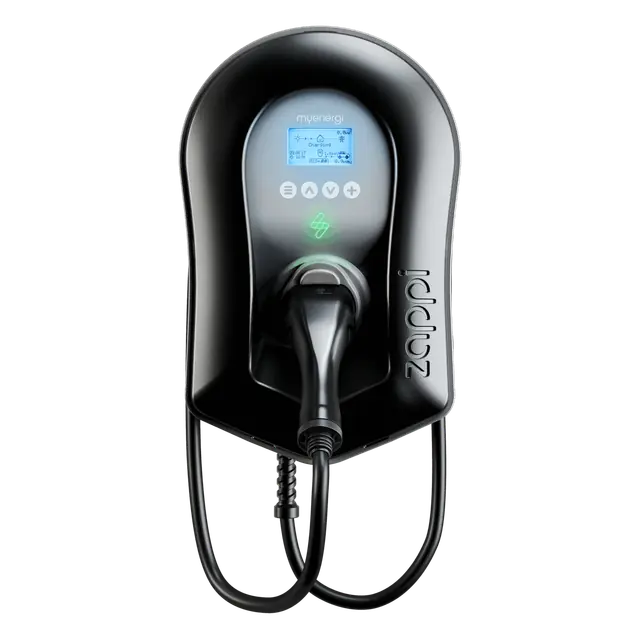
myenergi zappi ZAPPI-2H22TB-T — black tethered
A screen and three solar modes
The current multiphase configuration supports a single- or three-phase installation and on-device controls.
- Rating
- 7 / 22kW
- Cable
- 6.5m Type 2
- Modes
- ECO / ECO+ / FAST
The trade-off: 22kW needs suitable three-phase supply and a compatible car; sensing must match the site.
Listed price
Price perspective: A$1,556.70
Exact -T tethered SKU incl GST; installation, freight and extra sensing separate · Checked
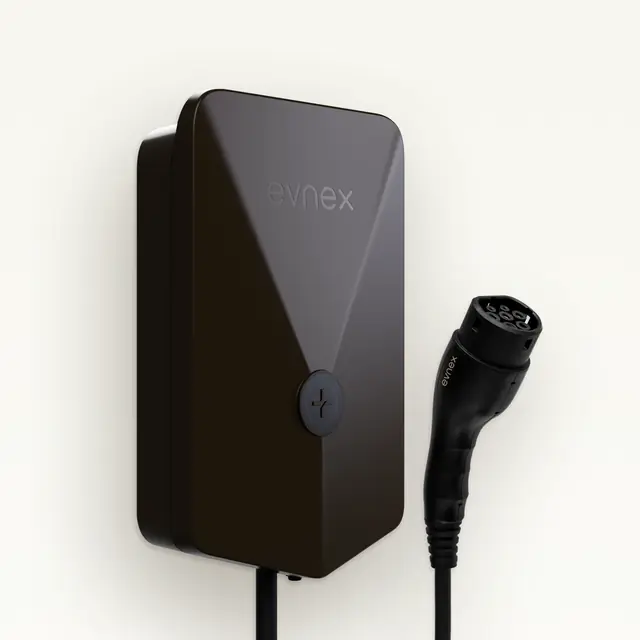
Fits a single-phase charging circuit with surplus solar and reliable home Wi-Fi.
- Rating
- 7.4kW, single phase
- Cable
- 5m Type 2
- Connectivity
- Wi-Fi
The trade-off: The page both includes a sensor and offers a required A$149 sensor add-on; confirm the package.
Listed price
Price perspective: A$1,099
Selected AU charger incl GST; installation and freight extra; sensor inclusion unresolved · Checked
For RFID and a tethered solar setup
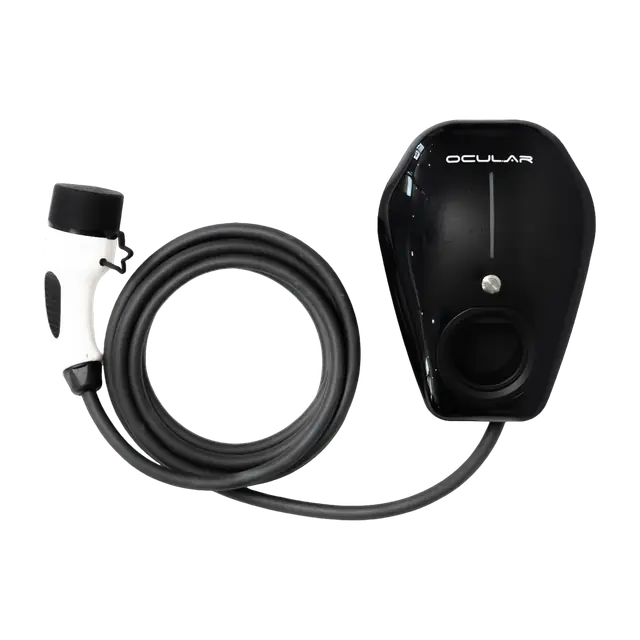
Ocular IQ Home Solar IOCAH30-7TE-RW — black, 5m
RFID access with a supplied CT
A single-phase Type 2 option with RFID access and documented solar modes for the exact RW revision.
- Rating
- 7kW class, single phase
- Cable
- 5m Type 2
- Sensor
- One CT / 20m lead
The trade-off: Warranty sources disagree between two and three years; get the applicable term in writing.
Listed price
Price perspective: A$1,195
IOCAH30-7TE-RW incl GST and CT; installation, freight and extra site work separate · Checked
How we chose these options
How we compared
Reviewed
- Evidence basis
- Australian purchase pages and manufacturer specifications, manuals and warranty terms checked 12 October 2026. Document research, not charging or reliability tests.
- Coverage
- Five tethered Australian configurations: Tesla Gen 3, current multiphase zappi, Evnex E2 Core, Ocular IOCAH30-7TE-RW and zappi GLO. Selected for different controls, supply phases and solar requirements.
- Limitations
- Car and supply limits constrain charging. Hardware prices do not establish installed cost. Sensor-package and model-specific warranty conflicts are stated below; recall searches do not clear individual serial numbers.
Choose by your supply and charging routine
Tesla suits scheduling and cable reach; Evnex suits single-phase solar with dependable Wi-Fi; the current multiphase zappi suits a three-phase solar installation. Ocular adds RFID access with a supplied CT, while zappi GLO is a smaller, screen-free single-phase alternative.
A charger cannot override the car's AC limit. Tesla's Australian charging table illustrates 7.4kW single-phase and 11kW three-phase charging for its tabulated cars; check your own vehicle manufacturer's limit before paying for a higher-rated charger. The phase, parking position and daily charging routine should drive the choice.
Full comparison reviewed 12 October 2026. We checked Australian buying pages and manufacturer documents, without testing charging speed, reliability or solar behaviour. The choices cover distinct uses across four brands, rather than a performance ranking or a complete market survey.
Hardware prices, before installation
| Australian model / store | Hardware price | Material extra |
|---|---|---|
| Tesla Gen 3 7.3m — Bunnings | A$770 | Dynamic meter extra |
| zappi ZAPPI-2H22TB-T — SCHNAP | A$1,556.70 | Extra site sensing if needed |
| Evnex E2 Core 5m — Evnex | A$1,099 | A$149 sensor option; inclusion conflict |
| Ocular IOCAH30-7TE-RW — Bunnings | A$1,195 | Extra site sensing if needed |
| zappi GLO 7kW 6.5m — myenergi AU | A$999 | Confirm grid CT package |
The amounts come from the linked seller pages. GST is explicit on the direct listings and in Bunnings' sale terms and SCHNAP's pricing terms. Compare complete installation quotes, including commissioning and any switchboard work, before treating a lower hardware amount as lower total cost.
Tesla: confirm the meter and solar system
The Bunnings offer is the Australian Gen 3 Type 2 charger with a 7.3m lead. Tesla documents app scheduling over home Wi-Fi, making this a practical starting point for overnight charging without an inverter integration requirement.
For dynamic load management, an approved meter is purchased and installed separately. Charge on Solar requires a compatible Tesla vehicle, Powerwall, on-site solar and supported software; site/export restrictions also apply. Buying this charger alone does not give every EV surplus-solar control.
Tesla's hardware warranty is four years for normal residential use and one year for commercial use, from invoice. Australian fault support is 1800 646 952; the installer's workmanship cover is separate. Buyers wanting generic solar diversion should investigate the CT-controlled alternatives below.
zappi: specify the current multiphase package
Specify the exact ZAPPI-2H22TB-T at SCHNAP in the quote. The suffix identifies a datasheet variant, rather than proving a newer generation. The manufacturer datasheet identifies the black tethered -T model as 7kW single-phase or 22kW three-phase with a 6.5m Type 2 lead. The Australian product page lists one grid CT with a 5m cable; ask the installer to confirm the complete sensing package for your phases and any generation or battery monitoring.
The screen is useful if you prefer local controls. ECO can draw grid electricity to maintain minimum charging; ECO+ can pause when surplus falls, with Minimum Green Level and boost settings affecting grid use. Have the installer demonstrate the selected settings with your car rather than assuming every solar-labelled mode uses only surplus.
The current AU product page describes the multiphase range and three-year warranty. Australian terms require competent installation and registration with proof of purchase and serial number. Contact myenergi APAC on 1300 743 443 or [email protected]. The main reason to choose this over GLO is a suitable three-phase installation or the on-device screen.
Evnex: settle the sensor package first
The selected Volcanic E2 Core, Type 2, 5m listing both lists a Power Sensor among included items and offers a required A$149 sensor add-on for solar/load management. Get a written package confirmation before comparing complete solar costs. A three-phase property also needs the installer to determine whether additional phase monitoring is required.
E2 Core uses Wi-Fi rather than 4G. Evnex's connectivity guidance says some smart scheduling and solar functions stop after more than 28 days offline while basic charging continues. This makes dependable coverage at the parking position a purchase requirement.
The E2 hardware warranty provides four years for residential use and three for commercial use, for the original customer. It excludes installation by parties outside Evnex or its approved contractors: confirm your installer meets those terms. Start claims with Evnex Support, 1800 959 377. Choose another model if reliable Wi-Fi or that installation arrangement does not suit.
Ocular: match the tethered RW revision
The Bunnings offer identifies IOCAH30-7TE-RW, black, single-phase, with a 5m Type 2 lead. The RW installation manual specifies one CT on a 20m cable. Its communications table names 4G, while the RW user manual describes Ethernet and Wi-Fi; confirm the delivered unit’s connections.
The RW user manual distinguishes Fast, Solar Assist and Solar Only. Solar Assist can import grid energy; Solar Only depends on sufficient surplus. Home-battery behaviour needs a site check because sensing measures grid export rather than connecting directly to the battery. Internet is needed for normal smart operation; offline plug-and-charge must already be configured.
Warranty evidence conflicts: Bunnings gives three years in Features but two in Warranty & Returns, while the installation manual specifies two. Budget on the documented two-year term unless the seller confirms a longer applicable warranty in writing. Manufacturer support is 1300 912 650 or [email protected].
zappi GLO: a screen-free single-phase alternative
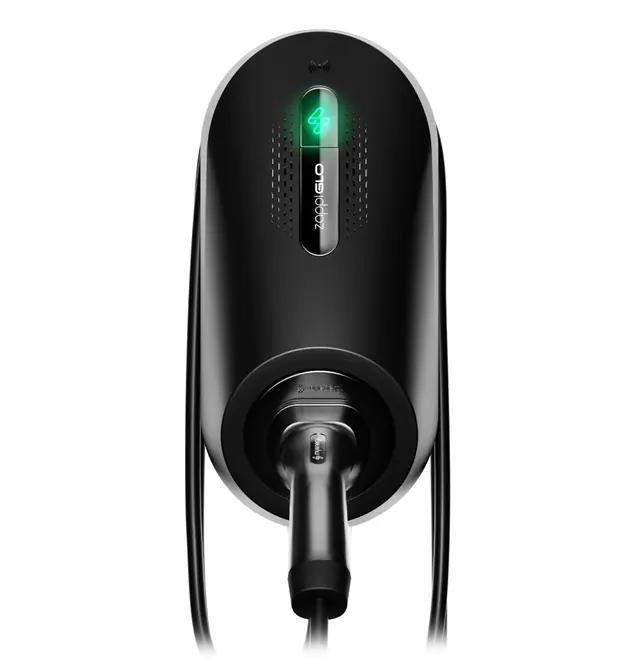
The Australian GLO offer specifies 7kW single-phase, a 6.5m tethered Type 2 cable and app control with RFID access. At A$999 it offers another solar-capable path when a screen and three-phase charging are unnecessary; it does not replace the multiphase zappi for a 22kW installation.
The GLO manual requires grid sensing for its controls. Confirm the supplied AU CT kit and installation cost; that document contains UK regulatory instructions, which are not an Australian installation standard. The global warranty page names GLO with a three-year standard term, but the AU terms predate GLO and name zappi generically. Confirm GLO-specific Australian cover with APAC support before buying; UK paid extensions are not established AU offers.
Get one complete written quote
- Match the delivered model: Australian configuration, car AC limit, supply phase, cable reach and parking position.
- Quote the whole job: charger, required CTs/meters, communications, GST, freight, switchboard/site work, commissioning and workmanship cover.
- Demonstrate solar control: include your inverter, home battery, export limits and any grid-boost settings; confirm account and internet requirements.
- Check safety and support: match model and serial against the ACCC recall register and relevant state electrical-safety notices with the installer. This comparison provides no serial-specific clearance.
Ask the installer to price your chosen configuration with its required controls in one written quote. This comparison does not assess portable leads, DC or bidirectional charging, or promise measured savings or reliability.
Check the evidence before choosing
Read how our researched comparisons differ from hands-on testing, and send corrections through our contact page.
How we comparePrimary sources (21)
- Gen 3 Wall Connector AU 7.3m offer — BunningsRetailer offerwww.bunnings.com.au/tesla-wall-connector-gen-3-7-3m-type-2-ev-charger_p0670324Source checked
- Wall Connector charging, app and warranty — Tesla AustraliaManufacturerwww.tesla.com/en_au/support/charging/wall-connectorSource checked
- Separate dynamic power meter — Tesla AustraliaManufacturerwww.tesla.com/en_au/support/charging/wall-connector/power-managementSource checked
- Charge on Solar requirements — Tesla AustraliaManufacturerwww.tesla.com/en_au/support/tesla-app/charge-on-solarSource checked
- Australian retail pricing and GST — Bunnings sale termsRetailer offerwww.bunnings.com.au/terms-conditions/online-and-special-orderSource checked
- ZAPPI-2H22TB-T multiphase offer — SCHNAPRetailer offerwww.schnap.com.au/solar-ev-charger-v21-zappi-multiphase-7kw-22kw-ip65-my-energi-zappi-2h22tb-t.htmlSource checked
- GST-inclusive prices — SCHNAP termsRetailer offerwww.schnap.com.au/privacy-policySource checked
- Current Australian multiphase zappi — myenergiManufacturerwww.myenergi.com/au/product/zappiSource checked
- DS-00010 Rev B manufacturer datasheet — hosted by MJS ElectricalManufacturerwww.mjselectricalsupplies.com.au/assets/brochures/ZAPPI.pdfSource checked
- ECO and ECO+ mode limits — myenergiManufacturersupport.myenergi.com/hc/en-gb/articles/360020720298-What-are-the-zappi-charging-modesSource checked
- Current Australian product warranty v2.0 — myenergiManufacturerwww.myenergi.com/au/wp-content/uploads/2023/11/myenergi-LTD-Product-Warranty-v2.0-AUS63.pdfSource checked
- Selected E2 Core AU package and sensor options — EvnexManufacturerstore.evnex.com/products/evnex-e2-coreSource checked
- E2 hardware and installation warranty — EvnexManufacturercdn.prod.website-files.com/66a6f44c9279e5bd842b2c80/692ca68b40c55b9d33f4c09b_Evnex-Warranties%20%282%29.pdfSource checked
- Australian claims route — EvnexManufacturerwww.evnex.com/au/product-supportSource checked
- IOCAH30-7TE-RW tethered offer and warranty — BunningsRetailer offerwww.bunnings.com.au/ocular-7kw-black-iq-home-solar-single-phase-type-2-lead-ct-clamps_p0708249Source checked
- IQ Home Solar installation guide v2.7, RW models — OcularManufacturerocularcharging.com.au/wp-content/uploads/2025/07/IQ-Home-Solar-Installation-Guide.pdfSource checked
- IQ Home Solar user manual v2.4, RW models — OcularManufacturerocularcharging.com.au/wp-content/uploads/2025/09/IQ-Home-Solar-User-Manual-v2.4.pdfSource checked
- Australian zappi GLO 7kW tethered offer — myenergiManufacturerwww.myenergi.com/au/product/zappi-gloSource checked
- GLO manual Rev G: sensing requirements; UK regulatory scope — myenergiManufacturersupport.myenergi.com/hc/article_attachments/44673289320081Source checked
- GLO standard warranty duration; global/UK scope — myenergiManufacturerwww.myenergi.com/product/zappi-extended-warrantySource checked
- Product-safety and recall search entry — ACCCOfficial sourcewww.productsafety.gov.auSource checked